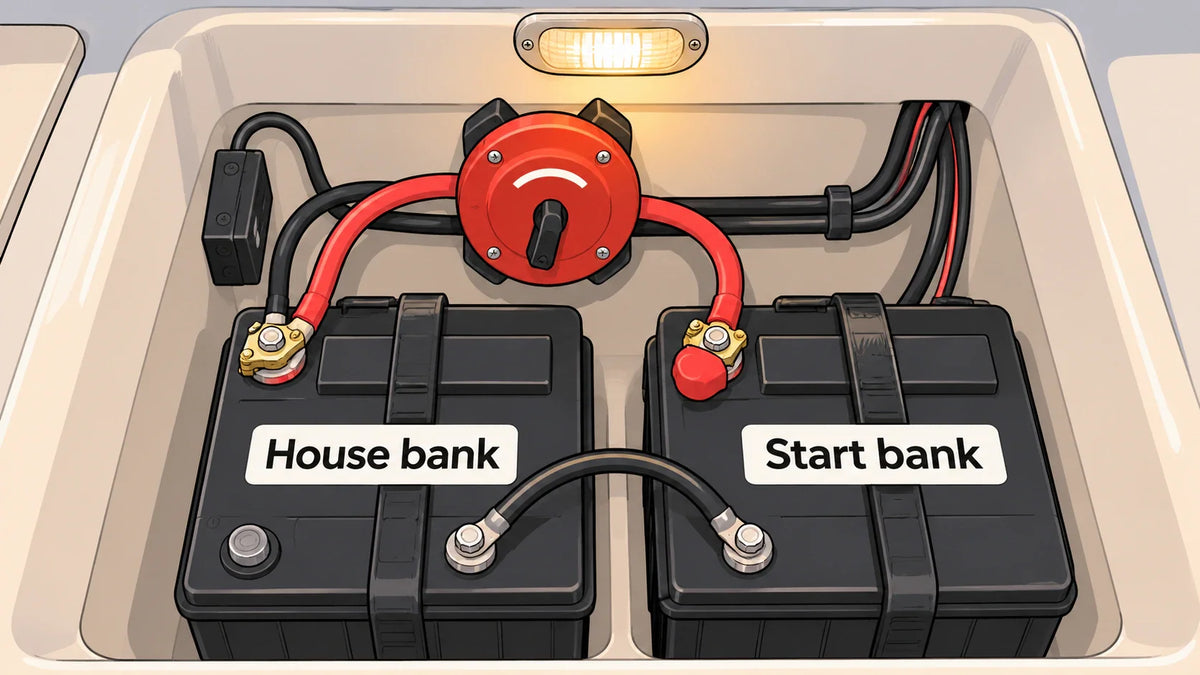

A boat’s starting battery may lose charge during house-bank use because the banks are connected, a load draws from the starting bank, or the starting battery is not being recharged adequately. The actual switch position, wiring and charging arrangement determine which explanation may apply; the symptom alone does not establish a boat-specific fault.
Check the connections and charging arrangement

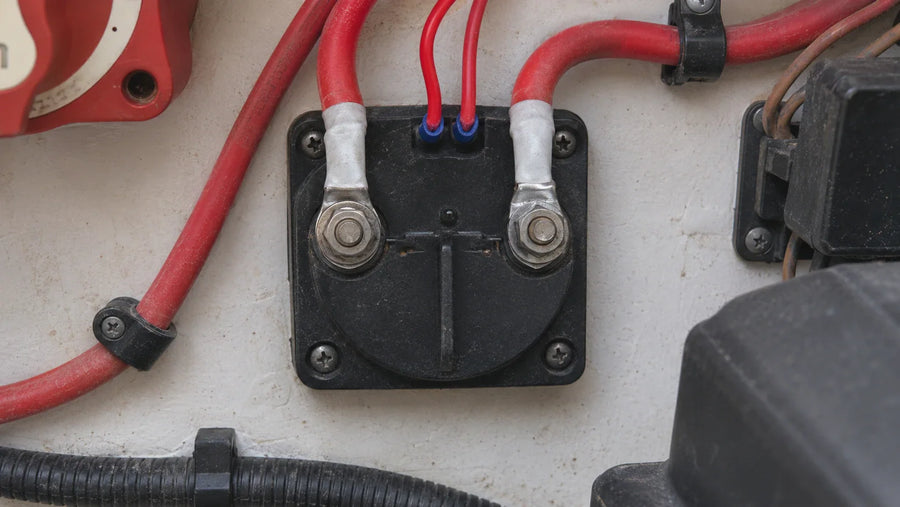
Record the battery selector’s actual position and identify how the switch, banks and charging equipment are wired. On some installations, a BOTH or COMBINE position parallels the banks, allowing loads on either connected circuit to draw from both while they remain combined. Whether that happens depends on the switch design and wiring, as explained in this marine electrical reference on selector switches.
An automatic charging relay may combine banks while charging and separate them after charging stops. The banks could remain connected for a time after the engine or charger stops; the relay’s behavior and delay depend on the installed model. Identify the relay and its indications, and interpret them using its own instructions rather than assuming another relay’s behavior.
Identify loads that remain connected
List the loads connected to each bank, including equipment wired directly to a battery or on the battery side of an isolation switch. Those connections can remain powered when the switch is off. Some equipment, such as an automatic bilge pump, alarm or memory circuit, may be intentionally left on. The same marine electrical reference explains why the switch position alone may not show which loads remain connected.
Compare charge changes with loads and charging

Record the starting battery’s indicated charge over time, along with the selector position, house loads in use and periods when the engine or shore-power charger is operating. These observations help establish when the change occurs and which electrical paths are relevant, but they do not by themselves distinguish current flowing between banks from inadequate recharging.
A charging-system problem can leave a battery undercharged. That is different from current flowing from the starting bank into house loads; government-hosted electrical training material describes the general relationship between reduced charging output and an undercharged battery. Bluetooth monitoring on the Vipboss 12V 105Ah LiFePO4 battery can help track battery state over time.
If the house bank itself will not stay charged, that is a separate issue from current flowing between banks; troubleshooting a boat house battery that will not stay charged covers that problem. When the switch, relay behavior or charging path remains unclear, use the instructions for the equipment actually installed. Have a qualified marine technician handle electrical tests or wiring changes when the applicable procedure is unclear.