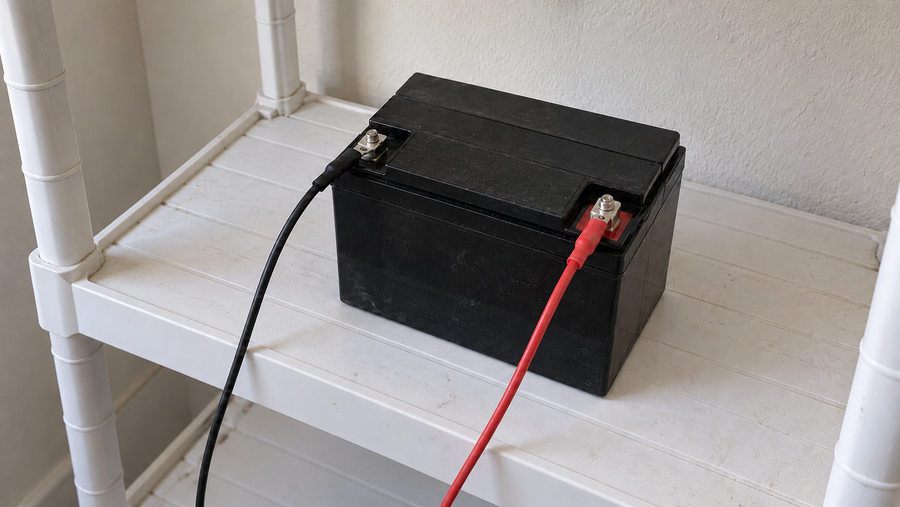

A 51.2V LiFePO4 battery often works in a 48V golf cart because “48V” names the cart’s voltage class, while 51.2V is the battery’s nominal operating voltage. First compare the battery’s full-charge voltage with the controller’s allowed input range. If that range matches, verify the charger, current ratings, accessories, and physical fit; if the controller limit is unknown or too low, do not connect the pack.
Why 51.2V belongs to the 48V battery class
A common LiFePO4 cell has a nominal voltage of 3.2V. A golf-cart pack made from 16 cells in series is therefore rated at:
16 × 3.2V = 51.2V nominal
“Nominal” is a reference value, not the battery’s voltage at every moment. Voltage changes as a battery charges, discharges, and supplies power. A cart labeled 48V is likewise designed around an operating range rather than exactly 48.0V at all times.
That is why a manufacturer can describe the same LiFePO4 battery as a 48V-class pack and rate it at 51.2V nominal. The extra 3.2V on the label does not, by itself, mean the cart is being overvolted.
The number that matters most is the battery’s maximum charging voltage. It must stay within the controller, contactor, voltage reducer, gauge, and other connected equipment limits. Use the exact battery and cart manuals rather than assuming every 48V component accepts the same range.
What determines whether the battery will work in your cart

Check these conditions before treating a 51.2V pack as a drop-in replacement:
- Controller voltage range: Find the pack’s specified charge voltage and the controller’s maximum input voltage. The controller must accept the battery’s entire operating range, including its highest voltage immediately after charging.
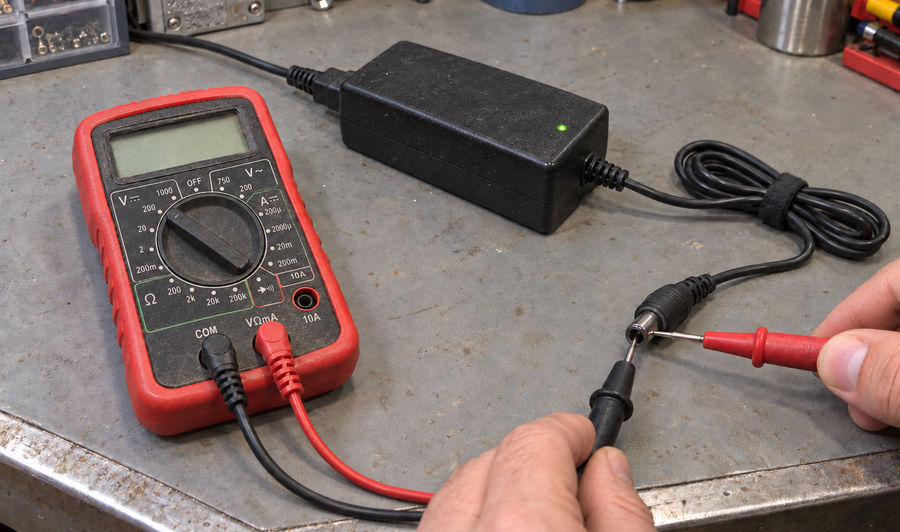
- Correct charger: Use a charger with the charging profile and output limits specified for that battery. A connector that fits does not make an old lead-acid charger suitable for LiFePO4.
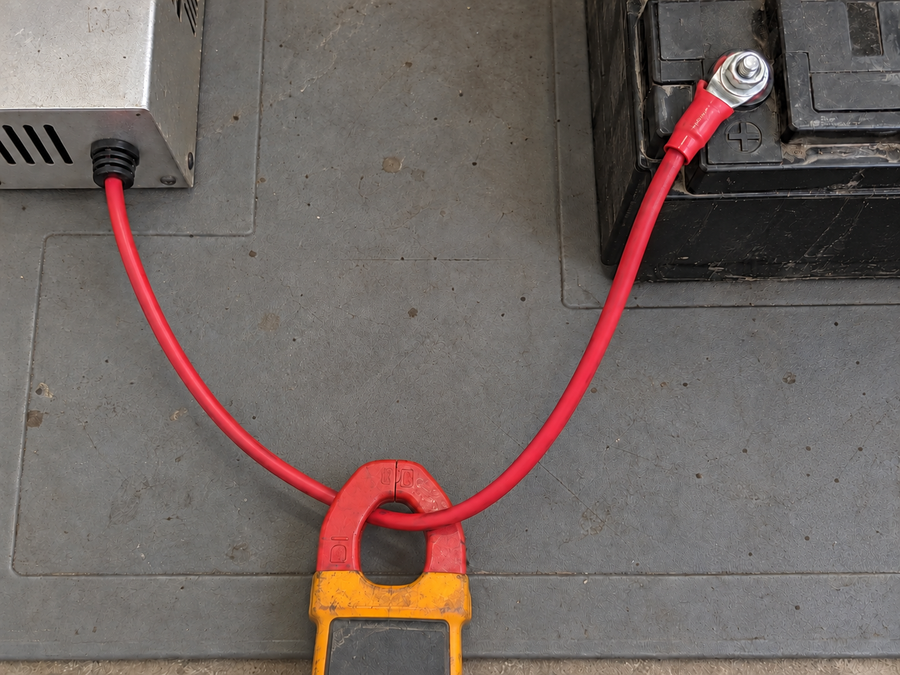
- Enough discharge current: The battery management system, or BMS, must support the controller’s continuous demand and short acceleration or hill-climbing surges. If the BMS limit is exceeded, it may disconnect the battery even when charge remains.
- Compatible accessories: Check voltage reducers, contactor coils, gauges, onboard charging controls, and other equipment connected directly to the pack. A 12V accessory powered through a suitable reducer is different from an accessory exposed to full pack voltage.
- Physical installation: Confirm the case dimensions, terminal positions, cable reach, polarity, ventilation requirements, and hold-down method. A battery is not a safe fit if it can move or if its cables must be stretched.
A stock cart with documented 48V lithium support may meet these conditions with a matched battery and charger. If the controller label or manual does not state its maximum voltage, get that limit from the cart or controller manufacturer before connecting the pack.
A modified cart needs a separate current check. A higher-output controller can demand more current than a battery intended for a stock cart. Compare the controller’s configured battery-current limits with both the battery’s continuous rating and its time-limited peak rating.
Regenerative braking creates another branch. If the motor sends energy back toward a full battery, the controller and BMS must be able to manage that charging current. Confirm the cart and battery instructions cover regenerative operation rather than assuming ordinary discharge ratings settle the question.
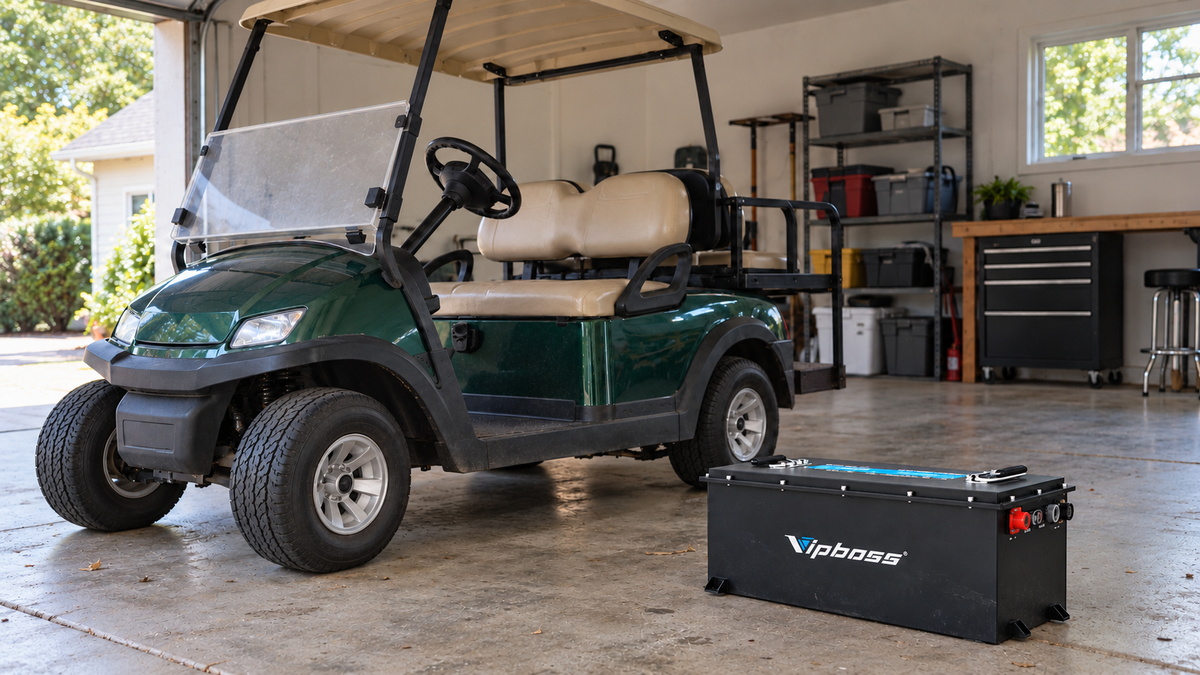
For example, the Vipboss 48V 150Ah lithium conversion kit is a 51.2V pack with a supplied lithium-compatible charger. Its listed limits include 200A maximum continuous discharge and up to 1000A for 3–5 seconds. It is suitable only when those limits cover the cart’s controller demand and its 20.5 × 13.7 × 8.66-inch enclosure can be securely accommodated. The voltage label alone cannot confirm either condition.
If all five checks match, 51.2V is normal for this type of 48V lithium conversion. If any voltage, current, charging, or installation limit is missing, treat compatibility as unconfirmed. Battery cables can deliver dangerous fault current, so have a qualified golf-cart technician handle the conversion when the required ratings or wiring changes are unclear.