A night off the grid should feel calm, not stressful. Power is the part that makes everything else easy: cold food stays cold, lights stay on, laptops charge, and the cabin remains quiet. The goal is a system that stores energy, refills it reliably, and delivers it safely to your appliances. The plan below keeps things practical for first-timers and uses numbers you can check in the field. You will see lithium battery mentioned where it truly matters, since chemistry and management are the backbone of dependable off-grid power.
How Big a 12V Lithium Battery Do You Really Need?
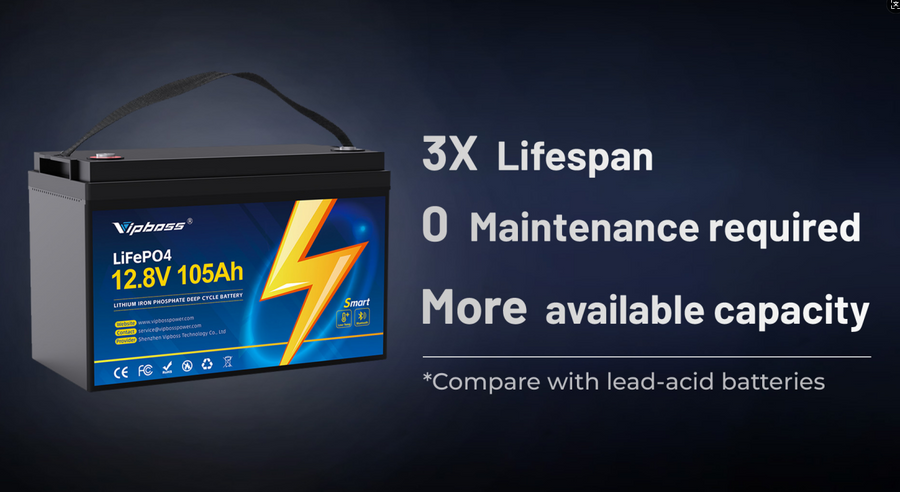
Right-size capacity by translating your day into watt-hours, then into amp-hours. A 12V lithium battery offers higher usable capacity than a similar-size lead-acid, so the final number often lands smaller than people expect.
A simple approach works well. List your common loads, estimate hours per day, and multiply.
| Device | Power (W) | Hours/Day | Energy (Wh) |
| 12 V compressor fridge (average) | 40 | 8–12 | 320–480 |
| LED lights (4 fixtures) | 10 × 4 | 5 | 200 |
| Laptop charger | 60 | 3 | 180 |
| Router, pump, fans total | 30 | 3 | 90 |
This example totals roughly 790–950 Wh per day. For a 12 V system, amp-hours ≈ Wh ÷ 12. At 900 Wh, you are near 75 Ah. Add a buffer for cloudy days and inverter standby, often 20 to 50 percent, so you end up in the 90–115 Ah range. If you plan to run a microwave or induction cooktop, increase capacity and revisit inverter sizing later.
Quick sizing habits
- Work with usable capacity, not only the label. Many LiFePO4 packs support deep discharge without heavy cycle penalties when used within spec.
- Keep headroom for growth. Cooking appliances or a travel coffee machine change the math instantly.
For extended off-grid scenarios like festival camping without hookups, power budgeting becomes even more critical when multiple days of autonomy are required.
Which LiFePO4 Battery Charger Specs Actually Matter on the Road?
Charging shapes daily rhythm and battery life. When choosing a LiFePO4 battery charger, confirm voltage setpoints, current capability, and protective features, then think about how the charger will live in your rig.
Voltage and Current That Make Sense
LiFePO4 charging follows a CC then CV profile. For common 12 V packs, absorption voltage typically sits in the 14.2 to 14.6 V window, with a lower float. Current is usually set by capacity and the schedule you keep. Many owners choose 0.2 to 0.5 C for balanced speed and longevity. A 100 Ah pack with a 20 to 50 A charger feels comfortable on the road.
Float voltage for LiFePO4 packs typically sits in the low-13 V range, and some packs prefer no long-term float. Follow your battery's datasheet.

Protection and Physical Design
Cold charging is the risk to watch. Near 32 °F (0 °C), charge acceptance falls and cell stress rises. Look for low-temperature protection and coordination with the pack's BMS. A "0 V activation" function helps revive a deeply depleted pack under control. Housing, heat dissipation, and connector quality matter in a bouncing, dusty environment.
Using Several Sources Together
Many rigs pair an AC charger with solar and a DC-DC charger from the alternator. The mix lets your lithium battery stay healthy: driving hours top up a bit, solar carries most of the daytime, and the AC charger plus a small generator covers long cloud stretches.
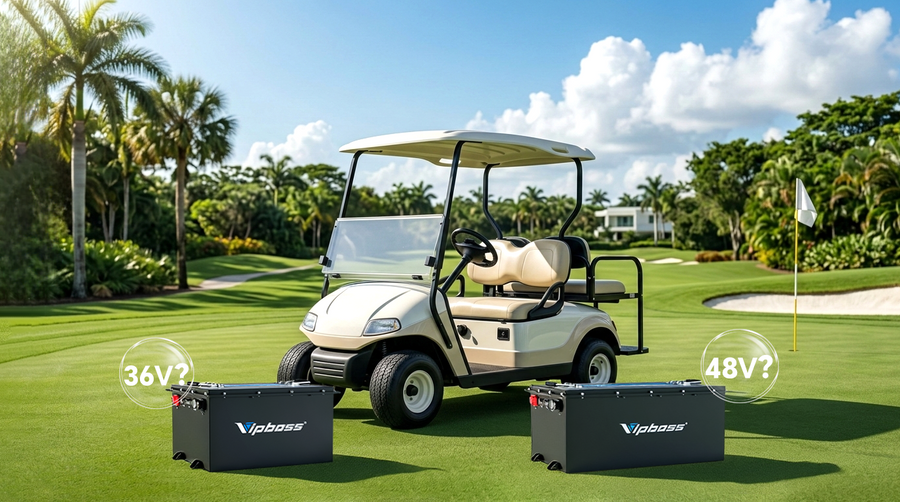
12V vs 48V LiFePO4 Battery: When Should You Step Up?
System voltage follows the load profile and wire runs. Simpler cabins with lights, fans, electronics, and a 12 V fridge stay clean and affordable at 12 V. High-power kitchens or long wire runs push you upward.
Who Stays on 12 V
If your heaviest AC loads are occasional and modest, 12 V keeps parts abundant and troubleshooting straightforward. You can expand capacity later without changing the entire architecture.
Who Benefits from 48 V
Continuous cooking, a larger air conditioner, or a powerful microwave pushes the bus current high. A 48V LiFePO4 battery cuts current for the same power, which eases wire gauge, reduces losses, and helps the inverter run efficiently. The tradeoff is tighter design discipline, plus new component choices. Many owners begin at 12 V, collect real-world data, then migrate after a season once limits are clear.
Solar, Alternator DC-DC, or Generator: The Best Charging Mix for a Lithium Battery System
Each source shines in a different situation. A balanced plan means you do not depend on perfect sun or constant driving.
Solar With An MPPT Controller
Panel nameplate is only a starting point. Think in terms of effective sun hours in your region. A 200 W panel in fair summer conditions might deliver around 700 to 900 Wh across the day. Shade and heat reduce output, so aim for clean airflow and minimal shadowing. MPPT controllers help squeeze energy from variable light. Choosing between flexible and rigid solar panel types affects both installation options and long-term energy yield for battery charging.
Alternator Charging via DC-DC
Direct alternator connections are risky for pack health. A proper DC-DC charger limits current and isolates systems. At 30 A into 12 V, one hour of travel can return roughly 360 Wh, which is meaningful when stacked across a week of short drives.
Portable Generator for Poor Weather
When forest cover and storms line up, a small inverter generator plus your AC charger is the safety net. Run it away from the cabin, manage carbon monoxide risk with alarms, and give your lithium battery a controlled recovery charge while you enjoy a dry evening.
Inverter & AC Distribution Sizing for a Lithium Battery Bank
The inverter decides what "home-like" feels like in the cabin. Sizing it safely and distributing AC loads wisely avoids nuisance trips and protects appliances.
Pick A Size That Handles Startup
Plan for a surge. Motors and compressors can draw several times their running watts for a moment. A conservative rule is to select an inverter that can handle about double the running load of your largest device combination. If the microwave is 1,200 W and you also want the coffee maker available, consider a 2,000 to 3,000 W pure sine unit. Account for idle consumption in your daily energy budget. Many 2 kW pure sine inverters draw 20 to 40 W at idle, which can add 480 to 960 Wh per day if left on continuously.
Plan Branch Circuits and Protection
High-draw appliances belong on dedicated outlets with their own breakers. Follow the inverter manufacturer's neutral and ground instructions. Use weather-appropriate outlets and GFCI where exposure exists. This level of planning keeps a lithium battery happy by avoiding sudden, avoidable overloads.
Safe Wiring for LiFePO4: Fuses, Breakers, Cable Gauge, and Grounding
Strong wiring practice is the cheapest insurance you can buy. Many field issues come from loose lugs, undersized cables, or missing overcurrent protection.
Core Rules That Keep You Safe
- Place the main fuse or breaker close to the battery positive, typically within a short reach.
- Size overcurrent devices by expected continuous current, then apply a safety factor of around 1.25, and confirm with device specifications.
- Use correctly sized copper lugs and proper crimp tools, add heat-shrink, and perform a pull test before the install goes into service.
- Control voltage drop on high current runs. Target around 3 percent, then size cable by current and round-trip length using a reputable voltage-drop chart or calculator.
- Bond equipment and busbars correctly, secure cables against movement, and label everything so roadside fixes stay calm.
A Simple Gauge Example
At roughly 100 A on short main runs, 2 AWG is a common starting point. As the current approaches 200 A or the distance grows, 2/0 AWG becomes typical. Always verify with current, length, and voltage drop math. Solid wiring lets a lithium battery deliver power without hot spots or mystery alarms.
Cold-Weather & Storage Tips: Protecting and Charging a Lithium Battery Below Freezing
Cold affects charging most of all. Discharge usually continues at reduced output, and charging needs extra care near freezing.
Charging Near or Below Freezing
Avoid full-rate charging near 32 °F. Warm the battery compartment first or use a heated enclosure, then resume at a modest current. If your monitor shows odd behavior during a cold snap, check the temperature before chasing voltage or current numbers. Unless your pack has internal heating and a BMS that explicitly allows it, avoid charging at or below 32 °F (0 °C).
Storage and Daily Care
For long storage, aim for a mid-state of charge in a cool, dry place, and schedule periodic checks. During camping season, keep a brief daily log: solar harvested, hours of driving, inverter use time, and any quirks you notice. Patterns emerge quickly and help you tune your lithium battery plan before problems grow. For campers with medical devices like CPAP machines, accurate runtime calculations become essential for health-critical equipment.
Quick Pre-Trip Checklist
- Main fuse or breaker position confirmed near the battery positive
- Lugs tight, cable runs secured, abrasion points protected
- DC-DC charger settings verified, alternator isolation confirmed
- MPPT connections clean, panel leads strain-relieved
- Inverter self-test passed, idle draw noted in energy plan
- Carbon monoxide alarm working, extinguisher accessible
- Spare connectors, fuses, MC4 tools, and quality tape packed
Start Simple on 12V, Leave Room for a 48V LiFePO4 Battery Upgrade
A dependable off-grid system grows with you. Begin with a clean 12 V core, an honest capacity estimate, an inverter sized for your real meals and coffee, and wiring that would make an electrician smile. Keep a light, repeatable charging routine that blends solar, DC-DC, and an AC backup when storms settle in. When cooking and climate control become daily essentials, move toward higher voltage and the efficiency that comes with it. With careful logs and a little patience, your lithium battery setup stays quiet, predictable, and ready for long weekends or long seasons.

FAQs about Lithium Batteries
Q1: Can I mix lithium and lead-acid on the same battery bank?
Do not parallel lithium with lead-acid. Their resting voltages, internal resistance, and charge acceptance differ, causing imbalance and chronic undercharge. Keep chemistries on separate banks. If a shared charge source is unavoidable, isolate through a DC-DC charger and match capacity and age within each bank.
Q2: What fuse size fits a 3 kW inverter on 12 V systems?
3000 ÷ 12 ≈ 250 A continuous. Add efficiency and surge margin, then choose a Class-T fuse around 300–400 A mounted close to the battery positive. Pair with appropriately sized cabling, usually 2/0 to 4/0 on longer runs, and confirm manufacturer guidance.
Q3: Do I still need a shunt monitor if my BMS has Bluetooth?
Yes. A Bluetooth BMS reports cell data, but state-of-charge over time is best tracked by a shunt doing coulomb counting. Calibrate after a full charge, enter true capacity and charge efficiency, and use a near-flat LiFePO4 Peukert value around 1.05.
Q4: How large should my solar array be for boondocking trips?
Size from your energy budget and sun hours. Panel watts ≈ daily Wh ÷ effective sun hours ÷ 0.75 to cover heat and controller losses. Use a series to raise the MPPT voltage and reduce the cable size. In partial shade, use parallel strings with proper fusing.
Q5: How do I winterize the power system for storage?
Charge to 40–60 percent, switch off the inverter, and remove parasitic loads with a master disconnect. Store cool and dry. Top up every two to three months. Never charge frozen cells. Keep smoke and CO alarms active near any generator locations.