Living off the grid feels powerful. Your lights, fridge, and tools run on energy you produce and store yourself. When things go wrong, though, the problem often traces back to the battery bank. The right off-grid battery keeps power flowing through cloudy weeks and busy seasons, while a poor choice means constant maintenance and early failure. Below you will find a clear look at common off-grid batteries, why LiFePO4 has become the favorite, and how to size a system that fits real life.
What Is an Off-Grid Battery System?
An off-grid battery system is the storage core of a stand-alone power setup. Solar panels, a wind turbine, or a generator create electricity, and the bank stores that energy so you can run appliances at night or during bad weather.
In most small homes and cabins, the system includes:
- An energy source, usually solar
- A charge controller to manage voltage and current
- A battery bank that stores DC energy
- An inverter that supplies AC power to the house
How Does an Off-Grid Battery System Work?
On sunny days, solar panels feed the charge controller, which pushes current into the batteries until they reach a safe full level, then tapers off. Later, the inverter draws power from the bank to run your loads. Four numbers shape performance: capacity, depth of discharge, cycle life, and efficiency. Different chemistries trade these factors in very different ways. For those designing a new system, choosing between flexible and rigid solar panels can significantly impact installation flexibility and long-term output.

Which Off-Grid Batteries Are Commonly Used for Off-Grid Living?
Most off-grid batteries for homes and cabins use one of four chemistries: flooded lead-acid, sealed AGM, gel, or lithium iron phosphate (LiFePO4). Nickel–iron appears in a few specialist systems, but rarely in mainstream projects.
Flooded Lead-Acid Deep-Cycle Batteries
Flooded deep-cycle batteries are cheap and familiar. Many products deliver around 300 to 500 cycles at roughly 50 percent depth of discharge. Pushing them deeper cuts that number sharply. They also need watering, equalization charging, and good ventilation. In practice, many designers treat only half of the rated capacity as safely usable for a long-term off-grid battery bank.
Sealed AGM and Gel Batteries
AGM and gel batteries trap the electrolyte inside mats or gel, which removes most routine maintenance. Their cycle life is usually better than flooded designs, often a few hundred cycles at 50 percent depth of discharge, with some gel batteries going higher. They remain heavy and bulky, and still age quickly if cycled too deeply. Many households that begin with AGM eventually plan a move to lithium once replacement time arrives.
LiFePO4 Battery Packs for Modern Off-Grid Storage
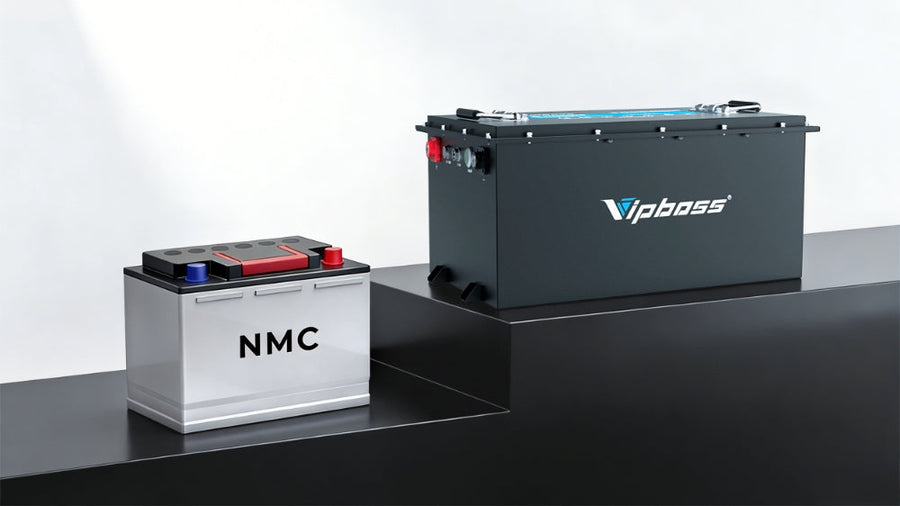
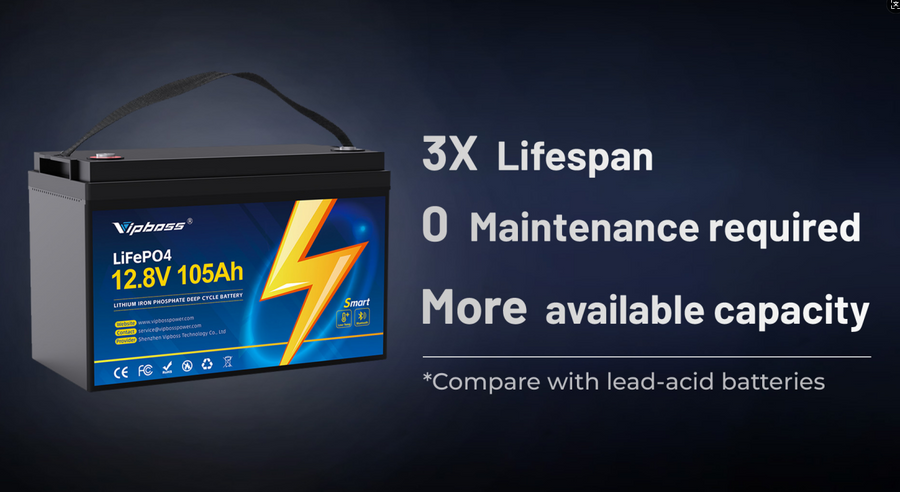
LiFePO4 battery packs sit at the center of most modern off-grid battery systems. Typical ratings are several thousand cycles at about 80 percent depth of discharge when the packs are kept inside their specified voltage and temperature limits. Round-trip efficiency generally stays high, so a larger share of what your panels produce makes it to your outlets. The packs are lighter and more compact than comparable AGM banks, which helps in vans, RVs, boats, and small utility rooms.
Nickel–Iron and Other Niche Options
Nickel–iron batteries can survive very deep cycling and have reputations for extremely long life. The tradeoffs are low efficiency, high weight, and high upfront cost. For most homeowners, they make sense only in unusual projects. For typical cabins, homesteads, and mobile homes, LiFePO4 or lead-acid options cover the real-world needs more cleanly.
Why Are LiFePO4 Batteries the Best Batteries for Off-Grid Power?
Many cabins still run on lead-acid, especially when budgets are tight. As soon as you expect daily cycling over many years, a LiFePO4 battery bank usually gives a better experience and a lower cost per delivered kilowatt hour.
Cycle Life and Total Usable Energy
Flooded and AGM batteries often need to stay near 50 percent depth of discharge to reach their rated cycle life. LiFePO4 banks, in contrast, can be used much deeper while still delivering thousands of cycles. If two banks share the same nameplate capacity, the LiFePO4 option typically delivers far more usable kilowatt hours before it wears out, which matters a lot in batteries for off-grid power.
Safety, Maintenance, and Everyday Use
LiFePO4 chemistry has strong thermal stability and does not vent liquid acid. You avoid corrosion and reduce ventilation needs, which makes indoor placement easier. Day to day, owners focus on correct charge settings, clean terminals, and basic monitoring. There is no watering schedule or equalization routine to manage.
Weight, Space, and System Design
A deep-cycle lithium bank often weighs roughly half of a similar lead-acid bank and takes less space. That gives you more freedom in layout and makes it easier to stay within axle limits in mobile rigs. For many RV and van owners, this alone is enough to treat LiFePO4 as the default off-grid battery choice.
How to Size an Off-Grid Battery Bank for Your Daily Power Needs
Even the best chemistry disappoints if you undersize or wildly oversize the bank. A simple three-step process keeps sizing grounded in reality.
Step 1: Estimate Daily Energy Use
List your major loads. For each one, record its power draw in watts and typical hours of use per day. Multiply watts by hours to get watt-hours. Add everything and divide by 1,000. That daily kilowatt-hour number is the foundation of your off-grid battery system.
Step 2: Choose Days of Autonomy and Working Depth of Discharge
Decide how many low-sun days you want the bank to cover without running a generator. Many homes aim for one to three days. For lead-acid, designers often use around 50 percent depth of discharge to protect cycle life. LiFePO4 banks commonly operate in the 70 to 80 percent range when used as batteries for off-grid power.
Step 3: Calculate Your Battery Capacity (kWh and Ah)
Multiply your daily kilowatt hours by the number of autonomy days, then divide by your working depth of discharge. That gives you the required stored energy in kilowatt hours:
Required capacity (kWh) = Daily load (kWh) × Autonomy days / Depth of discharge
Example:
- Daily load = 5 kWh
- Autonomy days = 2
- LiFePO4 working DoD = 0.8
Calculation:
Required capacity (kWh) = 5 × 2 / 0.8 = 12.5 kWh
Next, convert this to amp hours using your system voltage:
Battery capacity (Ah) = Required capacity (kWh) × 1000 / System voltage (V)
Using the same example on a 48 V system:
Battery capacity (Ah) = 12,500 / 48 ≈ 260 Ah
Round up slightly to match real battery sizes and keep a small safety margin for future loads and battery aging.

What Factors Affect Off-Grid Battery Lifespan and Reliability?
Battery life depends at least as much on use as on chemistry. A few habits make the difference between an early replacement and a bank that runs for many years.
Depth of Discharge and Charge Profile
Deeper cycling shortens life for every battery type. For lead-acid, stopping around 50 percent depth of discharge instead of 80 percent can double the cycle count in many cases. LiFePO4 already offers long life, but shallow cycling still helps. Charge stages and voltages should follow the manufacturer's profile so the bank is neither undercharged nor overcharged.
Temperature and Environment
High temperatures speed up aging, while very low temperatures complicate lithium charging. Locating the bank in a clean, dry, temperature-controlled space does a lot to protect capacity. Off-grid batteries last longer when they are not baking in a metal shed in midsummer or sitting unprotected in deep winter.
BMS, Inverter Settings, and Integration
Lithium banks rely on a battery management system that disconnects the charge or load when cells approach their safe limits. The inverter and charge controller need voltage and current settings that work with that protection. Once these devices agree on limits, the off-grid battery system behaves in a much more predictable way.
How to Choose the Right Batteries for Off-Grid Power in Different Scenarios
Different lifestyles point to different choices, even if the same roof space and sun hours are available.
Weekend Cabin or Occasional Retreat
A basic AGM or gel bank can still work for a small cabin that sees a few weekends of use each month. Limited cycling keeps wear under control and keeps upfront costs low. If you expect heavier use in the future, moving directly to a small LiFePO4 bank avoids the cost and hassle of an early upgrade.
Full-Time Off-Grid Home or Homestead
A full-time off-grid home runs fridges, pumps, communication gear, and comfort loads day after day. That pattern highlights the weaknesses of lead-acid. In this case, a LiFePO4 battery bank almost always gives a better mix of usable capacity, efficiency, and long-term cost. For many homesteads, it has become the default type of off-grid battery.
RVs, Vans, Boats, and Tiny Homes
Mobile systems chase low weight, compact size, and fast charging from alternators or shore power. LiFePO4 fits that target very well. A compact lithium bank, sized and fused correctly, lets you run fans, lighting, and refrigeration without hauling a stack of heavy lead-acid blocks everywhere you go.
Build a Reliable Off-Grid Battery System for the Long Term
Choosing a battery bank for off-grid use shapes every day you spend away from the utility grid. Flooded and sealed lead-acid batteries still have a place in low-budget, low-cycling setups such as weekend cabins. For most people who plan to live off-grid full-time, LiFePO4 stands out as the most balanced option, with long cycle life, strong safety performance, and good efficiency. Once you understand your daily use, pick a chemistry that fits your pattern, and size the bank around realistic autonomy, your off-grid batteries can settle into the background and quietly support the life you want.
FAQs
Q1: How important is the battery warranty for an off-grid system?
A long, clearly written warranty is critical. Look for coverage that specifies years and cycle count, includes off-grid use, and names allowable voltage and temperature ranges. Strong after-sales support and easy access to replacement modules matter as much as headline years.
Q2: Can I mix different battery brands or chemistries in one bank?
In almost all cases, mixing is a bad idea. Different chemistries and even different brands have unequal internal resistance and charge profiles, so they share current unevenly. This can shorten lifespan and confuse battery management. Build each bank from matched modules only.
Q3: Are second-life EV batteries a good choice for off-grid storage?
Second-life EV packs can be cost-effective but require careful engineering. Their remaining capacity and health vary, they often need custom enclosures and BMS integration, and local codes may demand certified assemblies. They fit experimental projects better than first-time DIY homesteads.
Q4: What fire and safety standards should I consider for off-grid batteries?
Check local electrical code and any requirements for UL-listed or IEC-certified equipment. Use noncombustible mounting surfaces, clear working space, proper fusing, and disconnects. For larger lithium banks, many inspectors prefer purpose-built enclosures and ventilation to manage rare but high-energy fault events.
Q5: How do monitoring and data logging help with off-grid battery health?
A good monitoring system tracks voltage, current, state of charge, and temperature over time. Trends reveal issues like chronic undercharging or unexpected standby loads long before failure. Logged data also helps fine-tune charge settings and justify warranty claims if problems arise.