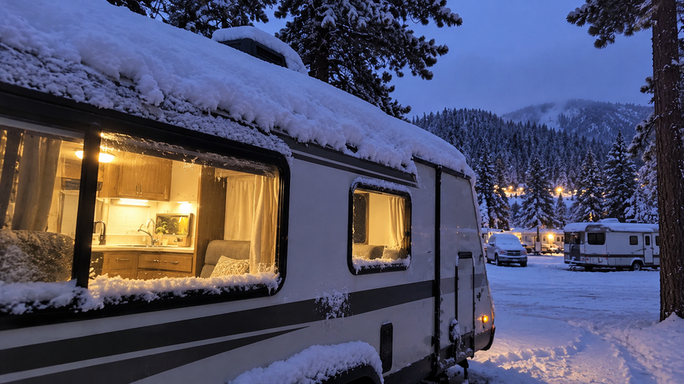
For winter RV camping, choose a LiFePO4 battery with low-temperature charge protection, enough capacity for your loads, and charging equipment compatible with the battery’s requirements. The Vipboss 12V 105Ah Bluetooth LiFePO4 Lithium Battery is one example with built-in low-temperature charge protection.
Why low-temperature charging matters
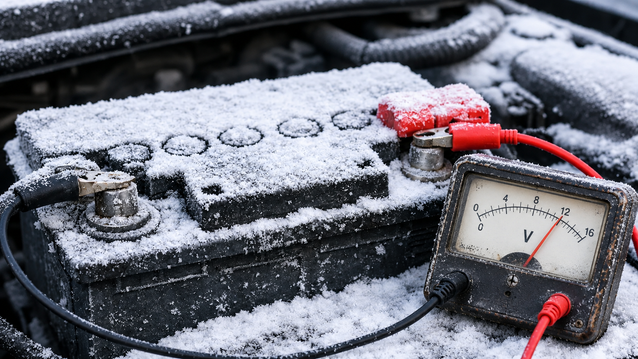
Discharging and charging are different considerations. A battery may be able to power RV loads in cold weather, while charging may be unavailable when the battery’s low-temperature protection prevents it. Charging should follow the battery’s documented operating limits. No specific charge-enable or recovery temperature is listed for this model.
Each shore-power charger, solar controller, alternator charger, or DC-DC charger should be compatible with the battery’s LiFePO4 charging requirements and documented low-temperature protection. Configure the complete charging setup accordingly rather than assessing the battery separately from its charging sources.
What to look for in a winter RV battery

Usable capacity: Choose enough stored energy for the loads you need during cold periods when charging may be unavailable. Rated energy is a useful starting point, but runtime depends on your appliances, inverter use, temperature, and access to charging.
Temperature-aware protection: A battery-management system, or BMS, is an important part of a lithium-battery selection. For RV lithium-battery applications, the RV Industry Association identifies protection for high and low voltages and temperatures, high current output, and cell balancing as relevant protection functions. This general guidance does not independently validate any particular battery.
Compatible charging equipment: Every charging source should match the battery’s LiFePO4 charging requirements and documented low-temperature protection. Review shore power, solar, alternator charging, and DC-DC charging together because the complete setup determines how the battery can be charged in winter.
Electrical and physical fit: Confirm that the battery voltage, terminals, available space, wiring, and system layout suit the RV. Capacity alone does not determine whether a battery fits the installation.
How the Vipboss 12V 105Ah fits a winter RV setup
The Vipboss battery is a 12.8V, 105Ah LiFePO4 battery with 1,344Wh of rated energy. It includes a built-in 100A smart BMS, Bluetooth monitoring, and low-temperature charge protection. These features address the main winter-selection criteria of stored energy, battery-management capability, monitoring, and low-temperature charging protection.
The battery measures 12.95 × 6.77 × 8.42 inches, uses a Group 31 form factor and M8 terminal bolts, has an IP65 enclosure, and weighs approximately 24.2 pounds. Use those details when comparing the battery with the RV’s available space, mounting arrangement, cables, and terminals. It supports configurations up to 4S4P, which is relevant when planning a larger battery bank with compatible system equipment.
Its recommended charging current is 21A, with a 14.2–14.6V LiFePO4 charging profile. Configure compatible charging sources for those requirements and for the battery’s documented low-temperature protection.
Winter-use checklist
- Choose enough battery capacity for your RV loads during periods when charging may be unavailable.
- Confirm that shore-power, solar, alternator, and DC-DC charging sources are compatible with the battery’s LiFePO4 requirements and documented low-temperature protection.
- Check the battery voltage, charging equipment, cables, terminals, protection devices, and mounting space as one complete RV installation.
- For the Vipboss battery, compare the Group 31 size, 12.95 × 6.77 × 8.42-inch dimensions, M8 terminals, and approximate 24.2-pound weight with the available installation space.
- Use the product’s stated 21A charging-current recommendation and 14.2–14.6V LiFePO4 profile when configuring compatible charging sources.
- Allow for the possibility that charging may be unavailable when low-temperature protection prevents it, and plan capacity accordingly.
Frequently Asked Questions
How much battery capacity do I need for winter RV camping?
Add the daily energy use of heating controls, lights, refrigeration, electronics, pumps, and other loads, then multiply by the number of days between reliable charges. Include a reserve for cold-related performance loss and periods when charging is blocked.
Is a heated LiFePO4 battery necessary for winter RV use?
Not always. It is most useful when the battery will regularly be below its charging limit and the installation can power and control the heating safely. Low-temperature charge protection alone stops charging but does not warm the battery.
Do the RV alternator and solar controller need LiFePO4 settings?
They should be compatible with the battery's required charging profile and low-temperature behavior. Verify voltage, current, temperature control, wiring, and protection for every charging source rather than assuming one charger setting covers the whole RV.