
This article explains when self-heating LiFePO4 batteries are worth using for winter camping around -4°F and when they are unnecessary.
At around -4°F, self-heating LiFePO4 batteries can be a genuine safeguard against dead power, but only if you match them to the right camping style, loads, and system design. In the wrong setup, they are expensive overkill; in the right setup, they keep critical heat and electronics running when ordinary batteries shut down.
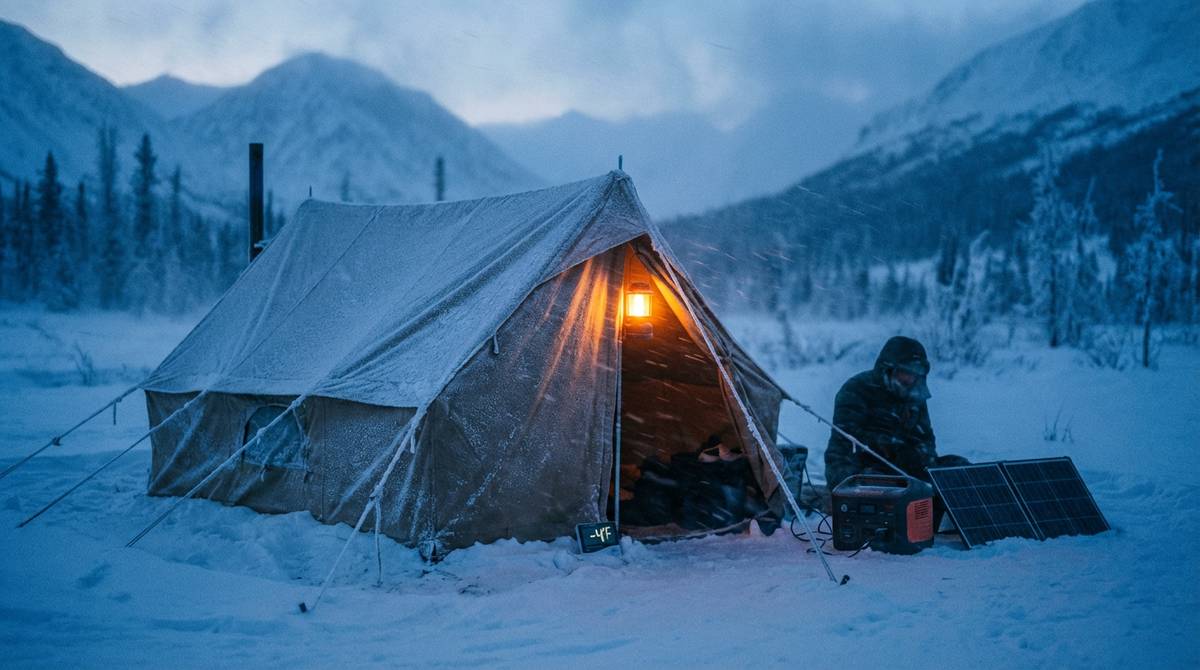
You crawl into your sleeping bag warm, but by 3:00 AM the wind is howling, the tent walls are rimed with frost, and your heater fan has gone silent because the “smart” lithium battery outside froze and stopped accepting a charge. Many winter campers have learned that at deep subzero temperatures, warmth and power both become systems you must design, not just gear you buy, a lesson echoed in detailed cold-weather guidance from winter camping educators and gear experts. REI’s winter camping basics and university-backed winter camping guides show that when conditions dive toward -4°F, small design mistakes compound fast, so this article walks through where self-heating LiFePO4 packs really shine, where they do not, and how to build a complete cold-weather power strategy around them.
What -4°F Really Means for You and Your Gear
At roughly -4°F, the cold is not just uncomfortable; it is medically and mechanically punishing. The National Weather Service highlights that frostbite and hypothermia risk jump quickly in extreme cold, especially when wind and moisture enter the picture, and recommends conservative exposure, careful layering, and redundancy in heat sources and shelter when winter storms and arctic air move in. Their winter safety guidance emphasizes that staying dry, limiting skin exposure, and having a fallback if your primary heat fails can be the line between an unpleasant night and a dangerous one.
Winter camping educators point out that nearly every task in deep cold takes longer and costs more energy, from pitching a tent on snow to cooking, melting water, and even bathroom breaks, which means your body needs more calories and your systems must be more forgiving of delays and mistakes. The Outdoor Action winter camping guide notes that travel and camp chores in winter can easily take about twice as long as in summer, and that wet clothing or sweat-soaked layers can multiply heat loss and hypothermia risk. If your battery system is marginal and your power-dependent heater or water pump dies at 3:00 AM, you may not have spare time, dexterity, or weather windows to recover gracefully.
Human insulation is still the first line of defense. A well-planned three-layer clothing system with a moisture-wicking base, insulating midlayer, and weather-blocking outer shell keeps your own “engine” efficient so you lean less on electrical heat and fans for survival. Layering primers for cold adventures stress that wool or synthetic base layers that move moisture, solid insulating pieces like fleece or down, and a windproof outer shell are the foundation of safe winter trips, while cotton pieces are a liability that hold cold moisture next to your skin. Multiple winter camping resources echo that if you get the clothing and shelter wrong, no battery upgrade will save the trip.
For sleep, ground insulation and bag selection are usually more important than any electric gadget. Detailed winter camping skills pieces explain that a sleeping bag rated well below the forecast low, combined with a high-R-value pad or even two stacked pads, often makes the difference between shivering and genuinely resting. Cold-weather camping guides and backpacking sleep-system deep dives recommend pads with combined R-values around 4 or higher for serious cold and highlight tactics like using hot water bottles in the bag to boost perceived warmth. That context matters, because a self-heating battery is there to protect your ability to run systems, not to compensate for an underbuilt sleep setup.

How LiFePO4 Batteries Behave in Deep Cold
LiFePO4 chemistry is outstanding for off-grid campers because it tolerates deep discharge well, delivers many cycles, and is relatively safe. The catch is cold charging. Below freezing, charging LiFePO4 cells can permanently damage them, so most modern batteries include a battery management system (BMS) that blocks charge when they are too cold. At about -4°F, a non-heated LiFePO4 pack stored in an uninsulated exterior box may still run your loads at reduced capacity, but as soon as you try to charge it with solar or alternator current, the BMS will often say “no” until the cells warm above freezing.
That behavior matters if your winter system depends on overnight or morning recharging. Suppose you arrive at camp with a half-drained battery and count on a few hours of solar in weak winter sun to top it up while you ski or snowshoe. If the pack sits in an exposed compartment and never warms above freezing, the solar controller can be happily sending current, but the battery will refuse to accept it. After a couple of days, your “large” lithium bank can fall flat even while you technically have generation available.
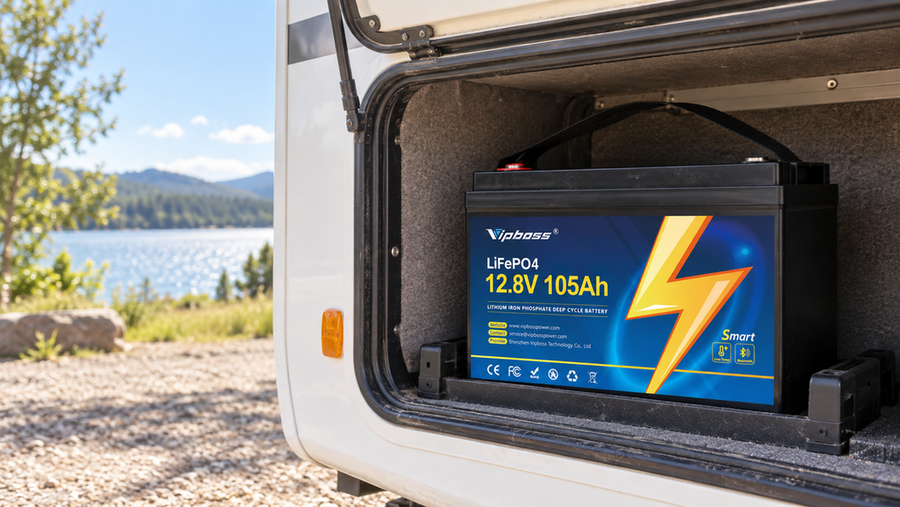
In contrast, if you mount the battery inside a van, trailer, or well-insulated battery box that spends most of the time above freezing thanks to interior heat and waste warmth from cooking, the cells often stay warm enough to accept charge without any special feature. That is the first big decision point: whether your battery will actually live at -4°F or merely be exposed to that air temperature while you sleep.
What “Self-Heating LiFePO4” Really Does
Self-heating LiFePO4 batteries add a heating element and control logic to that normal BMS behavior. When the cells are too cold to accept charge and you connect a charging source, the battery routes some of that incoming energy to internal heaters until the cells reach a safe temperature, then switches over to normal charging. Some designs can also draw on their own stored energy to warm themselves, though using stored energy to preheat is usually something you want to minimize.
In practice, this means a few key things. First, the self-heating feature usually protects the battery during charging rather than keeping it warm 24/7; if you park a trailer for days in -4°F conditions with no inputs, the pack will equilibrate toward ambient regardless of special features. Second, heating uses real energy. If the internal heaters draw on the order of tens of watts, heating for an hour can easily consume a noticeable fraction of a smaller battery’s usable capacity, especially in repeated cycles. Third, the heating logic depends on your charging source being strong enough to both power the heaters and still leave meaningful current for charging once the cells are warm.
A simple estimate illustrates the tradeoff.

A 100 amp-hour, 12-volt LiFePO4 battery stores about 1,200 watt-hours of energy. If the heater in a self-heating model draws roughly 60 watts and needs half an hour to warm the cells on a bitter morning, that costs about 30 watt-hours, or around 2–3 percent of the battery’s capacity. Even if heating took an hour, you are still trading less than about 5 percent of your stored energy for the ability to accept a full, safe recharge, which is usually a fair trade on multi-day trips.
Self-Heating vs Standard vs “Old School” Batteries
The camping world is already full of powered warmth aids, from heated sleeping bags to electric blankets. One instructive example is an actively heated sleeping bag design that senses outside air temperature and modulates internal heating coils to hold the bag at a user-set comfort range, powered by solar-charged batteries with safety cutoffs to avoid overheating. The Cozy Cocoon concept shows how targeted electric heat paired with insulation can hold a steady interior temperature in very low ambient temperatures. Self-heating LiFePO4 batteries are conceptually similar: they selectively spend energy to keep the “core” of your power system in its safe operating zone.
A compact comparison helps frame where they fit alongside standard LiFePO4 and conventional lead-acid or AGM batteries.
Option |
At ~-4°F: discharge |
At ~-4°F: recharge safety |
Weight and capacity notes |
Best suited use case |
Standard LiFePO4 |
Reduced capacity |
Must be warmed externally |
Light, high usable capacity |
Interior-mounted systems that rarely see subfreezing cells |
Self-heating LiFePO4 |
Reduced capacity |
Heaters bring cells up before charge |
Slightly heavier, heater overhead |
Exterior or partially exposed installs in deep cold |
Lead-acid / AGM |
Reduced capacity |
Can charge, but sluggish and hard on battery life |
Heavier, less usable capacity |
Budget systems where weight and depth-of-discharge matter less |
The key point is that self-heating packs are not magic; they are a structural workaround to a very real limitation of lithium chemistry in the cold.
When Self-Heating Packs Are a Genuine Lifesaver
In genuinely harsh cold, self-heating LiFePO4 batteries are most valuable when your safety and comfort depend directly on electric systems that must be recharged during the coldest periods.
One common example is the camper or small RV running a forced-air heater whose fan, electronics, and fuel pump are all powered from a house battery. If that battery is mounted in an exterior compartment that sits near ambient, a few nights around -4°F can be enough to drop cell temperatures below freezing. In that state, many lithium batteries will happily run the heater until the low-voltage cutoff, but they will refuse to recharge from your alternator or solar the next morning. By the third or fourth day, you can end up with a dead heater and no safe way to restore power beyond emergency driving or starting a generator.
Winter camping guides repeatedly highlight that trip tasks take longer in cold and that you must build generous safety margins for core systems like heat, shelter, and water. Winter camping education from Princeton’s Outdoor Action program and REI’s winter camping overview both emphasize pre-trip planning, backup plans, and redundancy in shelter and heat. A self-heating LiFePO4 battery wired into such a system effectively increases the robustness of your heat source, because it allows you to recharge reliably once you bring in generation, even when the pack itself spends long stretches in deep cold.
Another scenario is using a battery-powered CPAP, oxygen concentrator, or other critical medical device at a remote winter campsite. In that case, your acceptable risk tolerance is lower. If the battery lives in an unheated vehicle or vestibule, having it refuse to charge because its cells are below freezing can turn a minor planning mistake into a serious health concern. In these edge cases, paying more for a self-heating LiFePO4 with appropriate capacity and redundancy is much closer to a lifesaving decision than a convenience.

Finally, consider trips where snowmelt is your only water source. Melting snow for water is energy-intensive and time-consuming, a fact highlighted by winter backcountry guides that budget extra stove fuel and time for this task on cold trips. Winter camping basics underline that you must plan extra fuel and power any time you rely on snowmelt. If your system uses an electric pump and ignition plus lighting and GPS units all on one battery bank, preserving your ability to recharge that bank at -4°F directly supports your ability to make water, cook, and navigate.
When Self-Heating Packs Are Mostly Overkill
There are also many situations where self-heating LiFePO4 batteries are closer to a gimmick than a necessity at -4°F.
If your battery already lives inside a heated or semi-heated space, such as under a bed platform in a van, inside the cabin of a small RV, or in an insulated battery box that shares air with your sleeping area, the cells may rarely see sustained subfreezing temperatures even while the outside air is extremely cold. In those setups, body heat, space heating, and heat from cooking all tend to stabilize cabin temperatures closer to human comfort ranges, especially overnight when you are actively heating. A standard LiFePO4 with a competent BMS and good insulation around the battery compartment can often charge and discharge safely without any special features.
Cold-weather camping experts consistently stress that your first investments for low temperatures should be in insulation and passive protection, not in gadgets. Cold camping techniques and skills articles on winter sleep systems recommend better pads, more loft in the bag, and efficient use of hot water bottles or chemical warmers long before turning to powered heating solutions. When you translate that principle to your power system, it means insulating battery compartments, routing ducted warm air through them when you heat the cabin, and simply positioning batteries where they share your relatively warm air instead of hanging underneath the vehicle or on the tongue of a trailer.
On shorter trips of one or two nights, even exterior-mounted LiFePO4 packs often perform without drama if you start with them fully charged and manage loads conservatively. You can treat them as large “thermal flywheels”: they begin the trip warm, cool slowly over the first night, and still accept some charge the next day when the sun and daytime highs work in your favor. In that regime, paying extra for self-heating features adds weight and complexity without addressing your real risk, which is usually inadequate clothing, sleep system, or trip planning.
System Design Tips for Reliable Power Around -4°F
Whether or not you buy a self-heating LiFePO4, the system around the battery determines how much value you get from it in deep cold.
Start by sizing your capacity with an honest view of winter loads. Dark, cold trips usually mean longer evenings in camp, more time running lights, and heavier heater use. Cold-weather camping guides advise planning caloric intake and clothing layers to keep your body producing heat efficiently, but they also encourage realistic expectations about how long you will be awake and active on long winter nights. Practical tips for cold-weather camping and car-camping advice for winter both note that people often spend more hours in their tent or vehicle than they initially expect. That translates to more hours drawing power for lights, devices, fans, and sometimes small electric comfort items like heated seat pads or blankets when hookups are available.
Whenever possible, combine passive and active strategies. For instance, putting your battery in an insulated box inside the living space and routing warm cabin air past it while you cook or run a heater adds “free” degrees of temperature headroom before any self-heating element must work. Similarly, organizing your sleep system so that you sleep with electronics, spare batteries, and even critical items like water filters in your bag or at least off the bare floor leverages the same tricks winter campers use to keep water and electronics from freezing. Multiple cold-weather camping sources and practical winter camping blogs recommend keeping batteries and water inside your sleeping bag or near your body’s heat overnight to preserve function; your large house bank cannot sleep in your bag, but you can treat it as another “organ” you protect with insulation and warm interior air.
Finally, treat the self-heating feature itself as part of your energy budget, not a freebie. If your heater kicks on every time you start charging at dawn, factor that into your daily amp-hour plan. The rough calculation earlier shows that a typical heating cycle might consume only a few percent of a mid-sized battery, but if low solar, heavy heater use, and repeated cold starts stack up, those overhead costs become significant. Pair self-heating packs with appropriately sized charging sources, such as a robust DC-DC alternator charger or well-aimed solar array, so that once the pack is warm, you can quickly replenish what you spent keeping it safe.
So, Gimmick or Lifesaver?
Self-heating LiFePO4 batteries are neither snake oil nor automatic lifesavers. At roughly -4°F, they are best understood as a targeted engineering fix for a real cold-weather limitation of lithium chemistry. If your battery lives outside the heated envelope of your shelter, if your safety or comfort depends heavily on electric heaters or medical devices, and if you must be able to recharge during or immediately after the coldest periods, then a self-heating LiFePO4 can absolutely be a trip-saving and potentially life-preserving upgrade.
On the other hand, if your battery is already inside a reasonably warm space, your trips are short, and your primary vulnerabilities are clothing, shelter, or planning, then your money is better spent on a higher-R-value pad, a warmer bag, or a more robust shelter as championed in detailed winter camping resources. Expert guidance on winter camping systems consistently shows that passive insulation and thoughtful routines deliver the biggest comfort and safety gains.

Think of self-heating LiFePO4 batteries as the ABS brakes of your power system: if you never drive on ice, you will barely notice them, but if you routinely push into serious cold with critical electrical loads, they are a smart layer of protection that lets the rest of your well-designed winter setup do its job.