
Reducing battery weight will not make a scissor lift tip over if you use manufacturer-approved packs and stay within the machine’s load, slope, and wind limits. Aggressive DIY weight cuts or relocations can shrink your stability margin and push a borderline setup into a rollover.
If you rely on electric scissor lifts to keep projects moving, the idea of swapping heavy lead batteries for lighter ones can spark a real worry: will the machine feel twitchy or unsafe when the deck is near full height? Fleets that match battery systems to specific models typically see longer run times, faster charging, and far less battery maintenance without a spike in stability problems, as long as the change stays inside the original safety envelope. This guide explains how stability really works on a scissor lift, what battery weight does and does not change, and the practical steps to upgrade power safely instead of guessing.
How Scissor Lift Stability Really Works
Industry data on common models shows that compact 19 ft electric scissor lifts typically weigh about 2,580–2,690 lb, 26 ft units run around 4,190–7,295 lb, and big 50+ ft rough-terrain models can reach 17,000 lb or more, because that mass is part of how they stay planted at height industry data on common models. That base weight is what you are really balancing on when the scissors are fully extended.
Manufacturers separate two concepts very clearly: “machine weight” is the empty lift, and “platform capacity” is the maximum combined weight of people, tools, and materials the deck can support. A 2,600 lb lift with a few hundred pounds on the platform behaves very differently from that same machine overloaded with material stacked against one guardrail.
Stability comes down to where the center of gravity sits relative to the wheelbase and how far that point can move before it crosses the tipping line. Grade and slope matter because any incline pushes the center of gravity sideways; guidance on maximum slope shows that typical indoor electric scissor lifts are effectively “flat-floor only,” with only about 2–3% grade allowed if the manufacturer permits any incline at all scissor lift grade and slope limits. Rough-terrain units with larger tires and more mass at the base may tolerate roughly 25–40% grade when stowed, but their safe envelope still shrinks rapidly as the deck goes up.
Safety standards that treat scissor lifts as mobile scaffolds consistently point to three primary stability killers: operating on soft or uneven ground, exceeding load ratings, and moving the machine while elevated, according to OSHA-focused scissor lift safety guidance. Long-running safety programs also highlight wind and nearby traffic as major tip-over and collision risks, especially when the platform is high and the base has little room to move. Notice what does not appear in those accident patterns: the specific battery chemistry.

Battery Weight And Center Of Gravity: What Really Changes?
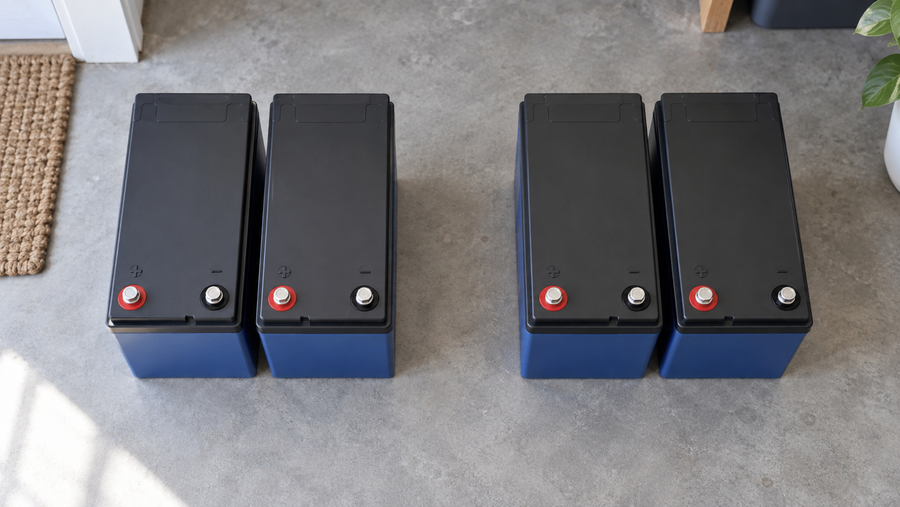
Most electric scissor lifts today run deep-cycle lead-acid battery banks in 24V or 48V configurations, built from 6V or 12V traction batteries wired in series for aerial work platform duty battery suppliers that focus on aerial work platforms. Newer platforms and retrofit kits increasingly offer lithium packs as an option at the same voltage.
Technical comparisons of lithium and lead-acid scissor-lift packs highlight that lithium systems are significantly lighter, deliver higher usable capacity, and require much less routine maintenance than flooded lead-acid banks technical comparisons of lithium and lead-acid scissor-lift packs. Lead-acid batteries demand regular watering, corrosion cleaning, and careful charging, while lithium packs remove watering and equalization from the daily routine and hold voltage more consistently over the discharge curve, as described in scissor lift battery guidance from manufacturers.
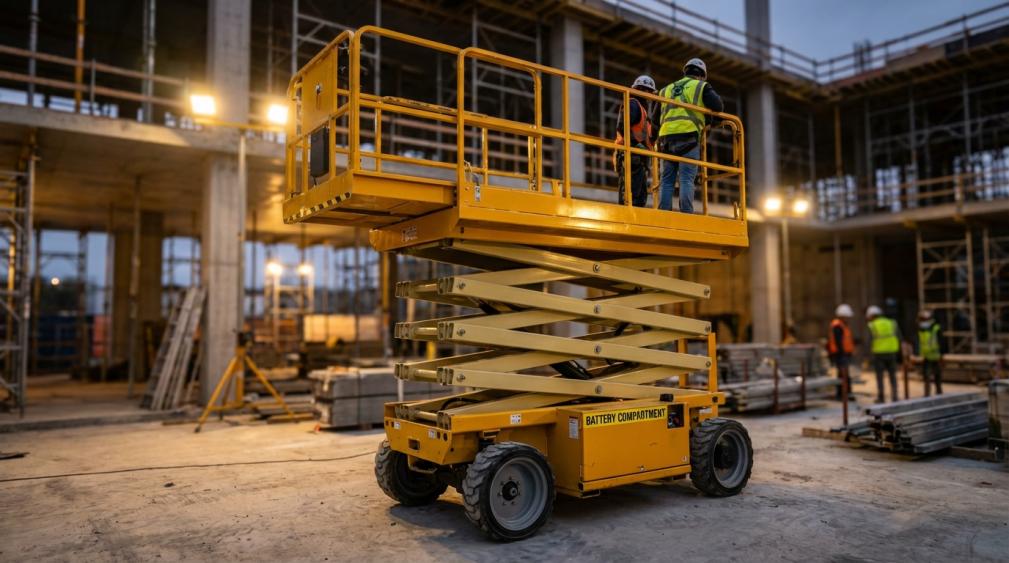
On a typical electric unit, the battery tray sits low in the chassis, effectively acting as part of the ballast that keeps the base heavy while the platform rises. Rough-terrain scissor lifts push this even further: their higher machine weights are engineered specifically to lift heavier loads to greater heights on uneven outdoor ground, with mass at the bottom contributing to stability. When you reduce battery weight, you are trimming a slice of that base mass.
However, the chassis, scissors, hydraulic structure, and deck generally weigh far more than the battery pack itself, and the platform load you add during work often changes total weight more than a move from lead-acid to lithium. What really matters is how any change in mass shifts the center of gravity within the wheelbase and whether you are still operating inside the machine’s rated slope, load, and wind limits.
When Reducing Battery Weight Is Safe
The safest scenario is when the scissor lift is offered from the factory in both lead-acid and lithium configurations, or when the manufacturer provides a specific lithium kit for that model. In those cases the mass, mounting, and battery management system have been designed as part of the machine, and any differences in weight are already accounted for in the published load, grade, and wind ratings.
Operator manuals and safety training materials consistently stress that batteries must match the voltage, configuration, and type specified by the manufacturer for each model, according to scissor lift battery guidance from manufacturers. When you stay within that specification using OEM or manufacturer-approved lithium kits, you are not guessing at stability; you are staying in the engineered envelope that underpins the rating plate.
In practical terms, if the lift’s nameplate load capacity, maximum allowable grade, and maximum wind speed remain the same with the new pack installed, and the installation follows the manufacturer’s instructions, the change in battery weight by itself does not suddenly turn a stable machine into a rollover risk. The real-world test is simple: if the manufacturer is willing to put its name on that configuration and keep the same operating limits, the machine has been designed around that battery mass.
When Weight Reduction Becomes A Stability Risk
The risk starts when weight is removed or relocated without the manufacturer’s approval. That includes custom lithium packs mounted differently from the original tray, smaller-capacity packs that are physically much lighter than the original bank, or “weight shaved” conversions where metal trays, covers, or brackets are cut away.
Reducing base weight shrinks the margin before the center of gravity crosses the tipping line, especially at maximum deck height or on the edge of the allowed slope. Guidance on maximum slope shows that even purpose-built rough-terrain scissor lifts, designed with bigger tires and heavier frames, only tolerate about 25–40% grade when rated for outdoor work scissor lift grade and slope limits. If that same machine loses a noticeable chunk of ballast, its real safety margin on marginal ground or ramps can quietly erode, even though the sticker on the side has not changed.
Unapproved changes also create a paperwork and compliance problem. OSHA-focused materials emphasize that employers must operate scissor lifts according to manufacturer instructions and ensure workers are trained on the specific hazards of the equipment they are using. Once a machine no longer matches its documented configuration, it is difficult to argue that you are still inside those instructions if a tip-over occurs.

Factors That Drive Tip-Overs Far More Than Battery Weight
Across training curricula, rental guidance, and OSHA-aligned safety content, the same pattern repeats: most serious accidents trace back to how and where the scissor lift is used, not the battery choice. That is good news because it means most of the risk is in your control regardless of battery chemistry.
Surface and slope come first. Safety articles on electric and rough-terrain scissor lifts drive home that machines must sit on firm, level ground free of potholes, soft soil, or hidden voids before lifting what you need to know to operate a scissor lift safely. Guidance on maximum grade warns that indoor electric units should be treated as “flat floor only,” while the rough-terrain machines people rely on for rocky, uneven ground are purpose-built from the ground up for that environment, with tires, frames, and engines tuned specifically for it. If the surface or slope is wrong, extra battery weight will not save the machine; if the surface and slope are right, a properly engineered lighter pack will not suddenly make it tip.
Overloading and poor load distribution are close behind. Safety guidance repeatedly warns that the combined weight of workers, tools, and materials must never exceed the rated platform capacity and that loads should stay evenly distributed with weight kept away from guardrails 7 tips to operate a scissor lift safely. When material is stacked in one corner of the deck, the center of gravity moves toward that corner, and the lift becomes easier to tip, especially when elevated or on a slight grade. No battery upgrade compensates for a platform that is both overloaded and unbalanced.
Wind and weather are also major contributors to instability. Scissor-lift safety summaries note that wind gusts can tip an extended lift even when everything else is in spec, and that many manufacturers recommend stopping work when wind speeds exceed roughly 28 mph. Rain, mud, and ice can reduce traction and bearing strength under the wheels, so a machine that felt solid in the morning can become marginal after a storm. Battery weight has almost no effect on these aerodynamic and surface conditions; respecting wind limits and ground conditions does.
Movement and collision risks round out the main stability threats. Training programs insist that scissor lifts should not be moved while the platform is elevated unless the manufacturer explicitly allows it, and that nearby traffic such as forklifts and trucks must be controlled to prevent impacts with the base. Even a heavy, over-ballasted machine can tip if it gets nudged off a curb or into a hole while the deck is high.
Finally, inspections and maintenance keep hidden failures from becoming sudden losses of control. Operator checklists include verifying tires and wheels, guardrails and gates, hydraulic lines, emergency lowering systems, and battery or fuel levels before each shift, with a strict rule to tag out any defective machine. Battery maintenance fits here: flooded lead-acid banks need correct water levels, clean terminals, and proper charging, while lithium packs still require cable inspections and correct charger settings, as highlighted in battery guidance from scissor lift manufacturers. A neglected battery system can fail at height and force an emergency rescue even if stability was fine.

Practical Retrofit Game Plan
A smart retrofit starts with paperwork, not wrenches. Pull the scissor lift’s operator manual and any supplemental bulletins, then check whether your model is listed with both lead-acid and lithium options or if the manufacturer offers an approved kit. Documentation from equipment makers and rental partners emphasizes that you should confirm the exact model’s required voltage, chemistry, and configuration before changing anything in the battery bay, according to scissor lift battery guidance from manufacturers.
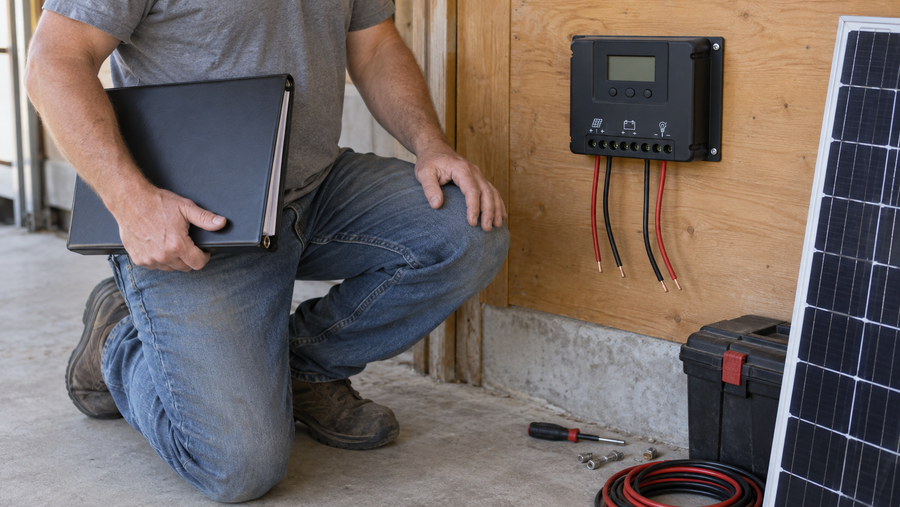
Next, match the battery system to those requirements. Traction battery suppliers that specialize in aerial work platforms stock 6V and 12V units designed to be combined into 24V or 48V banks for scissor lifts battery suppliers that focus on aerial work platforms. For lithium, that same “match the spec” rule applies even more strongly: voltage, capacity, mounting, and weight must all align with the scissor lift’s design, and any reputable lithium kit for a specific model will document those points in writing.
Then, treat the retrofit like a configuration change that affects training and procedures. OSHA-aligned guidance requires that operators be trained by a qualified person on the specific hazards of the supported scaffold or mobile elevating work platform they are using, and retrained when equipment or conditions change. Switching battery chemistry changes charging routines, runtime expectations, and in some cases machine behavior near the end of discharge, so operators should be walked through the new normal instead of discovering it mid-shift.
A short, controlled field test pays for itself quickly. With the new pack installed, run the lift through a full functional check on flat, solid ground: raise and lower the platform, drive slowly at low height where permitted, and verify that chargers, indicator lights, and safety interlocks behave as expected. During these tests, keep loads well under capacity and stay inside the most conservative slope and wind limits; the goal is to confirm that the machine feels predictable before going back into full production.
Finally, lock in the maintenance and charging pattern that fits the new batteries. Lead-acid banks need watering, corrosion cleaning, and scheduled equalization charges to deliver their expected life. Lithium systems trade that labor for monitoring state of charge, watching charger error codes, and ensuring the pack stays within the temperature range the manufacturer allows, as described in technical comparisons of lithium and lead-acid scissor-lift packs. In both cases, regular inspection of cables, connectors, and mounting hardware is non-negotiable.
Battery Choices And Stability At A Glance
Battery scenario |
Impact on stability in normal use |
Recommended approach |
Factory lead-acid configuration |
Baseline design; all load, grade, and wind ratings validated around this mass. |
Maintain correctly, follow charging and water-level guidance, and keep to nameplate. |
Factory or OEM lithium configuration for the same model |
Engineered as part of the machine; ratings account for lighter pack. |
Follow the manual; treat stability limits as unchanged unless the OEM says otherwise. |
Third-party pack explicitly approved for your exact model |
Depends on how closely it matches OEM specs and mounting. |
Get written confirmation on weight and configuration; update procedures and training. |
DIY lightweight pack with removed trays or relocated battery |
Unknown; base mass and center of gravity are altered without validation. |
Avoid; return to an approved configuration before lifting people or materials. |
Short FAQ
Will lighter batteries let the scissor lift carry more on the platform?
No. Platform capacity is a structural and stability rating set by the manufacturer and backed by OSHA-aligned scaffold and MEWP standards, and it does not increase just because the battery pack is lighter. You must always stay within the nameplate capacity, counting workers, tools, and materials.
Do operators need new training after a lithium retrofit?
Yes. Safety guidance requires retraining when equipment or work conditions change, and switching from lead-acid to lithium changes charging routines, runtime behavior, and sometimes indicator lights or controls. A short, focused session that covers the new battery type, charging rules, and any updated emergency procedures is part of running a safe, productive fleet.
Upgrading scissor lifts to lighter, higher-performance batteries can be a real power move for uptime and maintenance, but only if the machine stays inside its engineered stability envelope. Treat the battery pack as part of the ballast system, stick to configurations the manufacturer is willing to stand behind, and keep your operators disciplined about load, slope, and wind so you can enjoy the benefits of modern energy storage without ever seeing a lift lean past its comfort zone.