



Connecting an RV lithium bank straight to the alternator will not usually destroy the battery outright, but it can abuse both the battery and alternator unless voltage and current are controlled. Treat the alternator as a powerful charger and run it through lithium-compatible hardware instead of a bare cable for safe, reliable charging.
You pull out of a quiet boondocking spot at dawn, lights on, fridge running, dash voltmeter sky-high, and a nagging thought in the back of your mind: “Is this alternator feed cooking my new lithium bank?” After countless upgrades where tired lead-acid banks were replaced with lithium systems that finally last through the night and recharge in a fraction of the time, the same charging question comes up again and again. By the time you finish reading, you will know when a direct alternator connection is tolerable, when it is asking for trouble, and what changes turn engine power into fast, safe charging.
Why Lithium Changes the Alternator Conversation
Lithium iron phosphate (LiFePO4) house batteries behave very differently from the lead-acid batteries your alternator was designed around. A quality lithium pack can safely use about 80–100% of its rated capacity while keeping voltage much flatter, whereas traditional lead-acid banks should usually stay above roughly 50% to avoid early failure and voltage sag that drags down your appliances. Lithium RV batteries routinely deliver more usable energy from the same amp-hour rating and hold voltage steadier as they discharge, which is why boondockers feel such a big jump in real-world runtime.
They do this while weighing far less. Typical Group 24–31 lead-acid RV batteries run around 60–70 lb each, while many lithium replacements sit under about 35 lb, so a full bank can trim hundreds of pounds from your rig and free up payload for water, gear, or solar. That weight and efficiency advantage is a major reason manufacturers are standardizing on LiFePO4 in modern rigs paired with solar packages. Lightweight lithium house batteries make it easier to stay within your GVWR and still carry serious capacity.
Cycle life is the other big shift. Where lead-acid banks often deliver only a few hundred deep cycles, LiFePO4 batteries designed for RVs commonly reach into the thousands of cycles before noticeable loss of capacity, especially when kept within their preferred voltage and temperature limits. That longevity, combined with higher usable capacity, is why long-term cost per watt-hour delivered often ends up lower for lithium even though the upfront price is higher. A thoughtfully sized lithium bank can comfortably power off-grid lifestyles for many years when paired with the right charging gear. Modern 12-volt lithium RV batteries are specifically built for that role.

Here is how that compares at a glance:
Metric |
Lead-acid RV house battery |
LiFePO4 RV house battery |
Usable capacity |
~50% of rated Ah |
~80–100% of rated Ah |
Typical weight |
~60–70 lb (Group 24–31) |
Under ~35 lb (same size) |
Cycle life (approx) |
Hundreds |
Thousands |
Charge speed |
Slow to moderate |
Several times faster |
These advantages are fantastic for dry camping, but they also mean lithium will happily accept far more current, for far longer, than the alternator ever had to push into a sleepy lead-acid starter battery. That is why the alternator question matters.
What Happens If You Wire Lithium Straight to the Alternator?
Think of your alternator plus its regulator as a very simple battery charger that was tuned for a lead-acid profile. It is meant to quickly replace the burst of energy used for engine cranking, then taper off as the starter battery comes up to voltage. It was not engineered as a smart charger for a large, deeply discharged house bank.
Lithium batteries, by contrast, are built to charge fast and efficiently as long as voltage and temperature stay in range. Many RV-grade LiFePO4 batteries are comfortable with relatively high charge rates, and their internal resistance is low, so they will try to pull as much current as the source and wiring will allow. That fast-charge capability is a huge benefit when you use properly configured chargers, whether shore, generator, or solar.

High-efficiency lithium charging turns more of your harvested energy into stored power instead of heat.
The first line of defense inside your battery is the Battery Management System (BMS). A good BMS constantly monitors cell voltages, currents, and temperatures and disconnects charging if voltage or temperature go out of bounds, preventing classic overcharge or overheat damage. LiFePO4 RV batteries rely on that BMS for safety and long life. So if you connect directly to the alternator and its output creeps too high for the pack, the BMS should simply shut off charging rather than let the cells be ruined.
However, relying on the BMS as a blunt safety net is not the same as charging the battery well. Several RV-focused lithium guides stress that chargers must be explicitly compatible with lithium and set to appropriate voltages; they warn that lead-acid-only chargers can mischarge lithium packs, cutting into performance and lifespan even if the BMS prevents outright failure. Using a lithium-compatible converter or charger is described as mandatory for a proper upgrade, not optional.
Since an automotive alternator and regulator combination behaves like a basic lead-acid charger, treating it as a free, unlimited lithium charger is risky if you care about long-term battery health. It may work for a time, and the BMS may shut things down if voltage goes too high, but you are charging an expensive bank with a tool that was never programmed for it.
The Real Danger: Alternator Stress, Not Instant Battery Death
The component most at risk in a direct alternator-to-lithium connection is often the alternator, not the lithium pack. Lithium’s willingness to accept high, sustained current means the alternator can be driven near full output for long stretches instead of briefly topping up a starter battery.
Several lithium RV resources highlight fast charging as a major advantage: lithium batteries recharge much faster and more efficiently than lead-acid when paired with the right charger, cutting generator runtime and shore-power hours dramatically. Higher charging efficiency and deep depth of discharge are core selling points. That same trait, when attached directly to an alternator, encourages the alternator to work harder than it ever did with a small lead-acid starter.
Experienced RVers have raised exactly this concern when debating whether to stick with lead-acid or move to LiFePO4. The worry is that lithium’s high current draw could overload the tow-vehicle alternator. In many towable setups, there is a long run of relatively small-gauge cable between the alternator and the trailer battery, which creates enough voltage drop to limit current and unintentionally protect the alternator by throttling charge rate. In other words, the weak factory charge line becomes the fuse in the system.

That pattern shows up in real-world discussions of lithium upgrades on RV forums where owners compare alternator loading and towing behavior. Alternator concerns in lithium tow setups revolve around exactly this issue.
Once you install a large lithium bank in a motorhome, van, or fifth-wheel with heavier wiring between alternator and house batteries, that built-in current limiting disappears. Now the alternator can easily be pushed hard for long periods whenever the house bank is low. While the batteries usually tolerate this current (within their rated limits), alternators are air-cooled mechanical devices; running one near max output for long stretches is a recipe for heat, shortened life, and, in the worst case, failure on the side of the highway.
So will a direct alternator connection ruin your lithium battery? Usually not immediately, thanks to the BMS, but it is a poor match that can shorten battery life over time and, more urgently, put unnecessary stress on the alternator when the wiring is upgraded enough to let serious current through.
How to Build a Safe Alternator-to-Lithium Charging Path
The good news is that you can absolutely harness alternator power to charge a lithium house bank safely and efficiently. The key is to stop thinking “direct connection” and start thinking “controlled charger.”
Lithium upgrade guides consistently emphasize system-wide compatibility: the bank, wiring, converter, solar controller, and any other chargers all need to be chosen or configured for lithium rather than just swapping batteries and hoping for the best. That includes verifying wire sizes, appropriately rated fuses or breakers, and physical mounting as part of the upgrade. Full-system lithium planning is what separates trouble-free installs from constant chasing of gremlins.
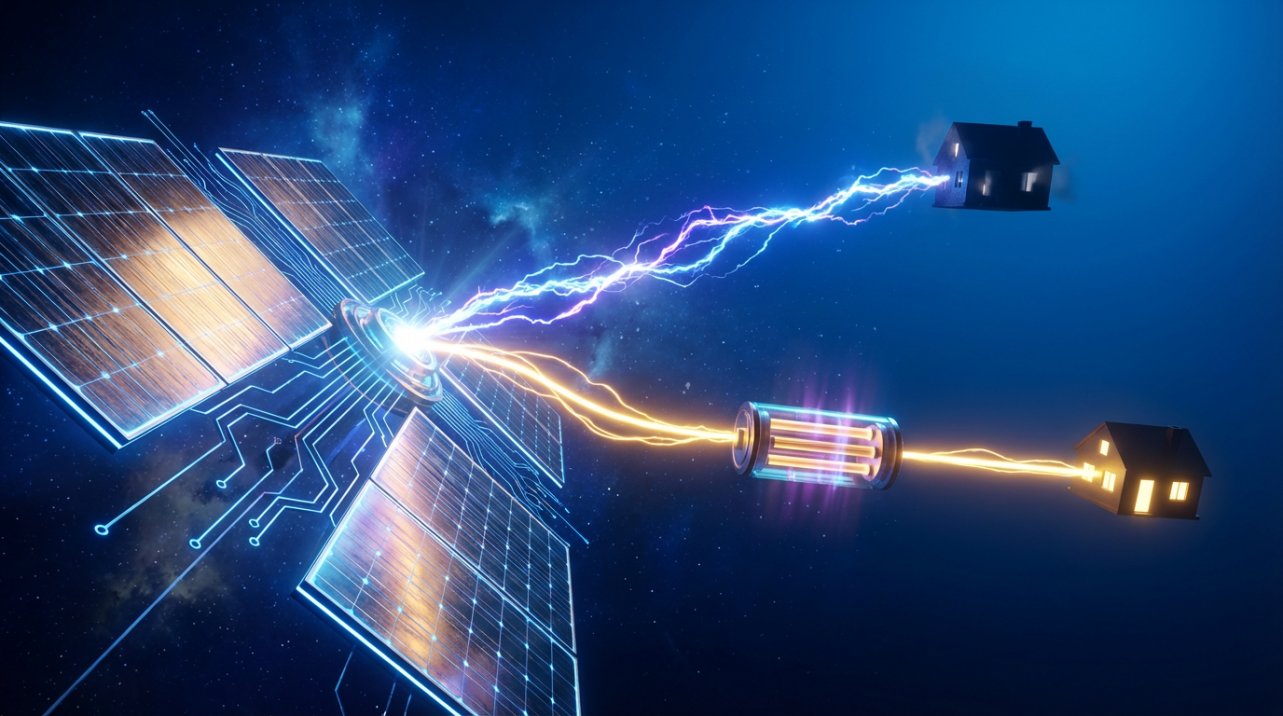
For alternator charging specifically, a DC-DC charger between the alternator and the lithium house bank is the clean, modern solution. Instead of running a simple isolator and heavy cable from alternator to the lithium bank, you route that feed into a DC-DC unit that is programmed with a lithium profile, then out to the batteries. This device does three critical jobs at once: it limits current to a safe, known value, shapes voltage to the lithium profile, and isolates the starting system from the house bank. Some lithium-focused RV battery suppliers explicitly recommend alternator charging by way of a DC-DC device such as the Victron Orion-Tr Smart when designing RV systems.

Lithium RV system guides show alternator-via-DC-DC as standard practice.
In practical terms, putting a DC-DC charger in the middle means the alternator sees only a manageable load rather than a huge, deeply discharged lithium bank. The DC-DC unit then delivers a well-controlled charge to the house bank with the correct absorption voltage and no long float at a high level that lithium does not need. That is exactly the kind of lithium-specific behavior that RV battery and charger manufacturers describe as necessary for long life and safe operation.
If you already have solar or shore chargers set up for lithium, think of the alternator/DC-DC pair as just another charger in the system. A strong alternator feeding a properly sized DC-DC unit can add a substantial amount of usable energy during a drive day, helping refill a large bank without ever starting a generator. That integrated approach is what allows many RVers to boondock comfortably for days at a time by combining lithium banks, solar arrays, and smart charging hardware. Well-integrated lithium banks are designed with this multi-source charging model in mind.
A Simple Way to Judge Your Current Setup
When you are staring at your existing wiring and wondering if you are safe, step back and look at three things together: battery bank size, wiring, and chargers.
If you have a modest lithium bank in a towable RV fed only through the factory charge line from the tow vehicle, with no extra heavy cables run directly from the alternator, chances are that thin, long wiring is limiting current so much that the alternator is not being abused. In those cases, the bigger issue is usually that alternator charging is weak and slow, not that it is going to cook the lithium bank, especially if you also have a lithium-compatible solar controller finishing the charge. Some owners even rely on that pattern, letting the main converter or solar controller bring the bank up properly while accepting that the alternator contribution is modest during travel days.
On the other hand, if you have invested in a large lithium bank — 200Ah, 400Ah, or more — wired with heavy cable directly from alternator output to the house batteries, you are in a different league. You now have the combination of a hungry bank, low-resistance cables, and a high-output alternator. In that scenario, routing alternator output through a DC-DC charger and confirming that all your other charging gear (converter, solar controller, inverter-charger) is set to lithium-appropriate voltages is no longer a nice-to-have upgrade; it is the responsible way to protect both your expensive bank and the alternator. High-capacity lithium banks for RVs are designed to handle serious power; your charging infrastructure needs to be equally serious.
Whatever your configuration, do not forget the basics during any lithium upgrade: verify wire sizes against expected currents, install correctly rated fuses or breakers on positive runs, secure the batteries physically, and respect lithium’s temperature limits — especially around freezing, where charging restrictions apply. Those fundamentals show up in every credible RV lithium installation guide because they are non-negotiable for safety. Lithium RV installation best practices and Airstream-specific lithium planning experiences both stress careful wiring, proper component selection, and cold-weather planning.
Quick FAQ: Common Alternator-Lithium Questions
Can a direct alternator connection overcharge my lithium bank?
A healthy lithium RV battery has a BMS that disconnects charging if voltage or temperature go out of range, so catastrophic overcharge is unlikely in a modern pack. The real problems with a bare alternator feed are poor charge profile and alternator stress, not cells being driven into a dangerous overvoltage state. That is why lithium manufacturers insist on lithium-compatible chargers and controllers instead of generic lead-acid ones.
Do I still need solar or shore charging if I add alternator charging?
Yes. Alternator charging is a powerful tool, but it should be one part of a balanced system, not the only charger you rely on. Rooftop solar charging directly into a lithium bank through a proper MPPT controller turns daylight into quiet, free energy, while shore or generator chargers can refill the bank quickly when you are parked. Combining these with a controlled alternator path is how many RVers achieve multi-day or even long-term off-grid capability without babying their batteries.
What about cold-weather driving and alternator charging?
LiFePO4 chemistry can usually discharge to well below freezing, but charging at low temperatures is restricted to avoid internal damage. Many RV-grade lithium batteries now include low-temperature cutoffs or even internal heaters so the BMS will simply block or condition charging when it is too cold, whether power is coming from solar, shore, or alternator. Real-world lithium upgrade stories and manufacturer guidance recommend either locating batteries in temperature-moderated spaces or choosing heated models if you expect extended freezing conditions.
Final Thoughts
A direct alternator connection will not usually ruin a modern lithium RV battery overnight, but it is a blunt tool pointed at an expensive, precision-engineered power bank and a hard-working alternator. Turn that same alternator into a controlled, lithium-aware charger — with proper wiring, a DC-DC unit, and lithium-compatible settings across your system — and every mile you drive becomes smart, safe, high-output charging instead of a rolling stress test. Build the charging path to match the strength of your lithium bank, and your rig will reward you with quieter camps, longer off-grid stays, and a power system you no longer have to worry about every time you twist the key.



Leave a comment
This site is protected by hCaptcha and the hCaptcha Privacy Policy and Terms of Service apply.