An RV does not automatically need an added battery disconnect switch. It is especially useful during storage or other long idle periods, when standby 12-volt loads could drain the battery. If you use the RV regularly, keep its battery charged through the normal charging setup, and already have a suitable disconnect, adding another switch may not be necessary.
What a battery disconnect switch does

A battery disconnect switch separates the battery from some of the RV’s connected electrical loads. With those loads isolated, equipment that remains on standby has less opportunity to draw from the battery while the RV is parked.
The switch may not isolate every circuit. RV electrical systems differ, and the existing switch may control the house battery, the chassis battery, selected equipment, or a combination of circuits. Identify what your particular switch actually disconnects before relying on it during storage.
Why storage makes a disconnect more useful
Some RV equipment can draw power even when it appears to be turned off. These parasitic loads may include control modules, memory circuits, inverter or charger equipment, electronic valves, and other installed devices. Official RV guidance on parasitic loads and battery disconnects explains that equipment and battery systems vary by RV and that disconnects can help avoid a low-battery condition while a vehicle is idle or in storage.
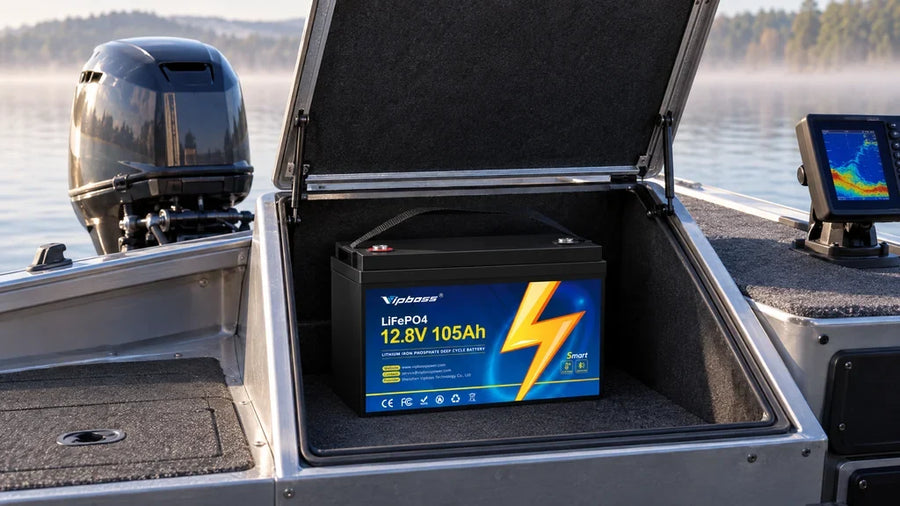
During storage, checking battery status can complement your review of which standby loads remain connected. If the RV uses the Vipboss 12V 105Ah Bluetooth LiFePO4 battery, its Bluetooth monitoring provides that additional observation point.
A disconnect is therefore most valuable when all of these conditions apply:
- The RV will sit for an extended period. More idle time gives standby loads more opportunity to reduce the battery’s charge.
- The RV is not connected to a charging source. Without an active charging arrangement, the battery must supply any remaining loads by itself.
- You want a simple way to stop the loads. A suitable existing disconnect can reduce the need to find and remove individual fuses or switch off multiple devices.
- The RV’s battery is vulnerable to extended discharge. Avoiding a low-battery condition can be an important part of storage planning.
When you may not need an added switch
You may not need to install an additional disconnect when the RV already has a suitable factory switch, the battery remains properly charged during the period of nonuse, or the RV is used often enough that extended standby drain is not a concern.
Regular charging does not by itself prove that every circuit is controlled by a disconnect. Check which battery and circuits the existing arrangement serves. If it leaves a significant standby load connected, a separate or different disconnect may still be useful for storage.
Base the decision on the RV’s actual storage pattern, charging arrangement, existing disconnect, and the loads that remain connected. If the RV will be stored without charging and its current arrangement does not isolate the relevant loads, a suitable battery disconnect is worthwhile. If those loads are already isolated or the battery is maintained appropriately, an added switch may provide little additional benefit.
FAQs
When is an RV battery disconnect switch most useful?
It is most useful during extended storage or other idle periods when the RV is not connected to a charging source and standby 12-volt loads could continue drawing from the battery.
Do I need another disconnect if my RV already has a factory switch?
Not necessarily. First identify which battery and circuits the factory switch controls. If it already isolates the relevant standby loads, an additional switch may provide little benefit; if important loads remain connected, a separate or different disconnect may still be useful.
What should I check before relying on a battery disconnect during storage?
Check which battery and circuits the switch isolates, whether any standby loads remain connected, whether the RV will have an active charging source, and how you will monitor the battery’s condition during storage.