
You can roast a tender, food-safe turkey in a small RV kitchen entirely on battery power by matching your turkey and oven to your power system, controlling heat loss, and following a disciplined cooking plan.
The classic nightmare is watching your inverter alarm scream and your oven go dark just as the turkey skin finally turns golden, while hungry family members stare at you across a tiny dinette. With the right combination of turkey size, RV-friendly oven or roaster, and a power budget that actually matches your battery bank, it is possible to pull off a full Thanksgiving bird off-grid without sacrificing safety or flavor. This guide shows how to size the power, choose the equipment, and execute a step-by-step roast that finishes on time instead of tripping a breaker.
Understand the Power Budget Before You Preheat
Before thinking about herbs and brine, you need to know whether your batteries can carry the heat load long enough for a full roast. An RV-size electric roaster or compact electric oven pulls a continuous load that will stress any battery bank if you underestimate the runtime.
Start with the label on your appliance. Many countertop roasters designed for turkeys pull roughly 1,400 to 1,800 watts at their highest setting. If you plan on three hours of cooking time, you are looking at several kilowatt-hours of energy. Your usable battery capacity must comfortably exceed that number once you add lights, fans, the water pump, and whatever else is running during the meal prep window.
A simple way to think about it is to reserve only part of your usable capacity for the turkey. If your lithium bank can safely supply, for example, 4,000 watt-hours, that does not mean you should plan a 4,000 watt-hour roast. Aiming to keep the bird under about half to two-thirds of your usable capacity leaves headroom for inverter efficiency losses, temperature swings, and minor schedule slips without crashing the system.
Example: Three-Hour Roast on a Lithium Bank
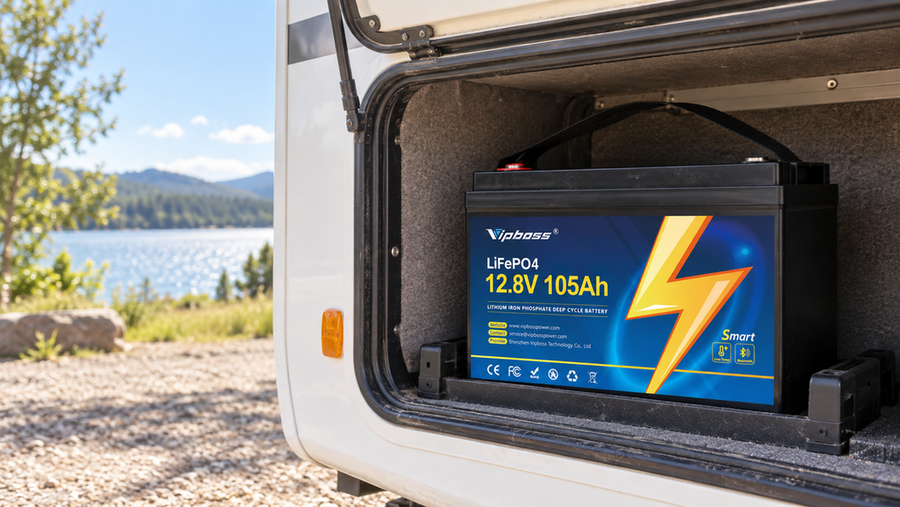
Imagine a 12-volt lithium battery bank rated at 400 amp-hours. At 12 volts, that is roughly 4,800 watt-hours in the pack. If you plan to use about 80% of that under load, you have around 3,800 watt-hours realistically available for cooking and everything else.
Now take a roaster that draws 1,500 watts when on full power. If you run it at its highest setting for 30 minutes to brown the skin and then it averages around 1,100 watts as the thermostat cycles for another 2.5 hours, the total energy use is roughly 750 watt-hours for the first 30 minutes plus about 2,750 watt-hours for the remaining 2.5 hours, or around 3,500 watt-hours in total. That total pushes the upper edge of what this bank can deliver comfortably once you include lights and fans. The calculation shows why keeping the lid closed, preheating efficiently, and shutting down nonessential loads during the roast are not just nice habits; they are the difference between a perfect meal and a mid-dinner blackout.

Pick a Turkey and Oven That Actually Fit an RV
RV kitchens are defined by constraints: short ovens, minimal counter space, and limited power. The bird and the cooking appliance you choose should respect those constraints instead of fighting them.
In many factory RV ovens, anything much over about 12 pounds becomes a wrestling match. The walls are close, heat can concentrate on one side, and it becomes difficult to rotate the pan without losing a lot of heat. Measuring the usable interior height and width before you even buy the turkey saves an enormous amount of game-day stress.
Large electric roaster ovens are a powerful workaround because they handle bigger birds while conserving moisture and freeing the built-in oven for side dishes. Many 22-quart roasters can accommodate turkeys well over 20 pounds and are designed to self-baste by condensing moisture on the lid and dripping it back on the bird, which means you do not need extra water in the pan for a whole turkey and you lose less heat while cooking large electric roaster ovens. RV owners routinely use this style of roaster as an extra "oven" alongside their main stove when space and power allow, especially for holiday meals prepared on the road making Thanksgiving dinner in your RV.
For very small families or extremely tight kitchens, another proven strategy is to skip the full-size turkey altogether and cook smaller birds such as Cornish game hens in a slow cooker or compact oven. This spreads the load across multiple appliances and reduces total roasting time, which is helpful when every amp-hour counts.
When the goal is to run completely on batteries, a roaster or compact electric oven powered by your inverter keeps you independent of campground hookups, but it also demands that the inverter be sized for the continuous wattage plus a safety margin. If you are comfortable using propane, a gas oven shifts most of the heat burden off the batteries, leaving them to power only the electronics and fans, but then you are no longer truly all-electric.
Time, Temperature, and Food Safety in a Tiny Kitchen
No matter how clever the power planning, a turkey that never reaches a safe internal temperature is a failure. The non-negotiable food-safety rule is that the thickest parts of the breast and thigh must reach at least 165°F, and the juices should run clear before carving how do you cook a turkey in an electric roaster oven.
One advantage of electric roasters is that they usually cook a bit faster than a conventional oven at the same nominal temperature. For example, a whole turkey in the 10- to 18-pound range may take around 2 hours in a properly preheated roaster instead of closer to 3 hours in a standard oven, with larger birds scaling up from there. That time savings is valuable when you are counting watt-hours, but you should still treat time as a guideline and temperature as the absolute decision point.
Because opening the lid dumps heat and forces the appliance to draw more power to climb back to its set point, a remote meat thermometer is one of the best tools you can own for battery-powered roasting. Many RV cooks using countertop roasters report that keeping the lid closed and tracking temperature from outside the oven consistently yields juicy meat and a shorter total roast than lid-up peeking roasting turkey in an electric roaster. The same approach works in RV gas ovens and convection ovens: once preheated, avoid door swings unless you need to rotate the pan.
Small-Oven Strategy: Rotate, Shield, and Rest
RV ovens are notorious for hot spots. A common pattern is a hotter rear corner and cooler front edge, which can lead to one side of the turkey browning too quickly while the other lags behind. One effective tactic is to preheat the oven at a higher temperature, such as around 400°F, then drop it to about 350°F for the bulk of the roast while rotating the pan regularly to even out the browning. In practice, this means brief, deliberate door openings every 15 minutes or so during the early phase, then longer stretches with the door closed as the interior temperature of the bird climbs.
At the end of the cook, resting matters as much in an RV as it does in a home kitchen. Once the breast and thigh hit the target temperatures, remove the pan, tent the turkey with foil, and let it sit for at least 20 minutes and up to an hour. Roaster recipes that rely on this rest window repeatedly report very moist meat and a forgiving carving schedule, giving you time to power down the heavy cooking load and bring other appliances back online.
Step-by-Step Battery-Only Roasting Game Plan
A reliable battery-powered roast starts the day before with prep that improves both flavor and moisture. One proven approach is a simple wet brine: submerge a fully thawed turkey in a clean 5-gallon bucket filled with cold water, dissolve about 1 cup of salt and 1 cup of sugar, and refrigerate it for roughly 24 hours. After brining, rinse and dry the bird thoroughly so the skin can brown instead of steaming. Aromatics such as lemon halves, herbs, or a modest amount of stuffing can go into the cavity, but avoid overpacking if your oven is already small.
When it is time to cook, setting up the roaster or oven for maximum efficiency pays off in both taste and power use. Many electric roaster turkey methods call for placing the bird breast side up on the roasting rack, brushing it generously with oil or melted butter, and seasoning liberally with salt, garlic powder, and pepper before covering and turning the roaster to its highest setting for the first 30 minutes. After that initial high-heat phase, reducing the temperature to around 325°F and leaving the lid closed until the remote thermometer shows the target internal temperatures keeps the meat moist and reduces the total time the heating element must run.
On the power side, treat the roasting window like an off-grid sprint. Before you preheat, charge the batteries as high as your system allows, shut down nonessential AC loads, and, if possible, shift other high-draw appliances such as electric water heaters or space heaters to propane. RV owners who successfully cook full Thanksgiving dinners off-grid consistently report that concentrating heavy electrical loads into one well-planned window and avoiding surprise devices like hair dryers or microwaves during that time is what keeps the inverter happy RV roaster-turkey experiences.
Sample Timeline for a 12-Pound Turkey on Batteries
For a 12-pound bird in an electric roaster, a realistic battery-minded schedule might look like this if you plan to eat at 5:00 PM. Around noon, you remove the turkey from the fridge and let it warm slightly while you finish prep and confirm that the battery bank is at or near full charge. At about 1:00 PM, you dry, season, and load the turkey into the roaster, bring it to the highest setting for roughly 30 minutes, then reduce to 325°F for another 1.5 to 2 hours, monitoring internal temperatures without lifting the lid. By around 3:00 PM, the breast and thigh should be approaching or passing 165°F; you then tent the turkey and let it rest while you shut down the roaster, reclaim inverter capacity for reheating side dishes, and use the drippings for gravy. Dinner hits the table on schedule with your battery state of charge still in a safe range.

Troubleshooting Power and Cooking Problems
Even with careful planning, you may run into two common issues: the power system sagging under load and the turkey cooking unevenly in a cramped oven.
If the inverter starts to complain partway through the roast, the first step is to immediately shed other loads. Turn off anything that is not essential, from countertop gadgets to entertainment devices. If your roaster has a slightly lower temperature setting that will still allow the bird to climb safely to 165°F, you can drop the set point to reduce peak draw and extend the runtime. If voltage is falling too quickly, you may need to finish browning on a propane grill or gas oven, but this is far easier to manage when the turkey has already spent most of its time in a controlled, battery-backed environment.
Uneven cooking shows up as pale patches of skin or breast meat that hits target temperature while the thighs remain stubbornly low. In a small RV oven, addressing this often requires selective shielding and smart rotation rather than more total time. A sheet of foil loosely placed over the part of the bird that is browning fastest, combined with careful rotation of the pan toward the hotter side of the oven, can balance things out without significantly increasing your total energy use. Electric roasters with domed lids and good circulation tend to avoid some of these problems, which is one reason they are popular for RV holiday cooking in small kitchens.
FAQ: Can You Really Rely on This Every Year?
A well-designed lithium battery bank with an appropriately sized inverter can support a turkey roast every holiday season, provided you match the bird size and appliance to the system and stay disciplined about other loads during the cook. Owners who treat the turkey as the primary electrical event of the day, rather than just another load, report consistent success with roaster-based Thanksgiving meals in RVs.
FAQ: Is an Electric Roaster Better Than the RV Oven for Off-Grid Turkey?
For most off-grid scenarios, a large electric roaster is the more forgiving tool. It fits larger birds, holds moisture extremely well, and generally cooks faster than a traditional oven at the same temperature while freeing your RV oven for casseroles and pies. An RV gas oven is still useful as a backup or for smaller turkeys, but if the goal is to maximize reliability on battery power and simplify the timing of a crowded holiday menu, the roaster usually wins.
A blackout does not have to dictate what ends up on your holiday table. With a right-sized battery bank, a turkey-friendly RV oven or roaster, and a game plan that treats both power and food safety as non-negotiable, you can serve a golden, juicy bird anywhere you can park.