
You can build a battery wall indoors, but it has to behave like a small battery room that your fire marshal and insurance underwriter would be proud of—or you risk denied claims and a very bad day.
Picture this: you finally have the budget for a sleek battery wall, so you start sketching spots in the basement or garage—then someone mentions “fire risk” and “insurance exclusions,” and the excitement turns into doubt. Well-designed indoor systems in dedicated, ventilated spaces have been running for years without drama while keeping homeowners covered and protected. The goal here is to show you how to decide whether an indoor DIY battery wall is a smart move in your house, what your insurer expects, and how to design it so it boosts your resilience instead of your risk.
The Short Answer: Yes, But Only If It Looks Like a Battery Room
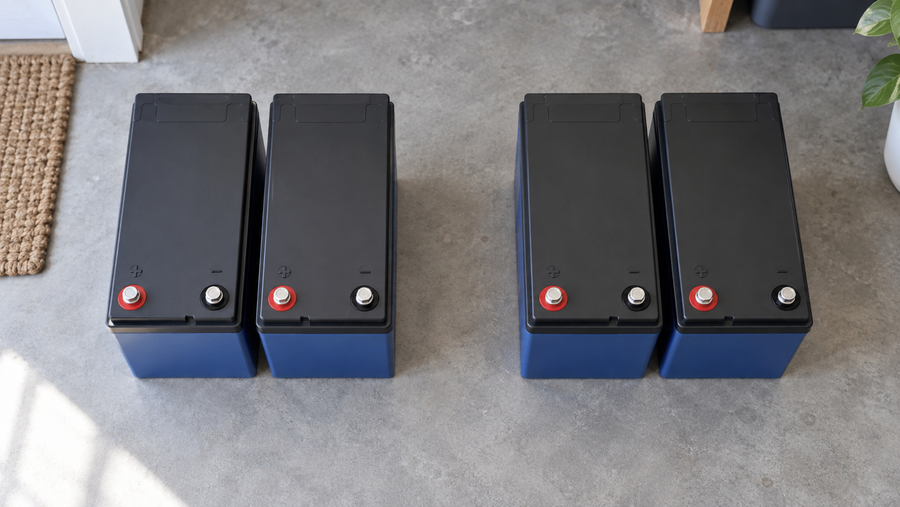
A “battery wall” is not a big phone charger; it is a compact energy storage system that can drive significant current and, if abused, create intense heat. Home solar batteries typically cost between $5,000 and $15,000 installed, so how and where you store them matters for performance, lifespan, and keeping homeowners insurance comfortable with the risk of having that much energy inside your walls. Home battery storage requirements emphasize that storage conditions are not a cosmetic choice; they are part of the safety system.
When you put that system indoors, many authorities and insurers mentally upgrade it from “appliance” to “battery room.” That means they care about a dedicated space, controlled temperature, ventilation, separation from bedrooms and ignition sources, clear labeling, and documented maintenance. If your plan is to hang loose battery modules in a corner next to paint cans and a gas water heater, the honest answer is no, you should not build that indoors.
How Fire Insurance Sees an Indoor Battery Wall
From an insurance perspective, lithium-ion batteries sit in a special category: incredibly useful but capable of fast, self-sustaining fires if something goes wrong. Consumer insurance guidance points out that improper use and storage can lead to fire, rapid overheating called thermal runaway, and property damage, and that these incidents are treated seriously even when they start from everyday devices.(grangeinsurance.com)
The good news is that standard homeowners policies generally treat fire as a covered peril, which includes fires started by lithium-ion batteries, as long as you have not run afoul of policy conditions. Guides on insurance coverage for lithium-ion battery fires stress reviewing your policy for wording around battery-related damage and, if needed, adding endorsements so coverage matches your risk.(grangeinsurance.com) In practice, that means you do not just install a large indoor battery and hope; you talk to your agent and get clear, written confirmation that the system is acceptable.
Insurers’ risk engineers also care deeply about how the system is designed and operated. Industry guidance for battery energy storage projects focuses on early risk assessment, appropriate technology and system sizing, layout and clearances, ventilation, and integration of detection, suppression, and containment in line with applicable codes. Operationally, they like to see emergency response plans, coordination with local fire services, remote monitoring for abnormal conditions, and documented testing of protective devices and shutdown procedures. These are exactly the things a serious DIYer needs to bake into the design if the goal is “fire-safe and insurable,” not “cheap and invisible.”
A simple mental test helps: imagine having to walk a claims adjuster through the installation after a fire. If you can show permits, inspection tags, a clearly labeled disconnect, a neat installation on a fire-resistant wall in a ventilated room, and a maintenance log, you are aligned with how underwriters think. If instead you would be explaining a no-permit install on plywood behind a bedroom, you already know how that conversation feels.

Picking the Right Indoor Location
Temperature and Ventilation: Keeping the Room in the Sweet Spot
Lithium home batteries like the same conditions you do. Practical storage guidance recommends a dedicated, temperature-controlled space—often a garage or utility room—kept roughly between 59°F and 77°F, with acceptable performance up to around 85°F, and warns that both freezing conditions and extreme heat can seriously degrade the system. Home battery storage guidance also emphasizes avoiding big temperature swings by using insulation, ventilation, and, when necessary, a small AC or heater and smart thermometers so you get alerts when the room drifts out of range.
Ventilation is just as important as temperature. Stationary batteries generate heat and, in some chemistries, gas during charging. Professional training materials on battery room ventilation and safety highlight that battery rooms must prevent any dangerous buildup of gas, especially during heavy recharge after deep discharges, and that worst-case accumulation is often underestimated.(cedengineering.com) For a home-scale lithium system, the principle is the same: never bury the battery in a sealed closet. Give the room a defined air path in and out—via wall vents, louvered doors, or ducted fans—and keep clutter away from any vents on the cabinet itself.
As a simple example, imagine a small 8 ft by 10 ft utility room with your electrical panel on one wall and a planned 10 kWh battery cabinet on another. If you add a low wall vent near the floor on one side of the room and a high vent or small exhaust fan on the opposite wall, and you size the fan so the room temperature stays near 68–77°F while charging on a hot day, you have already addressed one of the most critical safety questions an insurer will ask: “Where does the heat go?”
Separation, Clearances, and Surfaces
Location mistakes are a major source of defects in real-world battery installations. Inspectors have documented cases where a wall-mounted battery sits back-to-back with a bedroom, with only a small patch of fire-resistant sheeting that does not extend beyond the unit, leaving combustible wall materials exposed around the edges. That kind of shortcut raises both life-safety and insurance red flags.
A more conservative approach is to treat the mounting wall like a mini fire barrier. Practical home battery guidelines recommend mounting batteries on noncombustible or fire-rated surfaces such as masonry, tile, brick, or properly rated cement board, and keeping clear distances from living areas and hazards. For example, storage recommendations call for placing home batteries in well-ventilated areas, at least 6 inches off the floor, away from direct sunlight and flammable materials, with about 1 foot of clear space on all sides and at least 12 inches between multiple units. They also suggest keeping at least 3 feet of separation from bedrooms or frequently occupied rooms and about 2 feet from gas meters, electrical panels, and water heaters. These clearance rules are driven as much by fire and rescue access as by equipment comfort.
Think through a concrete garage example. Say you have a 10 ft concrete wall with a gas water heater sitting on the right. You might start your battery cabinet 2 ft to the left of the heater, give the cabinet itself 3 ft of width, and leave at least 1 ft clear on its left side. That layout lets you meet the 2 ft spacing from the gas appliance, maintain the 1 ft clearance on the battery’s sides, and still have 4 ft left over for walking past, all without putting the battery behind a bedroom wall. If your wall is timber or drywall, adding a fire-rated backer panel that extends beyond the battery in all directions is a simple, inexpensive upgrade that speaks directly to fire inspectors’ and insurers’ concerns.
In any area where a vehicle could reach the wall—like a garage—mechanical protection is also part of the safety story. Inspectors in the field routinely cite batteries placed where a minor parking mistake could dent the cabinet; simple steel bollards or wheel stops can turn that potential impact into a non-event.
Designing Your DIY Wall the Way Risk Engineers Think
Hardware and Electrical Protection
From a risk perspective, integrated systems beat cobbled-together ones. Experienced inspectors advise less-experienced installers to choose preassembled, integrated battery energy storage systems that combine inverter, battery modules, and protection devices in a tested enclosure, because they sharply reduce design and wiring errors. For DIYers, that translates into buying a listed home battery unit with a built-in battery management system (BMS), clearly specified breakers or fuses, and documented clearances, rather than mixing random modules and inverters.
Cable and breaker choices are not optional details. In one documented defect, a protection device was undersized for the cable cross-section and battery capacity, creating an overheating risk. The general rule is that overcurrent protection must be matched to the battery system and the conductors, and that DC cables in exposed runs should have robust mechanical protection, such as conduit, especially at higher voltages. Back-up circuits supplied by the battery should be protected by modern shock protection devices like GFCI/RCDs and labeled clearly at the panel so nobody has to guess which circuits will stay live during an outage.
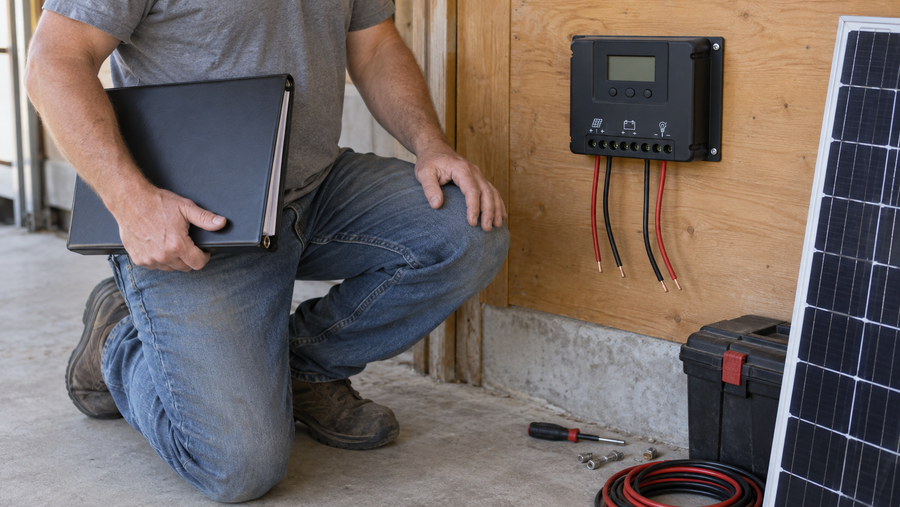
The practical takeaway: even if you are comfortable hanging the cabinet and running conduit, it is wise to have a licensed electrician handle terminations, breaker selection, and panel labeling. That gives you a cleaner inspection, a safer system, and a much easier conversation with your insurer if anything ever goes wrong.
Monitoring, Detection, and Shutdown
Modern home batteries come with sophisticated BMS electronics and monitoring apps; used well, these are as much for safety as for convenience. Good practice is to monitor temperature, voltage, current, state of charge, and cell balance, and to enable alerts for high temperature, unusual charging behavior, or repeated fault codes. Home battery storage recommendations explicitly call for robust BMS plus a monitoring interface that allows remote, real-time visibility and alarms.
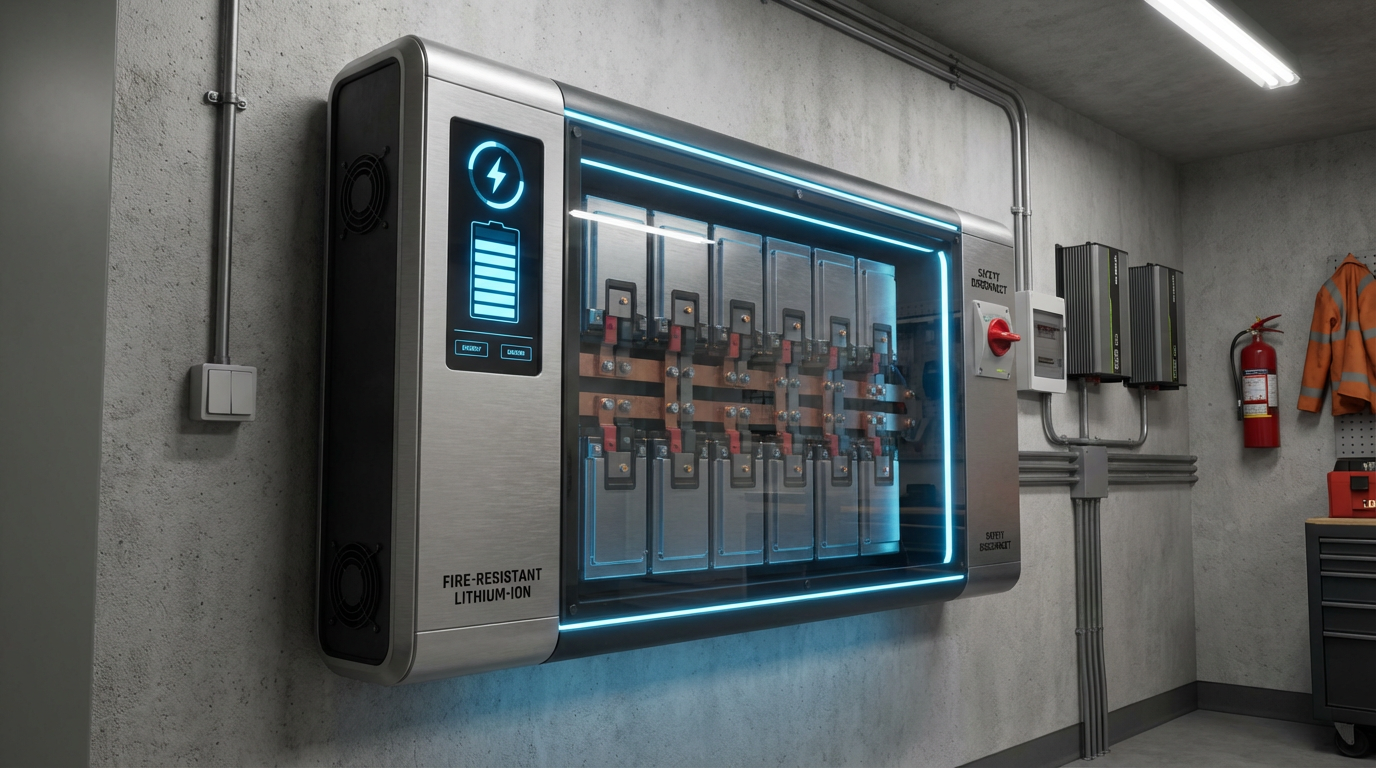
On the building side, both safety guidance and manufacturer tips insist on smoke detection and basic firefighting readiness near home batteries. A set of home battery safety tips spells out the importance of well-ventilated locations, separation from gas appliances or heaters, and having smoke detectors and a fire extinguisher accessible, along with installing the system correctly, ideally by a qualified electrician.(franklinwh.com) Other home battery storage recommendations add lithium-appropriate smoke detection, temperature monitoring, emergency power disconnects, and safety signage as insurance-driven requirements.
Imagine a tidy garage installation: a listed 15 kWh battery cabinet on a concrete wall, a dedicated smoke detector on the ceiling above, a clearly labeled disconnect switch right next to it, and the battery’s app configured to send overheat alerts to your cell phone. In that setup, you are not relying on luck; you have layers of monitoring and a simple way to shut the system down in an emergency, which is exactly how risk engineers prefer to see these systems built.

Documentation and Maintenance That Keep Claims Alive
Insurers and manufacturers both love paper trails. Practical home battery guidance recommends a structured maintenance schedule that includes monthly visual checks for damage or loose connections, periodic verification that monitoring equipment and sensors work, and annual professional inspections by certified technicians. On top of that, it advises quarterly performance reviews to track cycles, efficiency, and overall health using the system’s reporting tools, and stresses maintaining a detailed file with logbooks, service receipts, installation and inspection certificates, manuals, and warranty documents for at least the warranty period.
This kind of documentation is not busywork—it is claim support. If a fire or failure ever occurs, being able to show that you followed manufacturer maintenance, had a professional inspection on record, and kept the system within recommended temperature and clearance limits gives your insurer concrete reasons to treat the event as a covered accident rather than negligent maintenance.
When an Indoor DIY Battery Wall Is a Bad Idea
There are real situations where the right answer is “do not build this indoors.” If your only available wall backs onto a child’s bedroom, you cannot provide at least a few feet of separation from beds or couches, or the space is damp, cramped, and hard to ventilate, an indoor battery wall is working against you. The same goes for apartments, multi-unit buildings, or homes where you cannot get permits, inspections, or insurer approval; stacking energy storage inside those structures without formal oversight is inviting both safety problems and coverage disputes.
In these cases, shifting to an outdoor-rated, manufacturer-integrated system or a partially DIY approach—where you mount conduit and do basic prep while a professional crew installs and commissions the actual battery—delivers the upgrade you want without turning your home into a test lab. Battery safety tips from manufacturers repeatedly underline that if you are not well-versed in electrical systems and battery installation, you should bring in a qualified electrician, particularly when tying into your main panel and configuring protection devices.(franklinwh.com) That advice is even more important when the battery sits indoors, on the other side of a wall from the people you care about most.
FAQ: Common Indoor Battery Wall Questions
Does homeowners insurance cover a fire started by my indoor battery wall?
Most homeowners policies cover fire as a standard peril, and consumer insurance guidance notes that home insurance generally covers fire damage even when a lithium-ion battery is involved. Insurance discussions on lithium-ion battery fires add that policy language around battery-related damage and any needed endorsements can vary, so it is important to review your policy and talk to your agent.(grangeinsurance.com) A code-compliant, properly permitted installation with good documentation puts you on the strongest footing if you ever have to file a claim.
Can I put a battery wall in the basement?
A basement can be acceptable if it functions like a small, dedicated battery room: dry, well-ventilated, with stable temperatures near that 59–77°F target band, clear access for firefighters, and separation from sleeping areas. If the basement is finished and used as a living space, the safest practice is to locate the battery in a separate mechanical room on a fire-resistant wall, with doors and walls that slow heat and smoke spread. Add in flood risk—if your basement has ever taken on water, an elevated, outdoor location or a higher floor is usually the smarter approach.
Can I do the entire installation myself?
From a safety and insurance perspective, complete DIY is rarely the best option indoors. Manufacturer safety guidance strongly encourages professional installation, especially when tying into your home’s electrical system and ensuring correct wiring, protection, and ventilation.(franklinwh.com) Local codes often require permits and, in many jurisdictions, a licensed electrician for this kind of work. A sensible compromise is to do what you can safely and legally—planning, wall prep, cable routing—and then have a qualified professional make the final connections, commission the system, and sign off for inspection.
An indoor battery wall can be a fantastic power upgrade, but only if you build it like a serious piece of critical infrastructure, not a weekend gadget project. Choose a location that behaves like a small battery room, design for ventilation, clearances, monitoring, and shutdown, line up your permits and insurer sign-off, and treat documentation as part of the system. Do that, and your indoor battery wall becomes what it should be: quiet backup power that lets you sleep soundly, not a question mark on your insurance policy.