
This article explains why buying salvaged lithium cells from used markets is a serious safety, performance, and financial risk, and how to choose safer used or new battery options instead.
Buying salvaged lithium cells from used markets is one of the fastest ways to turn a power upgrade into both a fire hazard and a money pit. For serious off-grid and retrofit systems, they are a risk you can and should avoid.
You are sketching out a solar bank or RV upgrade when a deal pops up: a box of "pulled laptop cells" or a rebuilt pack for a fraction of the normal price. Across lab scans, government safety warnings, and real-world case studies, those cheap cells show drastically higher defect rates, far more fires, and service lives measured in months instead of the multi-year performance you actually need. This guide explains what "salvaged cells" really are, the hidden electrical and fire risks they bring into a power system, and the safer choices that still keep your budget under control.
What "Salvaged Cells" Really Are
In used markets, "salvaged cells" are individual lithium-ion cells or reassembled packs built from cells that have been pulled out of laptops, e-bikes, scooters, EV packs, and uninterruptible power supplies. They may be sold loose as bare cylindrical cells, rewrapped with a new label, or stuffed into a "refurbished" battery case that looks new on the outside but is full of old materials inside.
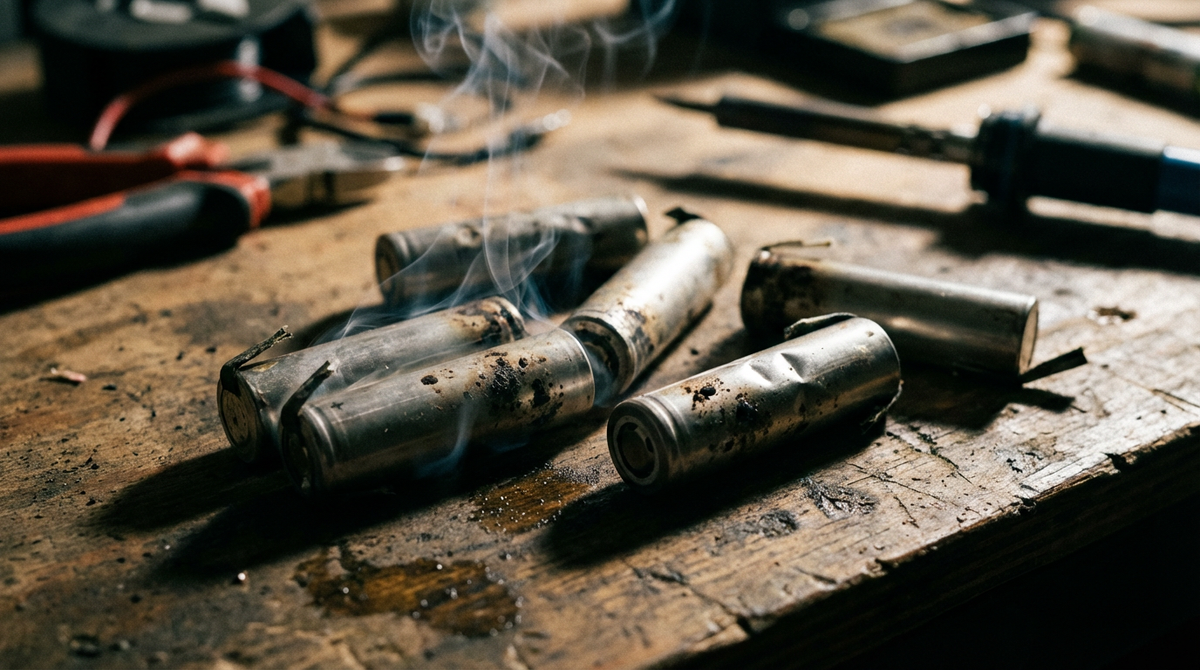
The U.S. Consumer Product Safety Commission has explicitly warned that loose 18650 lithium-ion cells are industrial components, not consumer products, and should not be sold individually. These loose cells are often separated from packs, rewrapped, and pushed through online marketplaces. Because they have exposed metal ends and usually no built-in protection electronics or robust casing, they can short against keys, coins, or tools, overheat, and fail violently during storage, shipping, or charging.
Refurbished and "reconditioned" packs sold at surprisingly low prices follow the same pattern. Technical reports on reconditioned e-bike batteries describe how small workshops rebuild packs from used cells with polished shells, but without original factory testing or qualification. The chemistry and structure of aged cells cannot be restored, so these packs often show significantly weaker charge and discharge performance and may last only about six to twelve months before their capacity collapses, compared with the several-year life of a proper new pack.
From the outside, salvaged cells and refurbished packs can look almost identical to new gear.

The real trouble is inside, where you cannot see the damage.
Hidden Defects You Cannot Measure with a Multimeter
A big part of the danger is that the worst defects in lithium cells are invisible. You can measure voltage and internal resistance on your bench all day and still miss the problem that will start the fire.
An industrial CT scanning study reported by 24x7 magazine scanned more than 1,000 cylindrical lithium cells from ten brands. The researchers found a serious internal defect called negative anode overhang in 33 cells, which is known to accelerate aging and greatly increase the odds of internal shorts and fires. Every defective cell came from low-cost or counterfeit brands; among those budget cells nearly 1 in 13 was defective, while not a single cell from three major original manufacturers bought through proper channels showed that defect.
That same study noted that in one bargain brand sourced through a discount online marketplace, about 15% of cells had this critical defect. In a modest e-bike pack using 39 cells, that defect rate would translate into roughly six cells with elevated fire risk sitting inches from each other. One internal short in one of those cells is enough to destabilize the whole pack.
Battery safety research summarized by Battery University explains why these internal flaws matter. Microscopic metal particles or misaligned internal layers can create a short path inside the cell. Mild shorts just increase self-discharge a bit, but major shorts can push the cell temperature beyond about 266°F, and once the core reaches roughly 302°F the reaction can run away, vent flammable gas, and ignite. Built-in protection circuits are designed to deal with external abuse, like a charger set too high or a visible short on the terminals; they cannot see a tiny metal particle embedded in the separator or a mis-wound electrode.

Salvaged cells add another layer of uncertainty: you do not know whether they were abused in the first life. Many consumer-grade lithium cells are damaged silently when they are charged below about 32°F, charged too fast in cold weather, or run in devices that hammer them with high current. That damage can cause lithium plating on the anode that significantly raises failure risk if the cell later sees a high current or physical shock. None of that history shows up in the marketplace listing for "grade A pulls."
Fire and Safety Risks in Real Systems
When salvaged cells fail, they do not simply lose capacity; they can turn your power system into an ignition source.
Environmental health and safety guidance from universities highlights that lithium-ion batteries store a lot of energy in a small space, and an uncontrolled failure releases heat plus flammable and toxic gases. In practice, a failing cell can swell, hiss, smoke, and then vent burning material that can ignite nearby cells and anything else in the enclosure. Once one cell goes into this kind of failure, the heat can jump to the neighbors and create a chain reaction that destroys a whole pack in seconds or over the course of several hours.

The U.S. Consumer Product Safety Commission has documented a rising number of fires and injuries involving loose 18650 cells, including cells used in small devices like vaping pens, personal fans, and headlamps. The same commission has recorded dozens of recalls and safety warnings in recent years for products whose lithium-ion batteries overheated or caught fire. Loose or rewrapped salvaged cells often lack the protection electronics and robust enclosures that well-engineered packs use to reduce these hazards.
Fire services and environmental agencies report similar patterns at the system level. Guidance from fire authorities notes that overcharging, incompatible chargers, overheating, physical damage, manufacturing defects, and contamination can all trigger severe lithium-ion battery fires. Waste-management and recycling operators in the United States report that lithium battery fires at facilities and in trucks have caused injuries, shutdowns, and heavy financial losses, often traced back to damaged or discarded lithium cells mishandled in bulk.
Consider what happens when you build a home power bank from salvaged cells and tuck it into a closet near your main panel. You are concentrating large amounts of energy in an improvised pack, using cells with unknown origins and unknown histories. If one cell has an internal defect, is dented from its previous life, or was once driven to near-zero voltage and "brought back," your off-grid upgrade now depends on the one component in your house most likely to enter a self-feeding fire if it fails badly.
Performance: Why Salvaged Cells Undercut Your Power Plan
Even if a salvaged pack never catches fire, it is likely to fail the most basic requirement of any retrofit or off-grid system: delivering predictable, dependable energy over years.
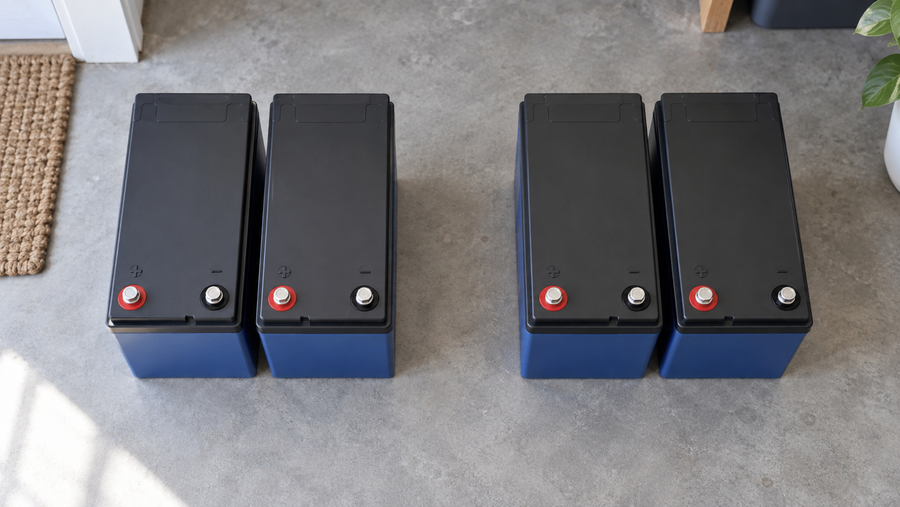
Manufacturers of new lithium packs design them around detailed performance data: nominal voltage, usable capacity, maximum continuous and peak currents, temperature limits, and expected cycle life. Commercial lithium iron phosphate packs, for example, are built and rated to provide thousands of cycles, and reputable vendors supply datasheets and warranties that align with those numbers. When you size a system the way professional guides describe, you multiply your average current draw by the hours of runtime you need and then select a pack that can handle both the electrical load and the environment.
Salvaged cells and informal refurbished packs flip that logic. You are given a sticker rating and a rock-bottom price, but no trustworthy data on the health of the cells, their true remaining capacity, or how hard they were pushed in the past. Reports from the reconditioned battery trade in e-bikes show that these rebuilt packs may last only about six to twelve months in real use before their range falls off a cliff. Users think they are saving money, but end up buying another pack far sooner than planned.
By contrast, there are documented cases where high-quality used lithium iron phosphate modules pulled from prototype electric trucks or large UPS systems still retained around 85% of their original capacity after roughly 500 demanding cycles with high current surges. In those projects, the buyer did not take the seller's word for it; they connected to the pack's data interface, downloaded logs of cycles, temperatures, and currents, and then repurposed the packs into solar systems that now see light, shallow cycling. With that level of information, it is reasonable to expect another decade or more of useful life in a gentler application.

The key difference is traceability and testing. Serious second-life projects target batteries that left their first life at around 80% health and are still above roughly 60%, sometimes down to about 40% for gentler applications. They demand original manufacturer datasheets, usage histories, and current performance tests validated by third parties. Random salvaged cells and mystery packs sold through used markets almost never come with this level of documentation.
Economics: Cheap Today, Expensive Tomorrow
On paper, salvaged cells look irresistible. If a new, warrantied lithium pack for a small cabin system costs several hundred or a few thousand dollars, and a box of 100 salvaged cylindrical cells costs only a fraction of that, it is tempting to "build your own" bank for less.
The problem is that the sticker price ignores three kinds of cost.
The first cost is shortened life. If a new pack is realistically good for several thousand cycles and five to ten years in your application, while an undocumented refurbished pack survives only a year before becoming unreliable, you are paying more per year of actual service. Technical evaluations of reconditioned batteries repeatedly show that their degraded chemistry cannot be reversed, so you get reduced usable capacity and poor discharge performance from day one.
The second cost is system stress and downtime. Salvaged cells age unevenly. Some will have high internal resistance and drop voltage early under load, causing an improvised battery management system to cut off the whole bank sooner than expected. Others may run hotter and drag the pack out of balance. You will see nuisance shut-downs, reduced runtime for your tools or appliances, and far more maintenance chasing intermittent faults.
The third and biggest cost is risk. A cell that fails violently can burn wiring, damage inverters, scorch walls, and turn a workbench or utility room into a fire scene. Fire-service case studies of salvage yards and old IT equipment highlight how a single compromised pack can ignite trucks, warehouses, or recycling plants. For an off-grid homeowner or RV owner, a similar event can mean losing a vehicle, a cabin, or a workshop, not just a few batteries.
When you factor in replacement cycles, extra hardware needed to add safety margins around questionable cells, and the possible cost of a fire incident, the apparent "deal" on salvaged cells evaporates.
When Used Batteries Make Sense — and How to Do It Safely
Used batteries are not automatically bad. The difference between a disciplined second-life project and a box of salvaged cells is night and day.
In the emerging second-life market, EV packs are typically retired from vehicles when their health drops to about 80% of original capacity, even though they are still quite capable. Analysts expect these packs to form a large pool of potential stationary storage, particularly in regions that need affordable grid support. Industry guidance for such projects emphasizes tight standards: choose chemistries suited to the job, understand whether cells are designed for energy or power, verify form factor and thermal behavior, and above all obtain a clear usage history and third-party performance tests.
A practical example comes from large lithium iron phosphate modules used in prototype electric trucks. One buyer acquired hundreds of these 130-amp-hour modules, pulled log data to confirm around 500 cycles and about 85% remaining capacity despite high current surges, and then integrated them into a solar installation. With duty cycles much gentler than the original vehicle application and proper battery management, the expectation is another ten to twenty years of service. This is technically second-life, but it is a world away from anonymous salvaged laptop cells dumped into a plastic box.
If you are determined to use used batteries in a retrofit or off-grid system, treat them as serious industrial components. Work only with established suppliers that specialize in testing, reconditioning, and certifying used cells or modules. Demand documentation of capacity testing, internal resistance measurements, and cycle history, plus evidence of compliance with transport and safety standards. Favor complete modules or packs from known manufacturers that retain their original protection electronics and housings, rather than loose cells that have been stripped and rewrapped.
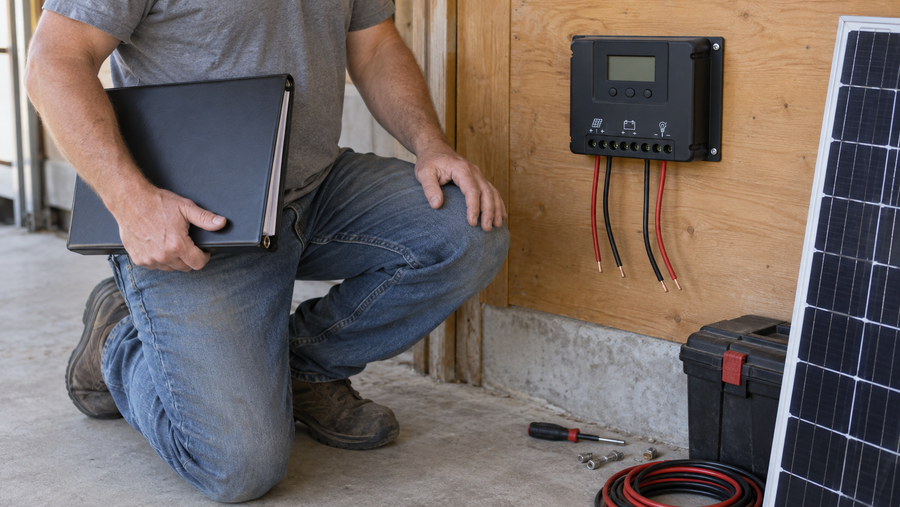
Even with high-quality used modules, follow the same design discipline you would with new lithium packs. Match your system voltage and current demands to the pack's ratings, keep charging and discharging within the specified limits, respect temperature ranges, and invest in a robust battery management system that can monitor and protect every series string.
Practical Rules for Power Upgrades
For most retrofitters and off-grid builders, the safest, most reliable path is straightforward. Choose batteries that are new or professionally refurbished by the original manufacturer or a clearly qualified partner, sold with real datasheets and warranties. Design your system around those specifications, not around whatever random mix of salvaged cells happens to be cheapest this week.
If a deal on used cells looks too good to be true, assume it hides problems. Technical guidance from the refurbished battery trade notes that a very large price gap between similar products is a red flag. Physical inspection often reveals more clues: overly soft or thin housings, scuff marks or polishing on cases, shells that do not sit flat, missing warranty cards and conformity certificates, and terminal holes showing signs of prior use. Those are all common signs of recycled internals hiding behind fresh plastic.
Finally, remember that how you dispose of batteries matters as much as how you buy them. Environmental agencies caution that used lithium and other high-energy batteries should never go into household trash or standard recycling bins because they can still hold enough energy to cause fires. Instead, follow local guidance and take them to proper battery or electronics recycling programs, taping terminals or bagging individual batteries to prevent accidental shorts in transit.
FAQ
Are any salvaged cells actually safe to use?
There are narrow cases where harvesting cells can be managed reasonably, such as taking brand-new OEM laptop packs from reputable manufacturers and carefully extracting cells for hobby projects, as some DIY communities have reported. Even then, some packs have arrived with cells at very low voltages, which requires careful handling and slow, controlled charging to avoid damage. For critical power systems that protect homes, cabins, or RVs, the combination of unknown history, lack of factory testing, and elevated fire risk makes loose salvaged cells a poor choice compared with new or professionally validated second-life modules.
What should I do with old or damaged lithium packs I already have?
Old packs that no longer hold charge well but look physically intact should be taken to battery recyclers, retailer take-back programs, or household hazardous waste events, not thrown in the trash. Damaged packs that are swollen, cracked, leaking, hot, or giving off unusual smells or sounds should be treated as hazardous waste and handled according to local environmental health and safety guidance, not opened or probed. Storing large quantities together in living or working spaces is unwise; instead, keep them in a cool, dry area away from combustibles until you can send them to a qualified recycler.
A high-performance off-grid or retrofit power system deserves batteries that are as robust and predictable as the rest of your design. Skip the salvaged-cell lottery, invest in traceable and properly tested packs, and you will gain more usable energy, less downtime, and a far lower chance of ever seeing your "power upgrade" show up in a fire report.
References
- https://www.epa.gov/recycle/used-household-batteries
- https://climate.mit.edu/ask-mit/how-well-can-electric-vehicle-batteries-be-recycled
- https://ehs.virginia.edu/Chemical-Safety/Battery-Safety
- https://en.wikipedia.org/wiki/Lithium-titanate_battery
- https://www.cpsc.gov/Newsroom/News-Releases/2021/CPSC-Issues-Consumer-Safety-Warning-Serious-Injury-or-Death-Can-Occur-if-Lithium-Ion-Battery-Cells-Are-Separated-from-Battery-Packs-and-Used-to-Power-Devices
- https://www.fire.nsw.gov.au/page.php?id=9389
- https://relionbattery.com/buyers-guide#:~:text=A%3A%20When%20purchasing%20a%20LiFePO4,to%20consider%20before%20your%20purchase.
- https://secondlifestorage.com/index.php?threads/advice-on-buying-used-ev-battery-packs.12731/
- https://www.battery.associates/post/top-5-things-you-should-know-before-purchasing-used-batteries-for-second-life-applications
- https://www.evfiresafe.com/post/ev-battery-fire-risks-salvage