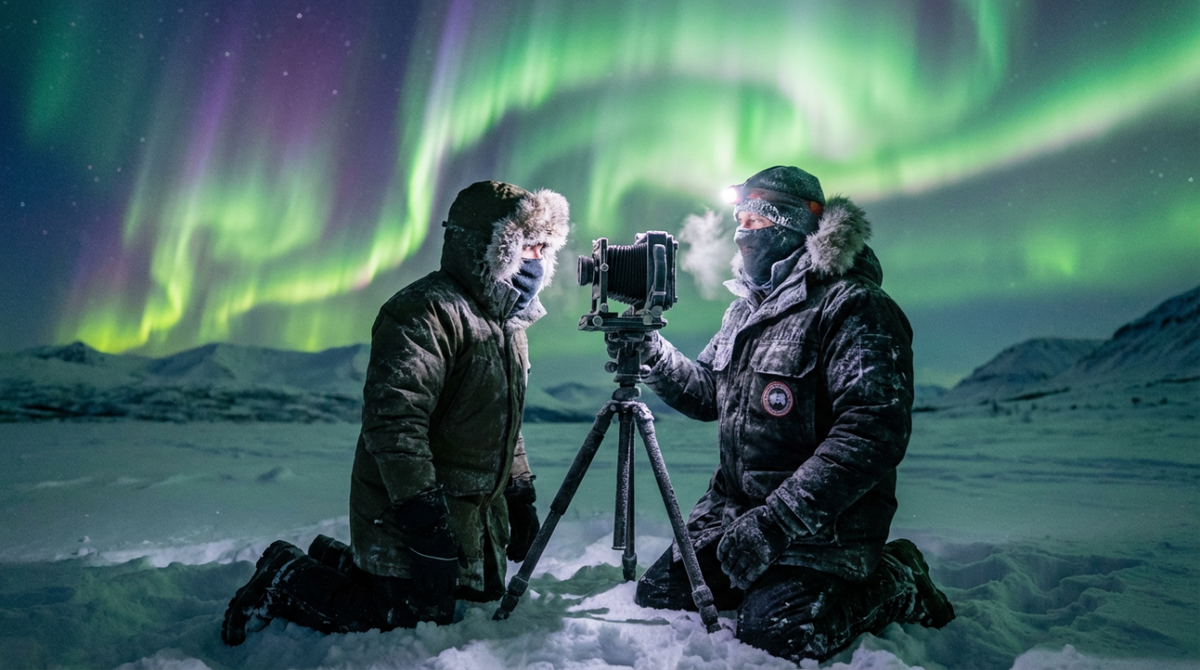

You line up the perfect aurora composition, the sky finally explodes in green and purple, and then your camera flashes a low-battery warning and shuts down, even though you charged everything that afternoon. The same power principles that keep lithium systems running in remote cabins and vehicles also apply to tiny camera packs. With a little planning, they can keep delivering in brutal cold instead of quitting early. This guide shows a practical way to keep your batteries warm, your camera safe, and your Arctic Circle aurora trip productive all night long.
What Arctic Cold Really Does to Camera Batteries
Cold weather slows the chemical reactions inside camera batteries, so in freezing air their apparent capacity drops and they seem to drain far faster than in mild conditions, a behavior highlighted in winter camera protection advice Adorama. A similar pattern shows up in car batteries, where freezing conditions can cut effective starting power by roughly 30–50%, which is why weak batteries often fail on the first cold morning, as outlined in cold-weather car battery guidance. Camera packs are smaller and more sensitive, so you feel the drop as suddenly empty batteries and cameras shutting off long before the meter shows zero.
Lithium-ion packs also suffer at the materials level when they are pushed into extreme cold for long periods. Laboratory work on lithium-ion cathodes shows that simply storing cells below freezing can create microscopic cracks and mechanical mismatch inside the cathode structure, gradually reducing capacity over repeated cycles, as reported in low-temperature lithium-ion research. That matters if you stash camera batteries in an unheated shed or car between multiple winter trips; they may not just feel weak from the cold, they can actually age faster.
Camera makers typically rate their batteries for use only a bit below freezing and warn that capacity drops sharply near the lower end of the range, which matches field reports from photographers shooting at around -4°F and colder.

When you push down into -22°F Arctic nights, you are operating beyond most spec sheets, so you need to think less like a casual tourist and more like someone designing a cold-weather power system: expect voltage sag, plan for fast apparent drain, and engineer warmth around the cells.
Core Strategy: Keep the Camera Cold, Keep the Batteries Warm
The most reliable Arctic tactic is counterintuitive: keep the camera cold and dry while keeping the batteries warm and energetic. Experienced winter shooters report that hanging the camera outside your jacket or carrying it in an outer pocket, rather than tucked under warm layers, keeps its temperature close to the ambient air. That dramatically reduces lens fogging and condensation problems when shooting, a pattern echoed in practical forum discussions on coping with freezing camera use. What actually needs warmth is not the body shell or sensor, but the lithium cells.
By contrast, the batteries should live close to your body, in inner jacket or pants pockets where they can stay near room-like temperatures. Cold-weather camera care guides emphasize carrying multiple spares, storing them in warm pockets, and rotating them so that a "dead" cold battery can warm up and recover some usable charge while a fresh warm one is in the camera. The high-level rule is simple but powerful: separate the temperature management of camera and power pack.

Camera: cold and dry. Batteries: warm and insulated.
Designing a Power Plan for -22°F Aurora Nights
How Many Batteries Do You Really Need?
In moderate weather, you might comfortably shoot an evening with one or two batteries; in Arctic conditions that mindset will strand you. Winter camera safety resources note that dropping the temperature by about 18°F can cut battery life roughly in half in very cold conditions, meaning repeated drops into deeper cold compound dramatically. If you normally get 400 shots from a battery at about 68°F, going down to -22°F is a 90°F swing, which is roughly five steps of that 18°F rule of thumb, so you can end up with something like one-thirty-second of the runtime if the battery is fully exposed to the cold. In practice that might mean only a dozen or so frames before the pack sags and the camera shuts down.
Real-world experience from winter photographers suggests that even for milder cold, they carry at least two batteries and often three for a full day outside, keeping the unused ones warm in inner pockets, as described in field discussions on practical cold-weather battery behavior. Translate that to -22°F aurora work and a more realistic starting point is three to six camera batteries per body, depending on how much video and how many long exposures you shoot, with the expectation that warm storage can restore a surprising amount of capacity as the night goes on.
Where and How to Keep Batteries Warm
The best "battery heater" in the Arctic is still your own torso. Cold-weather photography advice consistently recommends storing batteries in inner jacket or pants pockets, which keeps them much closer to their ideal operating temperature and slows the capacity loss that comes from cold-soaked cells. For aurora trips, it is worth dedicating one inner pocket solely to power, ideally using a small fabric pouch so batteries are not rattling against zippers, keys, or a cell phone.
For more aggressive warmth, many winter shooters pair their batteries with inexpensive chemical or reusable hand warmers. Battery care discussions note that keeping warmers and spares together in a pocket or insulated pouch helps maintain temperature far more consistently than body heat alone, especially during long static sessions on a tripod. That aligns with the broader recommendation to keep lithium packs gently warm but not hot in cold-weather power advice from SLR Lounge. The key is moderation: you want cozy warmth, not the intense heat of a heater vent or direct flame, which can damage packs.

When to Step Up to External Power
If you are planning multi-hour time-lapses of the aurora or running several power-hungry mirrorless bodies, internal batteries alone quickly become the weakest link. Cold-weather battery guides highlight the use of grips that hold extra cells, which roughly double the amount of lithium available while also slightly sheltering packs from the worst of the wind chill, an approach consistent with larger external power options in winter-focused power articles such as those from SLR Lounge. For heavier loads, USB-C power banks or dedicated camera power kits let you park a big battery inside your parka or an insulated pouch and feed the camera via a cable.
Each power upgrade trades complexity for runtime. More spares mean more swapping; grips add bulk but keep swaps fast; external packs offer the longest runtime but add cables that can snag or stiffen in the cold. Thinking like an off-grid power designer, you treat the internal camera battery as a buffer and the warmer external pack as the real "tank," positioning that tank where it can stay warm and protected while the camera remains out in the elements. For astrophotographers running dew heaters alongside camera gear through freezing nights, sizing an off-grid battery system for dew control follows similar cold-weather power planning principles.
Power tactic |
Main benefit |
Trade-offs |
Extra warm spare batteries |
Simple, reliable, no cables |
Frequent swaps, more to manage |
Battery grip (two or more cells) |
Longer runtime, fast swaps |
Added weight, bulk, higher cost |
Very long runtime, can stay warm off-camera |
Cables, potential snagging, more complex setup |
Condensation Control Between Cabin and Sky
In Arctic shooting, condensation destroys more electronics than cold ever will. Winter camera care guides emphasize that moving quickly between frigid air and a warm cabin is the real hazard rather than simply operating at low temperatures. When you tuck a cold camera under a warm parka or bring it into a humid cabin, moisture in the warm air condenses onto the colder body and lens surfaces and can then migrate inside.
Field-tested routines from experienced photographers recommend sealing the cold camera and lens in a plastic bag while still outside, trapping the dry Arctic air around the gear so that when you walk into a warm cabin, the condensation forms on the outside of the bag instead of on your camera, a method discussed in detail in cold-weather gear threads on Cambridge in Colour. You can then leave the sealed gear in an unheated entry area or on a shelf until it has gently warmed all the way back to room temperature before opening the bag.

Some photographers refine this further by unpacking gear from the bag once indoors and covering it completely with a clean, dry towel so water vapor in the room preferentially condenses on the towel rather than directly on the equipment, a simple tactic described in a condensation-focused routine Andrea Olivieri. Adding silica gel packets inside your camera bag supplies a passive moisture sink over time, giving you another layer of margin against corrosion and fogged optics, an inexpensive upgrade highlighted in cold-weather protection advice from Adorama.
One more practical point: always pull the battery out before you bag the cold camera for the walk indoors. The battery can ride in a warm pocket where it immediately starts to recover capacity, while the camera takes its time to warm up safely in its cold, dry microclimate.
Charging and Storing Lithium Batteries Safely in Deep Cold
The single most important safety rule for Arctic aurora work is that lithium camera batteries should never be charged while they are below freezing. Cold-weather video and cinema advice warns that charging lithium-ion cells when they are cold-soaked can plate metallic lithium onto the anode, permanently reducing capacity and potentially causing internal short circuits that can fail weeks later, a scenario flagged in detailed winter shooting guidance from XDCAM-user. The batteries need to be warmed back up indoors first, then charged within a comfortable room-temperature range.
Research on lithium-ion cathodes also shows that storing cells at sub-freezing temperatures for long periods can increase internal cracking and capacity loss over many charge–discharge cycles, meaning that keeping them slightly warmer when not in use is better for long-term health, as documented in low-temperature lithium-ion studies. Practically, that means you should not leave camera batteries in a parked car or unheated garage for days or weeks at Arctic temperatures between shoots; bring them into your lodging, store them dry in protective cases, and give them a full charge–discharge cycle every few months through the off-season to keep them in shape.
Most camera manufacturers recommend charging within roughly typical indoor room temperatures and explicitly warn that charge time increases and capacity drops at the cold end of the operating range. Respect those specs, and treat lithium camera packs with the same seriousness you would give to any off-grid power bank: keep them dry, avoid physical damage or shorting, and design your workflow so cells are warmed before charging, not after.
Example Aurora Power Setup at -22°F
Imagine planning two nights of aurora shooting at -22°F with a mirrorless camera that normally delivers around 400 shots per battery at 68°F. Using the winter rule of thumb that about every 18°F drop can halve capacity in very cold conditions, a 90°F drop represents roughly five halving steps, which would mathematically take you down to about one-thirty-second of that runtime if the battery is left fully exposed to the cold. That is why cold-weather field stories where a camera lasts just a few hours in mild cold align with the idea that, without thermal management, in true Arctic air your camera can shut down after far fewer images than you expect, while a separate power system for mounts and laptops may run all night.
To turn that risk into a plan, you might pack six camera batteries, a modest USB-C power bank, and a handful of quality hand warmers. Before sunset, every pack is fully charged and labeled. Two batteries ride in one inner-jacket pouch with a hand warmer, two in a pants pocket with another warmer, and two stay in your camera bag as a backup buffer. When the aurora starts, a warm battery goes into the camera, which stays outside the jacket on a strap or on the tripod, while the rest stay tucked against your body. As soon as the on-screen battery indicator falls quickly or the camera shuts down, you swap in a warm pack, flip the cold one back into a pocket pouch to recover, and keep shooting.
Back at the cabin, the cold camera and lens go into a large zip bag outside, the warm battery stays in your pocket, and the sealed bag comes indoors to warm up slowly on a shelf or covered with a towel. Only after the gear reaches room temperature do you open the bag, reinstall a now-warm battery, and start charging, checking each pack for damage, swelling, or other warning signs. This rhythm treats every component—from lens to lithium cell—the way you would treat a serious off-grid system: controlled transitions, predictable loads, and deliberate thermal management instead of leaving anything to chance.
Common Aurora Battery Questions
Can you keep the camera under your parka to protect it?
Keeping a cold camera under a warm jacket seems protective, but it actually creates a humid microclimate next to your body that can fog the lens and drive moisture into the camera as soon as it cools again, a downside highlighted by winter shooters discussing body-worn carry in Cameraderie cold-weather threads. A better approach is to keep the camera outside your layers so it stays at a stable cold temperature while you insulate only the batteries.
Is it safe to tape a hand warmer directly onto the camera or battery?
Hand warmers are excellent tools for maintaining battery temperature when used thoughtfully, and cold-weather battery guides recommend pairing them with batteries in pockets or insulated pouches rather than taping them directly to bare cells or delicate camera surfaces, a practice echoed in winter battery tips from SLR Lounge. Gentle, indirect warmth avoids hot spots that could damage plastics, seals, or the battery casing, while still giving you the power boost you need.
Can you leave batteries in a parked car between aurora sessions?
Leaving lithium camera packs in a vehicle at deep subzero temperatures for hours or days exposes them to exactly the kind of cold that reduces immediate capacity and accelerates subtle damage over time, similar in principle to the way car batteries lose cranking power in freezing parking lots as described in cold-weather starting advice. For both performance and long-term health, it is far better to bring camera batteries indoors, store them dry and at moderate temperatures, and only return them to the cold when you are ready to shoot.
Treating your aurora trip like a serious power project—planning spare capacity, managing temperature, and controlling condensation—turns brutal Arctic nights into reliable shooting opportunities instead of battery roulette. Build that warm-battery, cold-camera workflow once, and every future expedition, from winter mountains to polar sea ice, will benefit from the same rugged, optimized power strategy.