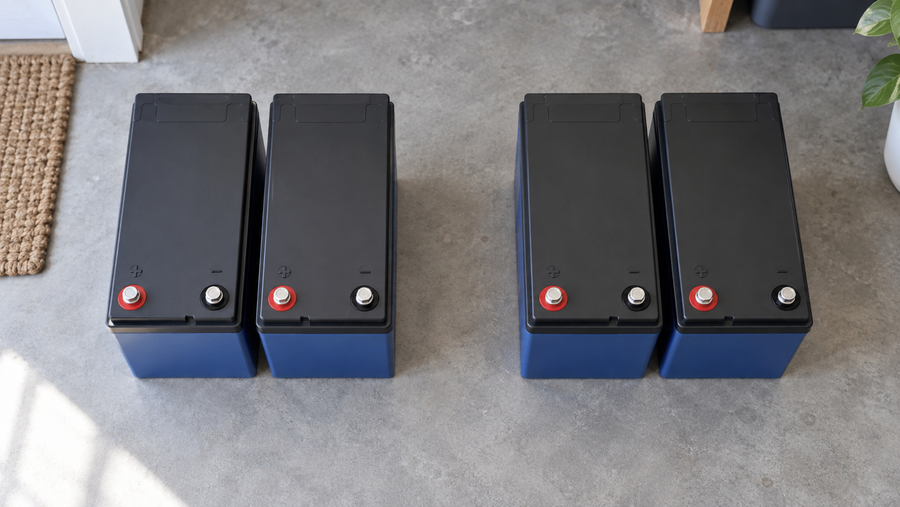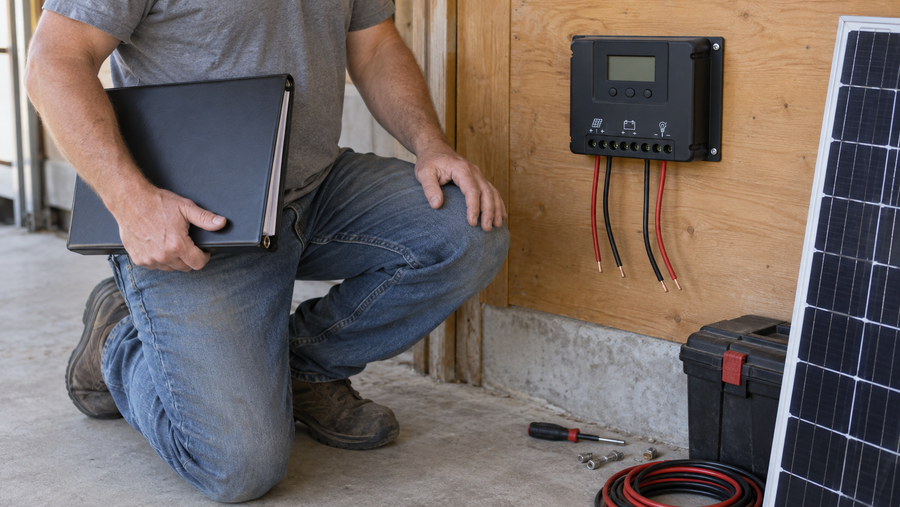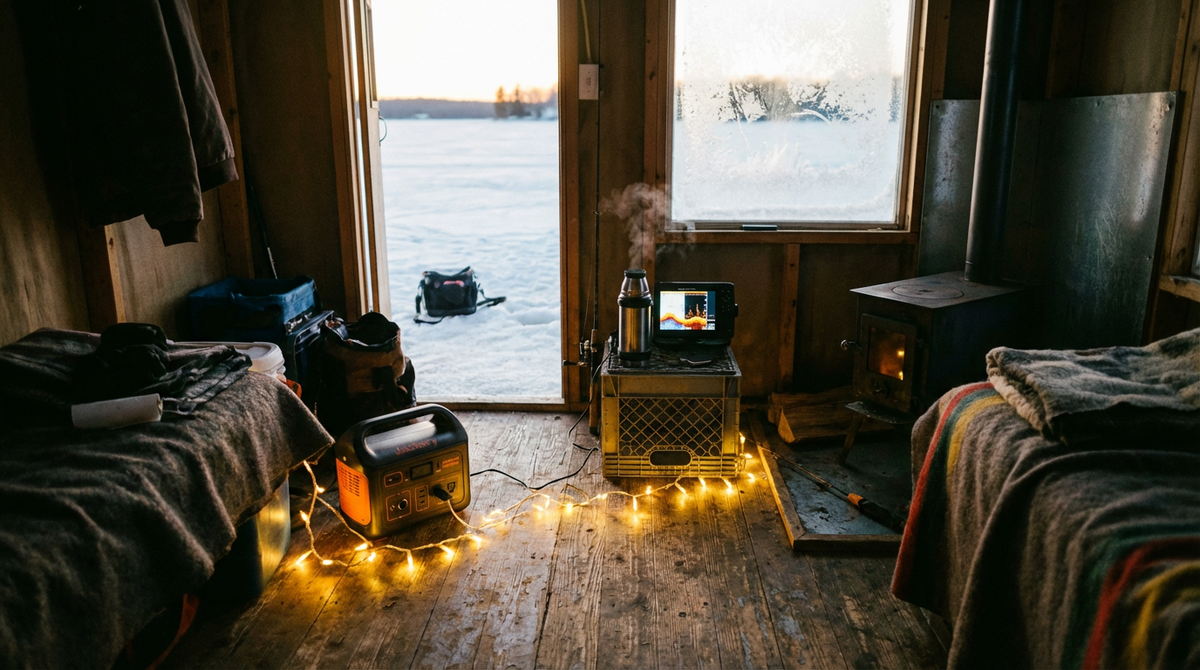

You know the feeling: the bite finally turns on, the wind howls across the ice, and your coffee is lukewarm while your fish finder blinks out because the little lead-acid battery quit. With a compact lithium setup that has already proven it can run kettles, grinders, and even camp fridges on long trips, the heat, sonar, and screens stay on from first hole to last without a single restart. This guide shows how to build that kind of all-day system, from the battery you choose to the way you brew, store, and sip coffee in the shanty. Similar compact marine power setups on fishing kayaks demonstrate how lithium fits into tight spaces while delivering all-day reliability.
The Winter Shanty Problem: Cold Coffee and Dead Screens
Most ice shanties start out powered the old way: a propane heater for warmth, a bargain thermos for coffee, and a small 12-volt brick for the fish finder. It works for a couple of hours, then reality hits. The coffee cools quickly because thin-walled mugs and cheap bottles dump heat into subzero air, and the sonar battery voltage sags just as the afternoon walleye window opens. Tests on modern stainless, double-wall bottles show that good coffee thermoses can keep drinks hot for a full workday and beyond, but the flasks many anglers toss in a sled are nowhere near that level.
At the same time, the shanty becomes a clutter of fuel and wires. Experienced guides running permanent ice houses often bring backup heat, a coffee pot, electronics, and even a laptop for slow periods, powered by a noisy generator in the corner. That works, but it locks you into one spot, burns gas, and still leaves you juggling which devices can be plugged in at the same time. The result is a day focused on rationing power instead of staying on fish.
A smarter approach is to treat your shanty like a tiny off-grid cabin and design the power system on purpose: heat handled one way, electronics handled another, with lithium doing the quiet, all-day work.

Power Strategy: Split Heat from Electronics
The single best move you can make is to split your loads into two lanes. One lane handles high-heat jobs like space heating and pan frying. The other handles low-draw but high-value tasks like sonar, lighting, chargers, and optional electric coffee tools. Lithium belongs almost entirely in that second lane.
Why Fish Finders Deserve Their Own Lithium Supply
Fish finders, flashers, and LED lights sip power compared with heaters, but they are extremely sensitive to voltage drop. A small 12-volt lithium pack or a section of a portable power station gives them a stable, flat voltage curve for the whole day instead of the sloping decline of a tired lead-acid battery.
On travel coffee setups, a compact immersion heater and Aeropress kit can run from a standard outlet and still heat about 10 fl oz of water to brewing temperature in around six minutes, with the entire kit fitting into a small bag and running off a single power source. That same class of outlet on a lithium power station can feed a sonar, a couple of USB cell phone chargers, and a strip of LED lights at once without noticeable strain, while the main battery barely moves because these are genuinely low-draw items. In testing for lightweight travel brewers, a mini immersion-heater-plus-pitcher rig proved efficient enough to match home kettles on timing once you had a decent power source, which is exactly what a lithium box provides in a shanty when combined with the methods described for travel coffee manual brew specialists.
Keeping this low-draw lane electrically separate also protects you from your own enthusiasm. When someone decides to plug in a laptop, camera charger, and portable speaker, the fish finder stays isolated on its circuit, shielded from any brief dips caused by larger loads spinning up.
Smarter Heat: Propane, Kettles, and Hybrid Cooking
For pure heat output in a cold shack, propane is still hard to beat. Many anglers already run vented or catalytic heaters, and some build clever multipurpose units where a cast-iron burner sits under a flat steel plate so it doubles as both heater and hot plate. In one practical setup, an angler kept a coffee pot or frying pan on that plate all day, turning the heater into a two-for-one solution that kept coffee steaming and burgers sizzling while fishing, as described in a multi‑purpose burner discussion.
That is one side of the hybrid picture. On the other side are fire-restricted situations, rentals that prohibit open flame inside, or days with kids in the shack when you want fewer exposed burners. In those cases, you lean harder on lithium to run compact kettles and portable brewers. Camping coffee guides show that instant packets, percolators, compact pour-overs, and hand-pump espresso machines all work off a simple source of hot water and have been tested everywhere from minimalist backpacking trips to car-camp kitchens by camp coffee testers. Paired with a lithium power station that can briefly supply enough output to heat water and then cruise at low draw the rest of the day, you get a flexible setup: propane covers space heat, lithium covers precision hot water and electronics.
The key is resisting the urge to run big household coffee makers or hot plates directly from the battery for hours. High-wattage appliances will chew through even a solid lithium bank fast. Instead, use short bursts of electric heat to bring a small kettle or travel pitcher to temperature, then pour into an insulated bottle that will hold that heat for hours. For other cold-weather power challenges like sizing battery capacity for overnight dew heater operation, similar off-grid power planning principles apply.
Coffee Workflow That Works on the Ice
Design your coffee workflow the same way you design a trolling pass: deliberate, repeatable, and easy to execute when conditions turn ugly.
Brew Methods That Actually Work in a Shanty
On the ice, simplicity beats showmanship. Methods that require loose parts, fragile glass, or fussy pouring are less attractive once gloves and headlamps are involved. Camping research highlights four reliable options: French press, cowboy coffee, percolators, and simple pour-over cones, all using modest water volumes and straightforward ratios, as explained in classic camp coffee breakdowns by outdoor brands and in more detailed tests by camp coffee reviewers.
For lithium-friendly brewing, a compact press or an Aeropress works exceptionally well. Travel coffee experts have shown that a stainless pitcher plus an immersion heater can heat about a mug's worth of water in roughly six minutes and then serve as both brewer and cup, with the entire kit fitting in a very small volume and powered from any standard outlet, as documented by manual-brew travel setups. In a shanty, that same system plugs into the AC outlet of a lithium power station, giving you clean, repeatable brews without open flame.
If you prefer a classic percolator, keep the high-heat stage on your propane plate or stove, then pour into your thermos rather than letting the pot sit and bake the coffee. Old-school cowboy coffee, where grounds are boiled directly in a pot and then settled with a splash of cold water, can be done on the heater and produces a surprisingly smooth, low-acid cup when ratios and timing are dialed in. Just avoid leaving any pot on high heat once brewed, which both wastes fuel and ruins flavor.
Keeping Coffee Hot Without Babysitting It
Flavor and heat are inseparable. Studies of coffee quality emphasize that aroma and perceived richness fall off quickly once the drink drops well below common drinking ranges. Practical winter travel tests put the sweet spot around 160–185°F, with flavor going flat below about 140°F, and that matches many anglers' experience of "dead" coffee halfway through a long sit.
The easiest way to keep your brew in that zone is a serious vacuum bottle. In real-world testing, the Stanley Classic Legendary Vacuum Insulated Bottle kept coffee hot for about 40 hours and cold for 35, while compact commuter bottles held heat in the 7- to 12-hour range, depending on size and lid design, as shown in controlled thermos trials by thermos testers.

Preheating the bottle with hot water for a few minutes, filling it fully to minimize air space, and closing the cap immediately after pouring all extend useful temperature.
That means your lithium workload drops dramatically. Instead of heating water every time someone wants a refill, you heat two or three small batches in the morning, brew into the thermos, and then sip from that reservoir. If your shanty heater has a flat top, you can stand the thermos on a folded towel near the heater's warm air—not so close that seals overheat, but close enough to slow heat loss further. The combination of a high-quality vacuum bottle and a lithium-powered brewing step gives you hot, stable coffee across a full ten-hour day without continuously burning fuel or battery.
Quick Comparison: Coffee and Power Setups
Here is how common setups compare once you think in terms of a heat lane and an electronics lane:
Setup type |
Heat source |
Coffee heating |
Electronics power |
Main pros |
Main cons |
Propane plus small SLA battery |
Propane heater |
Pot on burner |
Small lead-acid battery |
Simple, low upfront cost |
Coffee cools fast, sonar dies early, noisy restarts |
Generator-only |
Generator + heaters |
Household coffee maker |
Direct from generator |
Runs almost anything when fuel is flowing |
Noise, fumes, fuel logistics, more maintenance |
Lithium plus propane hybrid |
Propane heater |
Kettle or press on lithium, then thermos |
Lithium station or pack |
Quiet, efficient, all-day electronics, flexible heat |
Requires upfront planning and decent battery size |
All-electric lithium (no flame) |
Electric heater |
Electric kettle on lithium, then thermos |
Same lithium station |
Flame-free, ideal where heaters are restricted |
Demands large battery and strict power budgeting |
For most ice anglers, the lithium plus propane hybrid hits the sweet spot: solid, dry heat from gas, plus quiet, clean electricity where it matters.
Sizing and Protecting Your Lithium Bank
Once you have a strategy, the next decision is battery size. The goal is not to chase a perfect number but to give yourself comfortable runtime for a full day of fishing plus a safety buffer.
How Big a Power Station Do You Really Need?
Portable power stations built around lithium cells have changed what is realistic in a shanty. Camping-focused units in the roughly 1,000-watt output, 1,400-watt-hour capacity range are now common. In field use, gear in that class has run electric kettles, grinders, portable fridges, and lights from a single unit, and some models advertise over 3,000 charge cycles before noticeable capacity loss thanks to advanced battery management systems.
You can translate that to ice duty very simply. Low-draw items like fish finders, LED strips, and cell phone chargers barely dent such a battery over ten or twelve hours. Short, occasional bursts of electric heating to bring a small kettle to temperature take a visible but manageable bite each time. Even with conservative assumptions, you can plan for an entire day of fishing with multiple brew sessions and lights on from dark-thirty setup to after-sunset pack-down and still carry reserve energy for emergencies.
What matters more than hitting an exact watt-hour number is being honest about your behavior. If you know you will constantly use high-wattage devices, choose a larger station and still keep the propane heater as your primary warmth source. If your electric use is limited to sonar, lights, chargers, and a few heating bursts, a mid-sized unit is plenty.
Cold-Weather Care for Lithium Gear
Cold punishes every battery chemistry, but lithium handles voltage sag far better than traditional flooded or AGM options when treated properly. The key is to keep the battery itself out of the worst of the cold. Place the power station on a foam pad, block of wood, or sled bottom rather than directly on bare ice, and keep it inside the shanty envelope, not outside in the wind.
Layering applies to equipment as much as to clothing. Cold-weather fishing guidance stresses the value of moisture-managing base layers, insulating mid-layers, and wind-stopping shells, and the same logic holds for your power bank: give it a dry, ventilated, but insulated nook, away from dripping auger slush and boiling pots, following the general "stay dry and regulate temperature" logic laid out in winter fishing warmth and safety advice. Avoid sealing it in completely airtight containers where condensation can build, and always follow manufacturer limits on charging in extreme cold.
When recharging between days—whether from grid power at home, a vehicle outlet, or a small generator—let a deeply chilled station warm to a reasonable indoor temperature first before charging.

That extends cycle life and keeps the internal management system happy.
Safety and Comfort: You Cannot Fish When You Are Frozen
Power is only half the battle on the ice; the other half is staying warm enough to enjoy it. Cold-weather fishing experts hammer the same themes: anything but cotton next to your skin, smart layering, dry hands and feet, and realistic expectations about how cold you will get over many hours in freezing air and wind, points reinforced in multiple winter fishing guides like women's ice fishing clothing advice and trout fishing safety tips.
A lithium-powered shanty makes it easy to forget basics because you are staring at bright screens and sipping hot drinks, but the fundamentals still matter. Wool or high-performance synthetics for base layers, an insulating fleece or puffy mid-layer, and a wind- and water-resistant outer shell give your body a fighting chance. Hands and feet demand special attention: insulated boots, wool socks, and a backup dry pair in a sealed bag, plus good gloves or mitts and a small towel to dry hands after handling bait or fish. Heated vests, socks, and gloves powered by their own small lithium packs can be a game changer for anglers who run cold; they complement, rather than replace, the main heater and main battery bank.
Safety on the ice itself also remains critical. Early- and mid-season reports from big walleye waters frequently show ice thickness varying from just a few inches in some areas to well over eight inches in others, with pressure ridges, inflows, and springs creating thin spots right next to seemingly solid surfaces. State agencies regularly repeat that ice is never 100 percent safe, and they do not provide real-time thickness monitoring; they instead recommend local knowledge and constant on-ice testing with a spud bar or auger. A comfortable, lithium-powered shack should never convince you to shortcut those checks.
FAQ: Common Shanty Power Questions
Can Lithium Replace Propane Heat in My Ice House?
In theory, a very large lithium bank and efficient electric heater could keep a small shack warm without propane. In practice, the wattage needed for steady space heating will drain almost any realistically portable battery in short order. The most reliable real-world configuration today is a hybrid: propane for bulk heat, lithium for electronics, and short, controlled bursts of water heating for coffee and food.
If I Carry a Big Thermos, Do I Still Need Electric Coffee Gear?
A high-quality vacuum bottle that has been preheated and filled to the top can keep coffee hot through an entire day on the ice, as shown when robust stainless models held temperature for many hours in controlled thermos tests. If you are content with one style of coffee brewed once or twice a day, you can skip electric brewers and rely on a propane percolator or cowboy coffee poured into a thermos. Electric options shine when you want different brew styles on demand, need to avoid open flame, or simply enjoy pressing a fresh cup mid-afternoon without turning the heater up higher.
Is It Worth Upgrading from a Small Lead-Acid to a Lithium Pack Just for My Fish Finder?
For most frequent ice anglers, yes. Lithium offers a flatter voltage profile and much higher usable capacity per pound, which translates into longer runtime, more predictable sonar behavior, and less weight in the sled. Once you have that stable 12-volt source in your kit, you will quickly find yourself plugging in LED lights, cell phone chargers, and even small fans or camera rigs, turning a single fish-finder battery upgrade into the backbone of a much more capable shanty.
When you step onto the ice with a dialed-in lithium system, your day changes. Coffee stays at a satisfying, steaming temperature, screens stay bright, and you stop thinking about which device to unplug next. Plan your power lanes, build a simple, repeatable coffee workflow, and treat your lithium bank with the same respect you give your rods and augers; the payoff is a warmer, more productive season where energy is an asset, not a limit.