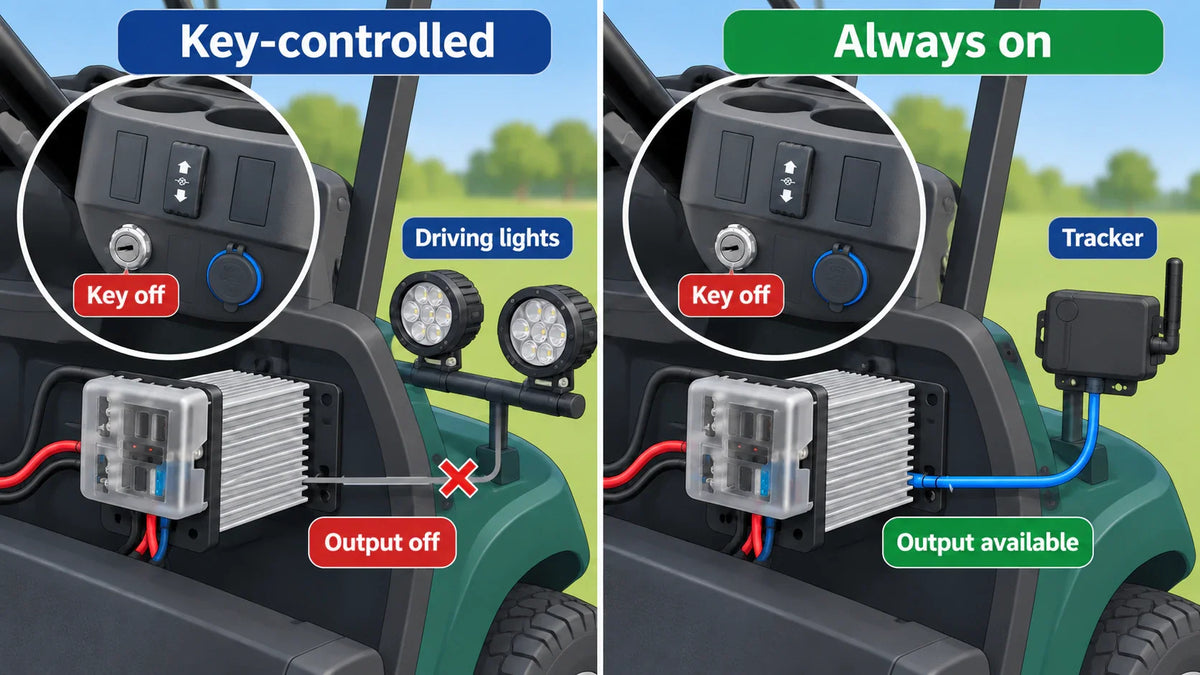

Choose key-controlled operation when reducer-powered accessories should turn off with the cart. Choose always-on supply only for accessories that need power while the key is off. Then check how the reducer implements that choice: switching its main input and controlling an enable terminal are different arrangements, even if both make the accessories stop when you turn the key.
Start with what needs power while parked
List the accessories supplied by the reducer and decide which must remain available with the cart off. Driving lights or an audio system may only be needed during use. A tracker or another intentionally continuous device may need a parked supply. These are examples of load requirements, not universal rules for those devices.

“Always on” means power is available at the reducer output while the converter is energized and operating. It does not mean every connected accessory is actively running: an accessory can have its own switch or sleep mode. However, turning off the accessory does not necessarily remove the converter's own input draw.
If different accessories need different behavior, do not choose one setting simply because they share a fuse block. A documented installation may separate the continuously powered loads from the switched loads. The wiring design should preserve the required functions while limiting unnecessary parked consumption.
Distinguish the three control arrangements
| Arrangement | What happens when the cart is off | What must be checked |
|---|---|---|
| Main input is switched | The approved switching device removes the reducer's input supply | Device DC-voltage/current ratings, wiring, and switching instructions |
| Enable or remote input is controlled | The reducer changes operating state while its main supply may remain connected | Supported control signal and specified disabled-state current |
| Input and enable remain active | The reducer continues to make its output available | Converter idle draw and any active accessory loads |
An enable terminal is a control connection, not automatically a terminal for carrying accessory current. Its permitted signal voltage and reference depend on the reducer. A cart key circuit may supply a suitable control signal in one installation and an unsuitable voltage in another.
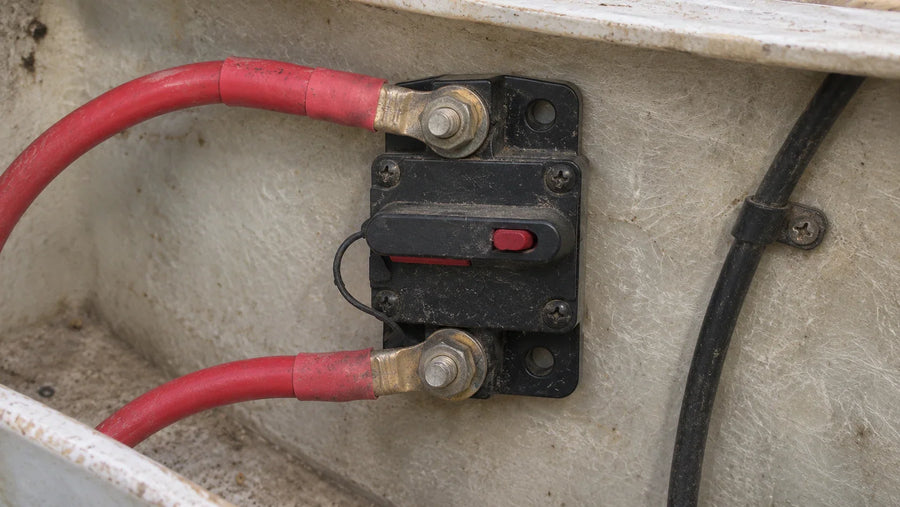
Do not route the reducer's main current through the key switch merely because the key controls the cart. Use the reducer manufacturer's approved switching arrangement, including a correctly rated relay or other device where specified. Neither a universal wire color nor a universal trigger voltage can be inferred from “36V/48V reducer.”
Account for idle and disabled-state current
An energized converter can draw current even when the accessories are off. Disabling a converter through its control input may reduce that consumption, but it does not prove that input current is exactly zero. Converter documentation distinguishes operating and shutdown current; step-down converter specifications illustrate that distinction. Those component figures are not a current allowance for a golf cart.
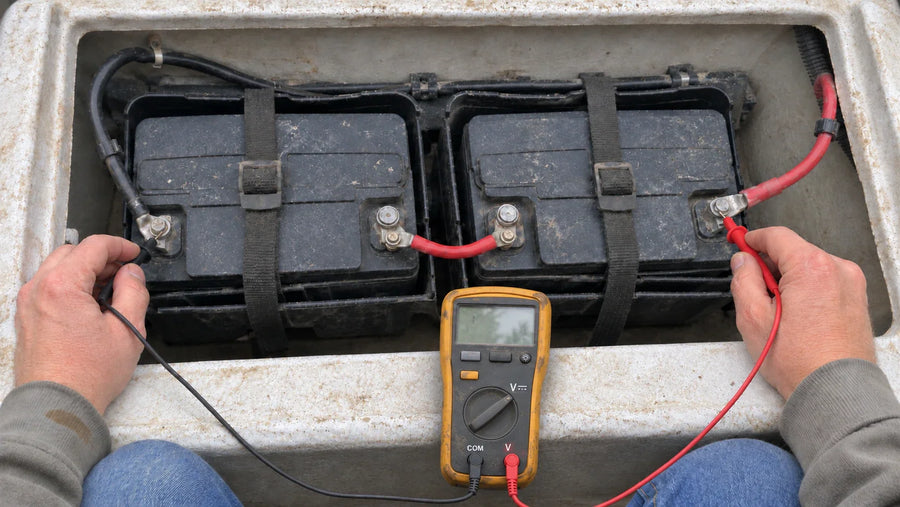
For a parked installation, use the actual reducer's specified idle or disabled-state draw and the connected devices' standby requirements. For long storage, follow the cart and battery storage instructions rather than assuming a key-off setting electrically isolates the pack.
This is also why key-controlled operation and a service disconnect serve different purposes. An enable input that stops the output does not make battery terminals safe to work on.
Check the behavior after installation
With the approved wiring complete, check what happens in each relevant state:
- Key on: the intended switched accessories receive their required supply.
- Key off: those accessories stop, while any deliberately continuous devices retain power.
- Accessories off: confirm whether the converter is still enabled or its input remains connected.
- Storage: verify the equipment's specified shutdown or isolation arrangement.
If an accessory remains powered unexpectedly, trace whether it uses an always-on branch or whether the reducer's enable signal remains active. If the output turns off but the pack still drains, check parked input current and other loads; output voltage alone does not identify the source of drain.
FAQs
Does key-switched operation guarantee zero battery drain?
No. A controlled enable terminal can stop output while some circuitry remains connected to the battery. Check the reducer's disabled-state specification and the rest of the cart's parked loads.
Can I connect an enable wire directly to any key-switch wire?
No. Match the reducer's specified control voltage, reference, and wiring arrangement to the cart circuit. A wire that becomes live with the key is not automatically suitable for that enable terminal.
When is always-on operation useful?
It is useful when a connected device must retain power while the cart is off. Include both the converter's own consumption and the device's parked load when deciding whether that supply should remain active.