
Turning off an RV’s ordinary battery disconnect usually cuts battery power to circuits downstream of the switch, not to every circuit in the RV. Battery-side wiring can remain energized, and solar can still charge the battery if the controller’s battery output connects on that side of the switch.
The switch divides the system into two sides

Think of the disconnect as a boundary between the battery side and the switched coach side. Loads wired downstream of the switch generally stop receiving battery power when it is off. Which lights, appliances, or other 12-volt loads are on that side depends on the RV’s wiring.
A circuit connected directly to the battery, or otherwise on the battery side of the disconnect, can stay powered. For example, an NHTSA recall report for affected Forest River trailers describes correcting the breakaway-switch wiring so it remained on the battery side and had constant power.
The Reflection travel-trailer owner’s manual gives a separate model-specific example: its Battery Power Control Box has battery-disconnect and battery-direct connection points, and its 12-volt safety items remain operational with the box switch off. The same system has a separate solar disconnect for the solar controller.
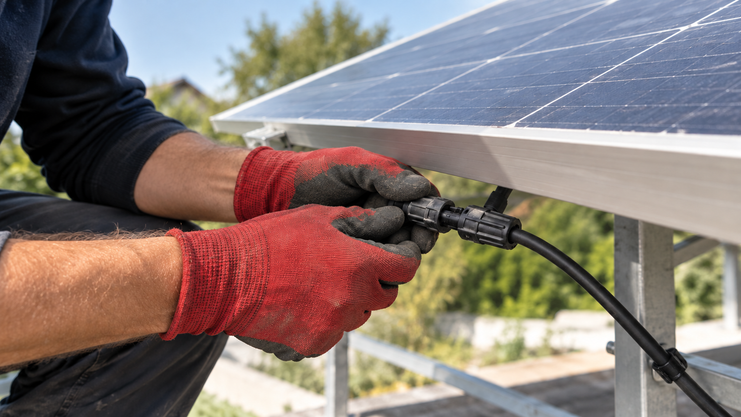
Solar charging depends on the connection path
Trace the controller’s battery-output conductors relative to the ordinary disconnect. If they connect to the battery side, turning off that disconnect does not break the controller-to-battery path, so charging can continue when solar is available. If they connect to the switched coach side, opening the disconnect separates the controller from the battery.
A separate solar disconnect creates its own boundary. In the Reflection system described in the owner’s manual, the solar controller has a separate solar disconnect switch, independent of the Battery Power Control Box switch.
Find the actual boundary
Start with the wiring diagram. Locate the battery disconnect, battery-direct connections, solar controller output, and the circuits you want to check. The diagram can show which paths are intended to remain connected when the switch is off.
Trace the conductors. Where the diagram is unclear, follow the relevant wires or have a qualified RV technician identify their connections. Other power sources, such as shore power or an inverter, and the chassis electrical system may create separate paths; the battery disconnect alone does not describe every source of power in an RV.
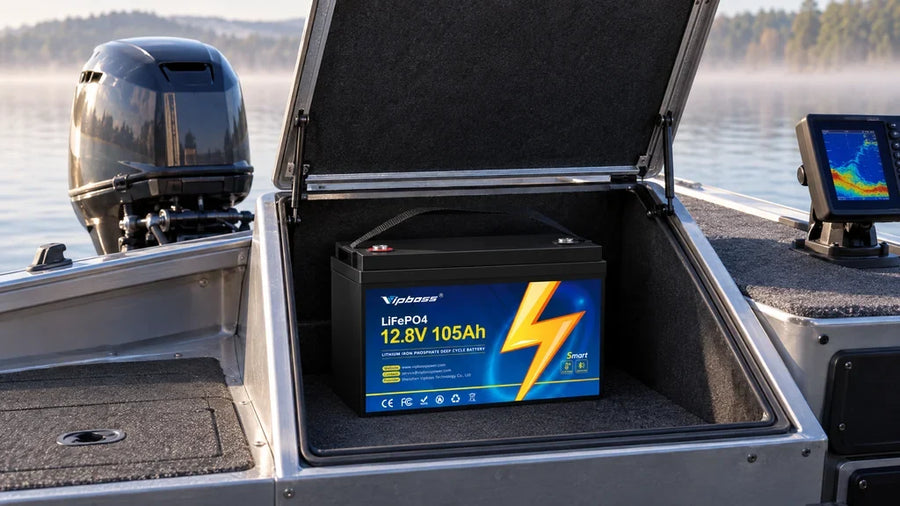
Check the boundary from another point. The Vipboss 12V 105Ah LiFePO4 battery includes Bluetooth monitoring, which can provide an additional observation point while you check the disconnect boundary. Use the wiring diagram and conductor path to determine which circuits are physically connected on each side of the switch; a light going out only shows that the light lost power, not that the battery is fully isolated.
For service that requires complete battery isolation, identify and isolate every relevant power path, including solar and any other connected source. The ordinary coach disconnect may only shut down normal switched loads.
FAQs
What can stay powered when an RV battery disconnect is turned off?
Circuits connected directly to the battery or otherwise located on the battery side of the disconnect can remain powered. Loads on the switched coach side generally lose battery power, although other sources such as shore power or an inverter may still energize some circuits.
Will solar panels keep charging the RV battery when the battery disconnect is off?
Solar charging can continue if the controller’s battery output is connected on the battery side of the disconnect. If that output is on the switched side, opening the disconnect breaks the controller-to-battery path; a separate solar disconnect controls its own connection.
How can I identify the boundary controlled by an RV battery disconnect?
Locate the battery disconnect, solar controller output, battery-direct connections, and coach circuits on the wiring diagram, then trace the relevant conductors if the diagram is unclear. Connections on the battery side can remain energized when the switch is off, while connections on the switched coach side generally lose battery power.