
If a 36V LiFePO4 charger shows the wrong voltage, compare the reading with the battery manufacturer's required charging voltage, not the 36V nominal label. Then determine whether the mismatch begins at the charger output or appears only after the charger is connected to the battery.
Find where the voltage becomes wrong

- Check the specification. Confirm the battery's required charge voltage and maximum charge current. Batteries with the same 36V nominal rating do not necessarily use identical charging limits.
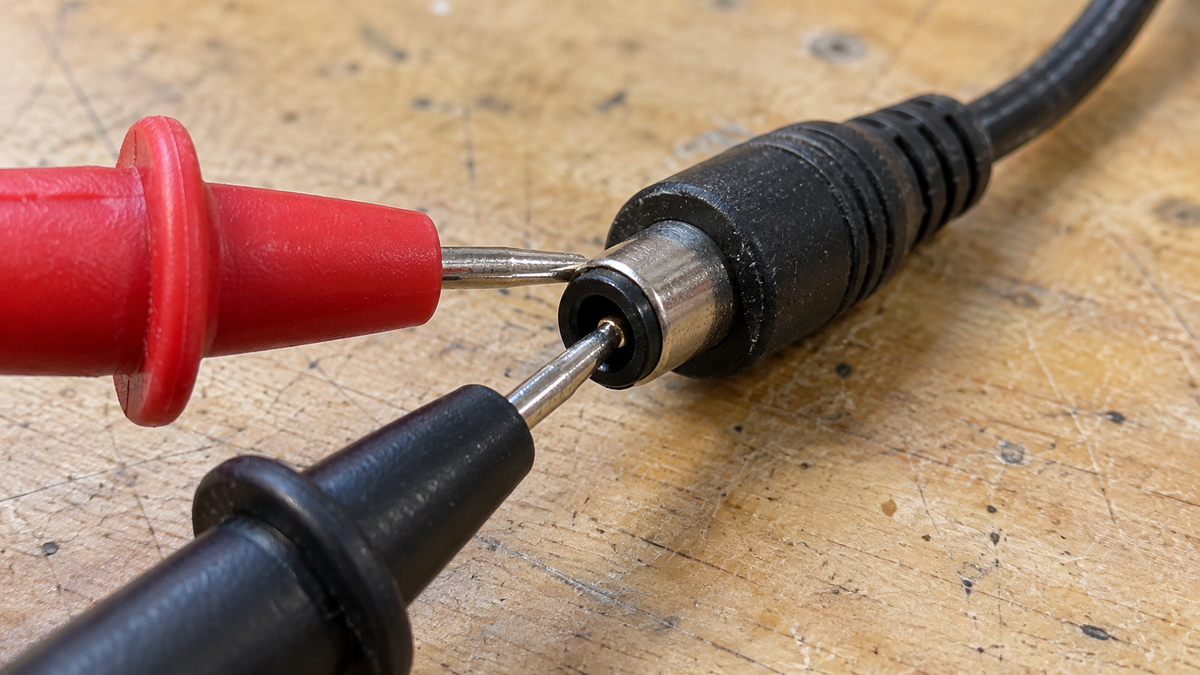
- Measure the charger output. Follow the charger manual's test procedure and observe DC polarity. Some smart chargers may not provide their normal output until they detect a battery, so an unloaded reading is not always conclusive.
- Measure at the battery while charging. If the charger reading is correct but the battery-terminal voltage is lower, inspect the connector, fuse, polarity, and cables for damage, looseness, corrosion, or excessive voltage drop.
- Check status indicators. A fault light or BMS warning can distinguish an out-of-range charger from temperature, current, cell-voltage, or wiring protection.
A battery percentage display is not a substitute for a voltage measurement.
What the voltage pattern suggests
| What you observe | What to check next |
|---|---|
| Charger output is too high before connection | Wrong setting, wrong charger, or charger fault; stop before connecting it |
| Charger output is correct but battery voltage is low | Connector, fuse, polarity, cable condition, and voltage drop |
| Charging starts and then stops | BMS warning, battery temperature, cell voltage, current limit, or wiring fault |
| Charger reports full too quickly | Starting state of charge, actual charge current, or premature termination |
| Voltage drops after disconnection | A small change can be normal; a sharp drop with poor runtime needs battery testing |
One reading cannot prove which component has failed. Compare the meter reading with charger indicators, battery warnings, temperature, and the limits in both manuals.
When replacing the charger makes sense
Replace the charger only when testing shows that its chemistry, output, or charge behavior does not meet the battery specification—or when the charger cannot reliably produce its stated output. A new charger will not correct a loose cable, active BMS protection, or a battery fault.
If the battery is a 36V LiFePO4 model that specifically permits a 43.8V charge voltage and 25A charge current, the Vipboss 36V 25A Lithium Battery Charger is one matching-specification option. Confirm the connector, polarity, battery limits, and wiring capacity before purchase or connection.
Stop charging if the output exceeds the battery's limit, the charger repeatedly faults, or the battery becomes unusually hot, swollen, or visibly damaged. Do not bypass the BMS or repeatedly reconnect the charger to force charging.
Frequently asked questions
What voltage should a 36V LiFePO4 charger output?
Use the voltage specified by the battery manufacturer. A 12-cell LiFePO4 pack is often paired with a 43.8V charger, but the battery specification remains decisive.
Can a 36V charger read correctly with no load but fail while charging?
Yes. A charger can appear normal without load yet show a voltage drop or fault when current is required.
Does a wrong charger voltage always mean the charger must be replaced?
Not always. Check the charger output, connector path, battery limits, and BMS behavior to identify where the mismatch begins.