
You are not paying for the 100Ah rating on the label so much as for how safely, how often, and how long that 100Ah can actually work for you.
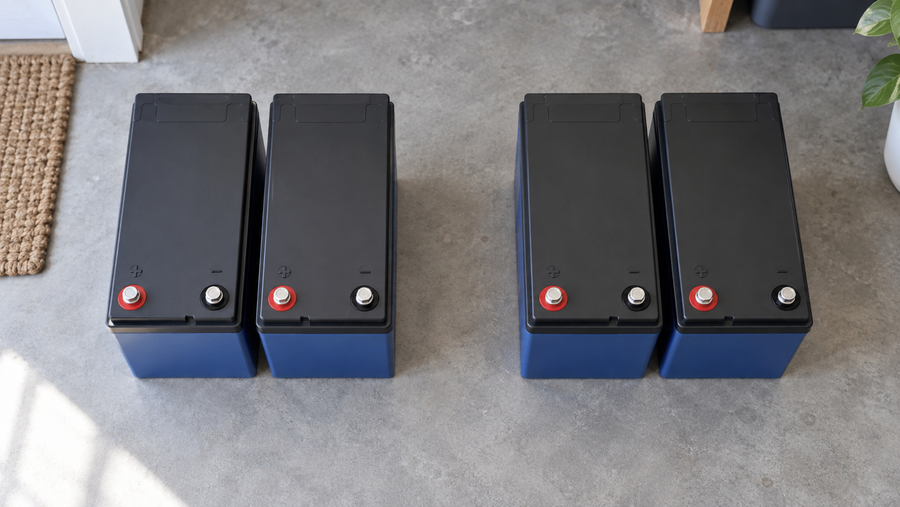
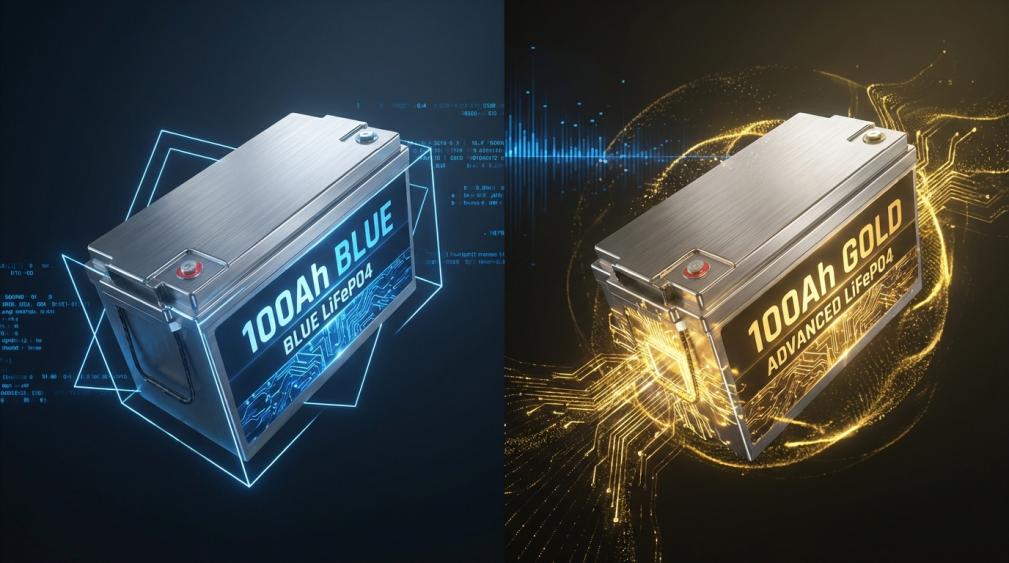
Picture this: you’re sizing an off‑grid bank or RV house system and see two 100Ah lithium batteries side by side. One is around $300, the other close to $800, and the cheaper one promises “long life” just as loudly. Data from brands such as Mach1 Lithium, LithiumHub, and Vatrer Power show the same pattern: low‑cost packs often deliver only a fraction of the safe cycles, safety margin, and support that premium packs do. By the end of this guide, you’ll know where the extra dollars go, how to read spec sheets without getting burned, and when the higher‑priced 100Ah battery is actually the cheaper choice over time.
Why “100Ah Is 100Ah” Is a Myth
On paper, 100Ah simply means a battery can deliver 100 amps for one hour, or a lower current for longer. Guides from Eszoneo and other manufacturers note that this rating alone tells you nothing about how many times you can do that, how deep you can discharge it, or how safely it behaves under stress.
Chemistry matters first. Most 12V 100Ah off‑grid batteries today are either lithium iron phosphate (LiFePO4) or another lithium‑ion chemistry such as nickel manganese cobalt (NMC). Sources such as Eco Tree and LithiumHub highlight LiFePO4 for its high thermal stability, strong safety margin, and very long cycle life, while NMC trades some of that lifespan and stability for higher energy density and a lighter case. A 100Ah LiFePO4 pack is usually a bit bulkier but can deliver thousands more safe cycles than a similar‑size NMC pack when cycled daily.
Then there’s usable capacity. Power Sonic and LithiumHub both point out that quality lithium batteries can safely use nearly all of their rated capacity, often up to 80–100% depth of discharge, while traditional lead‑acid should be kept around 50% or less to avoid damage. So a 100Ah lithium pack can often provide roughly double the usable energy of a 100Ah lead‑acid battery over a single discharge, even before you consider cycle life.
When you see two “100Ah” labels, you are really comparing the size of the tank, not the strength of the tank walls or how many times you can drain and refill it before something cracks.
Where the Extra $500 Really Goes Inside a Premium 100Ah Battery
Chemistry and Cell Grade
Mach1 Lithium’s 2026 price guide shows that 100Ah deep‑cycle lithium packs typically fall in the 800 range, with LiFePO4 options costing about 20–40% more upfront than standard lithium‑ion but lasting three to five times longer in cycle life. Eco Tree and Anern’s technical guides emphasize that LiFePO4 commonly delivers about 3,000–7,000 cycles to 80% remaining capacity, while other lithium chemistries are more often in the 1,000–2,000 cycle range.
Cell grade is just as important as chemistry. Expion360 explains that quality packs use closely matched Grade A cells, often tested to UL 1642 standards, while cheaper batteries may use Grade B or even reclaimed cells. Those lower‑grade cells can drift out of balance, heat up more under load, and fail earlier. Because you can’t open the case in a store, the price spread usually reflects that unseen difference: rigorous cell sourcing, matching, and testing costs money.
In real‑world use, a $300 generic 100Ah pack might be built with lower‑grade cells aimed at a few hundred to perhaps around a thousand solid cycles, while an $800 LiFePO4 pack from a premium brand is engineered for several thousand cycles under daily use. On an off‑grid cabin or full‑time RV, that difference can represent years of extra runtime.
Battery Management System, Safety, and Smart Features
A lithium battery is not just cells in a plastic box. LithiumHub, Eco Tree, and Vatrer Power all highlight the Battery Management System (BMS) as a major cost driver. The BMS monitors every cell group, controlling charge and discharge to protect against overcharge, over‑discharge, overcurrent, short circuits, and extreme temperatures.
In budget 100Ah packs, the BMS is often minimal: basic over‑ and under‑voltage cutoffs and modest current limits, sometimes with weak low‑temperature protection. Higher‑end packs integrate more powerful electronics, including higher continuous and surge current ratings, accurate cell balancing, cold‑weather charging protection, and sometimes Bluetooth monitoring or built‑in heaters for cold climates.
Each of those safeguards takes real engineering and higher‑grade components. LithiumHub notes that advanced BMS and smart features turn a battery into a “smart device,” which adds cost but dramatically improves safety and lifespan, especially in high‑demand RV, marine, and off‑grid systems that see vibration, heat, and deep daily cycling.
Build Quality, Testing, and Certification
Manufacturers like Wis‑Tek and Ritar Power describe how much of a battery’s cost comes from manufacturing and validation rather than just raw materials. Precision electrode coating, cell assembly, formation cycling, and multiple rounds of testing for capacity, internal resistance, and safety all add labor and equipment cost.
PowerBattery’s breakdown of pack pricing shows that the enclosure, terminals, internal wiring, thermal management, and certification work (UL, CE, and similar) can be a significant share of the final price. Cheaper “lick and stick” imports that Expion360 warns about often skip some of this investment. They use housings and components intended for mild, climate‑controlled environments, then get sold into RVs and off‑grid cabins that see vibration, dust, and wide temperature swings.
Premium 100Ah packs from brands like Battle Born, Dakota Lithium, and Expion360 tend to have robust cases, strong internal bus bars, high‑quality terminals, and validated operating ranges. Those differences show up when a battery is bolted into a trailer that vibrates down gravel roads for a decade.
Warranty, Cycle Life Charts, and Brand Support
Warranty is where the marketing talk meets the manufacturer’s real expectations. Expion360 points out that quality lithium RV batteries often carry warranties of about 10–12 years and publish detailed cycle‑life charts showing about 3,000–5,000 cycles. Many cheap 100Ah packs advertise “up to 5,000 cycles” in generic lithium marketing copy but only back the product with a two‑ or three‑year warranty.
Mach1 Lithium and Vatrer Power recommend using both warranty length and documented cycle life as key quality signals. If a company truly expects a battery to deliver thousands of cycles over a decade, it can usually afford to stand behind it for more than a couple of years. Longer warranties and accessible tech support are baked into the price of that $800 pack; the $300 battery often assumes it will be out of warranty long before you reach those “typical lithium” cycle numbers.
Real Money Math: $300 Versus $800 for a 100Ah Pack
Price tags alone are misleading. The right way to compare batteries is cost per usable kilowatt‑hour over the battery’s life.
Vatrer Power gives a clear example using a 1 kWh pack. A lead‑acid battery at about $300 with roughly 500 cycles and only half its capacity realistically usable delivers around 250 lifetime usable kWh, or about $1.20 per usable kWh. A LiFePO4 pack around $900 with about 5,000 cycles at roughly 90% usable depth of discharge delivers about 4,500 usable kWh, or around $0.20 per usable kWh. The higher sticker price buys a far lower lifetime energy cost.
Now apply similar thinking to two 12V 100Ah lithium batteries. Vatrer Power notes that a 12V 100Ah LiFePO4 pack holds about 1.28 kWh. Using conservative, rounded numbers:
Battery type |
Upfront price |
Example rated cycles |
Approx lifetime usable energy* |
Approx cost per usable kWh |
Budget 100Ah lithium |
$300.00 |
1,000 |
≈1,150 kWh |
≈$0.26 |
Premium 100Ah LiFePO4 |
$800.00 |
4,000 |
≈4,600 kWh |
≈$0.17 |
*Assumes about 90% usable capacity, based on LiFePO4 examples from Vatrer Power and LithiumHub.
These cycle figures sit in the ranges reported by Mach1 Lithium, LithiumHub, and Anern for basic versus long‑life LiFePO4 packs. The takeaway is important: over its lifetime, the $800 pack can actually deliver energy at a lower cost per kilowatt‑hour than the $300 pack, while also being safer and more reliable under hard use.
For RVs, boats, and off‑grid cabins that charge and discharge daily, Mach1 Lithium estimates that the higher upfront cost of quality LiFePO4 can pay back within roughly two to four years compared with lower‑cost, shorter‑life options, and especially versus lead‑acid banks that need multiple replacements over a decade.
Why Prices Range From $200 to $900 for “12V 100Ah”
If you shop across major retailers and specialist brands, the spreads are eye‑opening. Vatrer Power reports that 12V 100Ah LiFePO4 batteries run from roughly 150 for bare‑bones budget units up to 1,000 or more for high‑end models with advanced BMS, heating, or monitoring. Leaptrend’s comparison of 12V 100Ah batteries shows Amazon‑style offerings in the 310 bracket, its own LiFePO4 around 309, another mid‑range brand at about $310, and premium names like Dakota Lithium and Battle Born at about $799 and $925 respectively.
Layer that onto Mach1 Lithium’s broader 2026 market data, where large 100Ah deep‑cycle packs typically sit between about $400 and $800, and the pattern is clear. The very lowest prices usually mean compromises in cell grade, BMS sophistication, testing, and support. The highest prices reflect long warranties, verified LiFePO4 chemistry with strong cycle‑life data, advanced safety features, and sometimes regionally higher production costs tied to stricter labor and regulatory standards.
Global factors such as raw‑material volatility, tariffs, and production scale that Wis‑Tek, Ritar Power, and PowerBattery describe also feed into the final price. Large automotive and grid suppliers may be building packs at around 120 per kWh at scale, but smaller 100Ah batteries for RVs and off‑grid systems carry higher per‑kWh costs because they need robust housings, integrated BMS, and lower‑volume manufacturing.
How to Decide Which 100Ah Battery You Should Actually Buy
The right choice is not “always buy the expensive one.” It is “match the battery to your duty cycle, risk tolerance, and long‑term goals.”
If your 100Ah pack will be the heart of an off‑grid cabin, a full‑time RV, a live‑aboard boat, or a critical backup system, you are asking that battery to cycle deeply and often. Sources like LithiumHub, Mach1 Lithium, Anern, and the ROI analysis from Anern’s LiFePO4 guide all converge on the same recommendation: in frequent‑cycling applications, a high‑quality LiFePO4 pack with thousands of rated cycles, a strong BMS, and a long warranty is the most cost‑effective path, even if it costs 900 upfront. You buy it once, size the system correctly, and avoid repeated replacements, downtime, and safety worries.

On the other hand, if your 100Ah battery will support a weekend fishing boat, a camper used a few trips a year, or a rarely used backup circuit for a small cabin, the math changes. Mach1 Lithium notes that standard lithium‑ion can be adequate in applications expected to see only a few hundred total cycles over their lifetime. In these lighter‑duty cases, a well‑chosen mid‑range 100Ah pack in the 500 bracket from a reputable brand, with a reasonable warranty and honest specs, can deliver solid value without paying for cycles you will never use.
Regardless of use case, a few checkpoints are non‑negotiable. Look for clear chemistry labeling, ideally LiFePO4 for most RV and off‑grid systems. Check for credible certifications and safety testing rather than vague claims. Verify that the data sheet shows realistic cycle‑life curves at specific depths of discharge, not just marketing lines about what “lithium batteries can do.” Make sure the warranty length and terms match the performance you expect; a two‑year warranty on a battery advertised for 5,000 cycles should raise questions.
FAQ
Q: If my budget is tight right now, is it wrong to start with the $300 100Ah battery? A: It is not automatically wrong. For light, occasional use, a mid‑priced 100Ah pack can be perfectly reasonable. Just be honest about how often you will cycle it and what happens if it fails early. If the battery is mission‑critical or hard to access once installed, the risk and labor of replacing a short‑life pack often outweigh the savings.
Q: Can I trust “up to 5,000 cycles” on a cheap 100Ah battery? A: Expion360 and other premium manufacturers caution that many low‑cost brands quote generic lithium cycle figures without tying them to their own product with matching warranties and charts. Treat “up to” numbers as marketing unless they are backed by a detailed cycle‑life graph and a long, written warranty.
Q: Does it ever make sense to pay more than $800 for a 100Ah battery? A: In some cases, yes. Ritar Power and PowerBattery note that specialized packs with reinforced housings, advanced thermal management, wide temperature‑range performance, and industrial‑grade certifications cost more but are appropriate for harsh or commercial environments. If your system runs in extreme conditions or downtime is very expensive, those extra layers of engineering can be worth the premium.
A 100Ah label only tells you the size of the tank; the real value is in how many safe, reliable cycles that tank can deliver in your world. When you weigh chemistry, cell grade, BMS quality, build, and warranty—and run the simple cost‑per‑kWh math—the right 100Ah battery stops being a guessing game and becomes a strategic upgrade to your power system.
References
- https://www.lifepo4prices.com/
- https://battlebornbatteries.com/lithium-batteries-cost/?srsltid=AfmBOop2A8aajvGW0DtPICAGtePxQxhOflqgjybWKwsTeCwrjnd02tZI
- https://eszoneo.com/info-detail/understanding-100ah-lithium-ion-battery-prices-what-you-need-to-know
- https://lithiumhub.com/why-lithium-batteries-cost-more-and-what-you-get-in-return/#:~:text=Not%20all%20lithium%20batteries%20are,inside%20different%20lithium%20battery%20brands.
- https://www.power-sonic.com/lithium-vs-lead-acid-batteries-is-the-higher-cost-worth-it/
- https://www.ritarpower.com/industry_information/The-Price-of-48V-100Ah-Lithium-Batteries-An-In--Depth-Analysis_218.html
- https://www.saffordvw.com/how-much-does-a-car-battery-cost/
- https://www.anernstore.com/blogs/diy-solar-guides/100ah-lifepo4-vs-lithium-ion-guide?srsltid=AfmBOopA8FPrYKL1z_-RNA8_pdeVvY_X2fLY-FR105kGEMLY-sLbGZz1
- https://ecotreelithium.co.uk/news/lithium-iron-phosphate-battery-cost/
- https://diysolarforum.com/threads/12v-100ah-li-prices-vary-widely-why.74690/