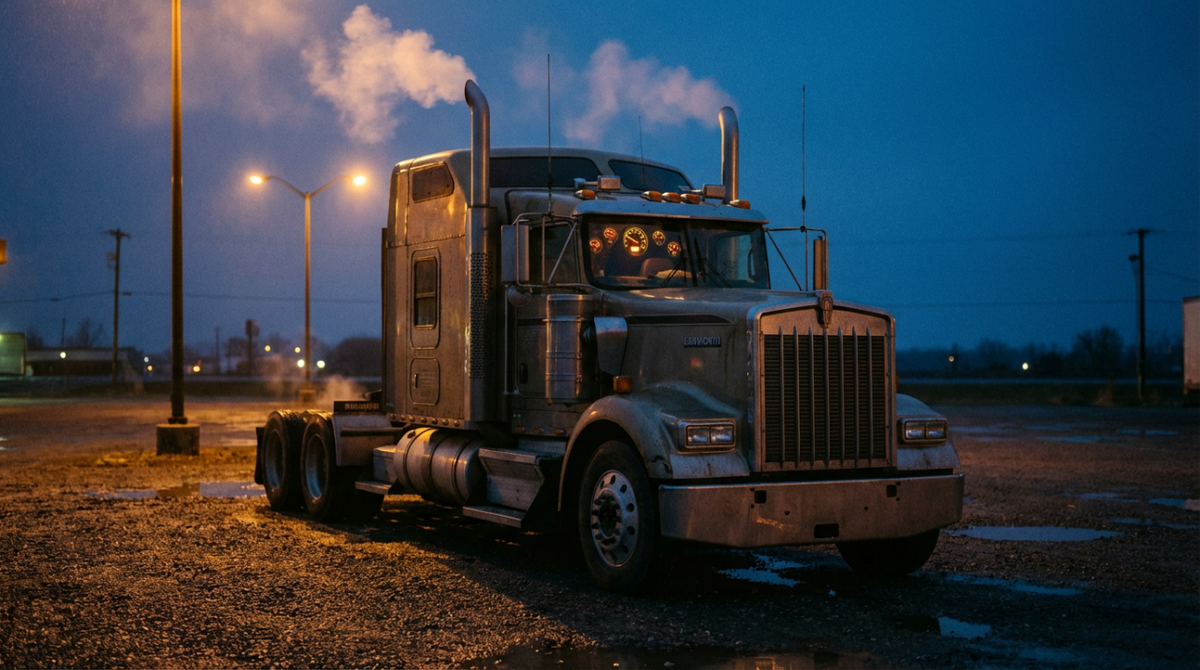

Letting a truck idle just to "top up" the batteries is almost never worth it: you burn expensive fuel, accelerate engine wear, and still get a slow, incomplete charge. Treat long idling as an emergency backup, not a charging strategy, and design your system so the engine can be off while your power stays on.
You know the moment: parked on a break, engine rumbling, air conditioning running, watching the fuel needle slide down while hoping the batteries are getting healthier. When fleets actually track idle hours and fuel burn, they routinely uncover hundreds or even thousands of hours a year where trucks sit motionless, adding costs without adding range or reliability. This guide lays out when idling to charge helps, when it quietly wrecks your bottom line, and how to upgrade your power setup so you can shut the engine off and still have all the power you need.
What Idling Really Does to Your Truck and Fuel Budget
Vehicle idling means the engine is running while the truck is not moving, burning fuel and producing emissions without doing useful work. Cutting that idle time is one of the easiest ways to lower operating costs engine idling. Heavy-duty diesel engines typically consume about 0.5–1 gallon of fuel per hour at idle, depending on engine size and parasitic loads such as air conditioning and alternator demand. For long-haul sleeper trucks, rest-period idling alone is estimated to consume up to 1 billion gallons of diesel per year in the U.S., which equates to roughly $3 billion in fuel at common price levels idling reduction for long-haul trucks.
Put that in terms of a single truck. If a tractor idles 2,000 hours per year at about 0.8 gallons per hour, it burns around 1,600 gallons of diesel just sitting still, which is roughly $6,400.00 per year at $4.00 per gallon, before you count any maintenance or downtime. That same engine wear and fuel cost happens whether you are idling for heat, air conditioning, or because someone told you it "keeps the batteries happy."
The hidden maintenance penalties are just as real. Prolonged idling is low-load operation, which encourages incomplete combustion, soot and carbon buildup, and moisture accumulation in the engine and exhaust system. That contamination degrades engine oil more quickly and can increase oil consumption, pushing you toward shorter oil change intervals and higher service costs. Some estimates translate each hour of idling into roughly 30–50 miles of equivalent engine wear, shrinking engine life and resale value.
On top of the mechanical and fuel costs, idling produces a concentrated blast of CO₂, nitrogen oxides, and particulates right where your drivers and nearby communities are breathing, with national idling emissions estimated in the tens of millions of tons of CO₂ annually. Many jurisdictions now enforce strict anti-idling rules, with some programs allowing fines that can reach into the tens of thousands of dollars for repeat offenders. Once you add fuel, maintenance, emissions, and fines together, "free" charging by idling becomes very expensive.
How Much Charge Do You Actually Get When You Idle?
Alternators are designed first to keep the vehicle's electronics powered and the starting battery healthy, not to act as fast chargers for deeply discharged batteries, and that difference matters when you are thinking about using idling as a charging tool how long to drive to charge a car battery. Experts in off-grid vehicle charging note that bringing a significantly discharged battery back toward full capacity by driving can take 4–8 hours of continuous highway driving, and even then you may only reach about 75–80% of its full capacity because the vehicle's electrical system intentionally limits voltage and current to protect sensitive electronics.
At idle, things get worse. At low engine speeds, the alternator produces less output, yet modern trucks carry a heavy electrical load from HVAC blowers, lighting, electronics, and telematics, so only a small fraction of alternator current is left over to recharge batteries. Battery specialists point out that idling can recharge a battery, but very slowly, and restoring a dead starting battery at idle may take several hours of continuous running, with a strong recommendation to use driving rather than idling whenever possible.
Real-world testing on passenger vehicles, which use similar lead-acid starting batteries, shows that short, low-speed drives or brief idling sessions simply do not put enough energy back into the battery to offset cranking and parasitic loads keep your car battery charged. Idling for 15–20 minutes is explicitly not recommended as a way to recharge a battery, both because charge current is limited at low RPM and because idling accelerates oil contamination and condensation in the exhaust. The same physics applies on a bigger scale to truck platforms.
You technically can recover charge by idling for many hours with most accessories turned off, but even then a heavily discharged battery may not return to full health, and a proper external charger is safer and more effective. Taken together, the practical message is clear: idling gives you a trickle of charge at a very high fuel and engine cost.

A Simple Cost–Charge Example
Consider a tractor with weak starting batteries after an overnight at a cold rest area. If you idle for 4 hours at roughly 0.6–1.0 gallons per hour, you will burn 2.4–4.0 gallons of diesel, which is around 16.00 at $4.00 per gallon, just to coax the alternator into slowly feeding charge into those batteries. At the same time, a dedicated battery charger drawing grid power for about 4 hours can bring a 12‑volt battery up to a healthy state of charge without any engine wear or diesel burn. From a power-optimization standpoint, idling is the most expensive way to add each amp-hour to your batteries.
Pros and Cons of Idling Just to Charge
There are really only two meaningful "pros" to using idling as a charging method, and they come with heavy strings attached. First, idling is always available wherever the truck is parked, as long as there is fuel in the tank; no shore power, charger, or extra hardware is required. Second, a running engine gives you both electrical power and heating or cooling at the same time, which is why long-haul drivers have historically used overnight idling to meet cab comfort needs idling reduction for long-haul trucks.
The list of cons is far longer. Idling is fuel-inefficient compared with almost any alternative power source, often burning up to about 1 gallon per hour, while auxiliary systems or idle-reduction technologies can deliver the same services at a fraction of that fuel use or from stored electricity idle reduction technology. Prolonged idling accelerates engine wear, shortens oil and filter life, and increases the risk of expensive aftertreatment problems such as clogged diesel particulate filters. It also worsens local air quality, drives up CO₂ emissions, and puts you squarely in the crosshairs of anti-idling enforcement in many states and cities.
From a strictly electrical perspective, idling usually gives you a poor return on investment. The alternator's limited net output at idle, the slow charging of sulfated or aged lead-acid batteries, and the constant parasitic loads from modern electronics mean that hours of idling might only partially recharge a weak bank. That makes idling a last-resort tool rather than a reasonable everyday practice.
When Idling to Charge Is Actually Justified
There are situations where idling to charge batteries is the least-bad choice. If a truck is stranded far from shore power with a deeply discharged starting battery, and no external charger or jump support is available, extended idling can slowly rebuild enough charge to ensure the engine restarts later. In severe cold, idling may also be necessary to keep fuel from gelling, maintain coolant temperature, and prevent batteries from freezing, although even then, block heaters and fuel treatments are safer and cheaper whenever shore power exists.
In these edge cases, the goal should be specific and limited. Rather than idling "all night just in case," a more disciplined approach is to idle only as long as needed to restore enough starting margin, with as many electrical accessories turned off as safely possible to direct alternator output toward the batteries. The vehicle should be monitored for overheating, fluid leaks, or exhaust routing issues, especially when parked near buildings or other trucks, because hours of stationary exhaust flow can concentrate fumes in dangerous ways.
The key point is that these scenarios are exceptions. If your operation regularly relies on idling to keep batteries alive or hotel loads running, that is a design and policy problem, not a fact of life. The fix is to rethink how power is generated, stored, and delivered when the wheels are not turning.
Better Ways to Keep Batteries Charged Without Idling
The most efficient way to recharge vehicle batteries with the engine is to use road time at stable RPM rather than idle time. Battery experts report that about 30 minutes of driving at highway speeds is often enough to recharge a moderately discharged starting battery, while idling the same amount of time achieves much less because alternator output and airflow are lower how long to drive to charge a car battery. For batteries that were significantly drained, several hours of continuous highway driving may be required, and even then the battery may stop short of a true 100% charge. Planning routes so that heavier hotel loads and charging demands happen just before or after longer driving segments makes much more sense than burning fuel while parked.
For trucks that sit for longer stretches, especially between duty cycles, connecting an external charger or battery maintainer is the gold standard. Long-term storage guidance for passenger vehicles recommends using a battery tender that attaches to the terminals and plugs into a standard 120‑volt outlet to keep the battery topped off without overcharging keep your car battery charged. Dedicated automotive chargers are designed to bring a battery up to full charge in a controlled way over roughly 4 hours or longer, which is far more effective and gentler on the battery than long idling. For fleet yards and depots, installing shore-power pedestals and integrating plugging in as part of end-of-shift procedures turns battery maintenance from a driver workaround into a system.
Idle-Reduction and Battery-Based Systems
For long-haul and vocational trucks that need substantial power with the engine off, idle-reduction technologies deliver a much better balance of cost, comfort, and compliance. Idle reduction technology is a broad category that includes automatic shutdown timers, auxiliary power units, fuel‑operated heaters, battery-powered air conditioning, and plug-in hybrid systems that can run truck equipment without the main engine idle reduction technology. These systems provide electricity and climate control from smaller engines, dedicated heaters, or stored battery energy, so the main engine can stay off.
Economic analysis for long-haul sleeper trucks shows that idling typically uses about 0.6–1.5 gallons of diesel per hour, while a diesel APU can deliver full services at roughly 0.2–0.5 gallons per hour and a simple diesel bunk heater may use only about 0.04–0.08 gallons per hour idling reduction for long-haul trucks. In one reference case with 1,800 idling hours per year and $3.00 per gallon diesel, idle-reduction options such as APUs, bunk heaters, automatic start–stop, and electrified parking spaces all delivered payback times on the order of a few years or less, with some options paying for themselves in roughly a year under those conditions.
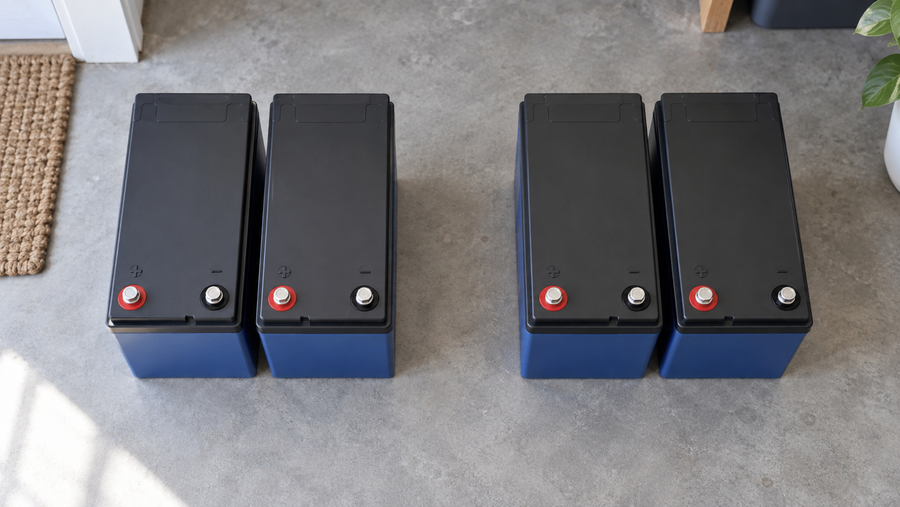
Battery-powered HVAC systems and advanced battery-based power modules provide another route: these units charge from the engine or shore power when the truck is underway or plugged in, then run cab loads quietly with the engine off. When matched with the right capacity and charging strategy, they turn every mile of driving and every hour on shore power into clean stored energy, instead of converting parked hours into wasted diesel. In fleets that adopt these systems, idle hours typically drop sharply, drivers retain comfort, and the batteries are no longer dependent on crude "charge it by idling" practices. Mobile service businesses like pet grooming vans with lithium battery systems demonstrate how quiet battery power eliminates both engine noise and client complaints while keeping all equipment running.
Here is a compact comparison to anchor the decision:
Power option |
Typical fuel/energy use (from research) |
Primary role |
Best use case |
Main engine idling |
About 0.5–1.5 gallons diesel per hour |
Cab comfort and incidental charging |
Emergency or last resort only |
Diesel APU |
About 0.2–0.5 gallons diesel per hour |
Cab comfort and electric power |
High-idle long-haul with regular overnight stops |
Diesel or plug-in bunk heater |
About 0.04–0.08 gallons diesel per hour |
Heat only |
Cold-weather operations where heat is the main overnight need |
Stored electrical energy, no diesel at use |
Cab comfort and hotel loads with engine off |
Fleets able to charge while driving or on shore power |
|
Electrified parking (EPS/TSE) |
Grid electricity billed per hour |
Full cab services without using vehicle fuel |
Corridors with available electrified parking spaces |
All of these alternatives turn idle time into either productive driving time or clean, efficient power time. They also reduce emissions, noise, and regulatory risk, helping carriers meet tightening greenhouse gas and fuel economy standards and avoid local anti-idling penalties.
Practical Charging Strategy for Truck Batteries
A practical, engine-off-friendly battery strategy comes down to a few habits and equipment choices. First, use longer, steady driving segments at highway speeds as your primary alternator charging window, especially after heavy hotel loads; this keeps batteries healthier and reduces the temptation to idle for "top-ups" how long to drive to charge a car battery. Second, integrate external charging wherever trucks routinely park for hours: battery maintainers in yards, shore power at terminals, and electrified spaces along key lanes keep your car battery charged. Third, for trucks that habitually need overnight power, invest in idle-reduction systems sized to your real loads and duty cycle, using tools such as Argonne National Laboratory's compendium of idle-reduction equipment to compare options and fuel savings idle reduction technology.
In parallel, tighten up operating policies. Data from GPS and telematics platforms show that drivers and fleets often accumulate up to 1,500 hours of idling per year per vehicle just through everyday habits like extended warm-ups, long loading waits, and overnight stops engine idling. Setting clear idle limits, coaching drivers that idling beyond about 10 seconds between moves wastes more fuel than a restart, and rewarding low-idle behavior creates a culture where the main engine is used to move freight, not to act as an inefficient generator.
Quick FAQ
Does idling for 30 minutes meaningfully charge truck batteries?
Evidence from automotive charging tests shows that 30 minutes of driving at highway speed can top up a moderately discharged starting battery, but idling for the same time produces much less charging because alternator output is low and onboard loads consume much of it how long to drive to charge a car battery. For a truck with a significantly discharged battery, 30 minutes of idling is unlikely to restore a reliable reserve; you would need hours of run time to approach what an external charger can do in a controlled session.
Can idling recover a "dead" battery?
A deeply discharged lead-acid battery can sometimes be brought back to a usable state by several hours of charging, but the process is slow and the battery's underlying health may already be compromised. Off-grid charging studies suggest that even long periods of driving often only restore such a battery to around 75–80% of its original capacity, and idling is less effective than driving at speed. If a battery repeatedly needs rescue charging, replacement and a better charging setup are usually the smarter option.
How much idling is "too much" from a cost perspective?
Analyses of long-haul sleeper operations show that once a truck accumulates 1,000–2,000 hours of rest-period idling per year, the fuel and maintenance costs are high enough that idle-reduction investments such as APUs, heaters, or electrified parking typically become more economical than continuing to idle idling reduction for long-haul trucks. Given that daily habits and loading delays can easily total around 1,500 idle hours per year per vehicle in some fleets, the breakeven point arrives sooner than many operators expect engine idling.
Powering Up Without Wasting Fuel
Idling feels simple, but it is the most expensive and least effective way to charge truck batteries. When you shift charging into road time, plug in whenever the truck sits, and lean on idle-reduction and battery-based systems for hotel loads, the engine can stay off while power stays on. The result is straightforward: fewer wasted gallons, healthier engines and batteries, and trucks that are ready to roll when it is time to move freight, not when the fuel gauge says you have idled long enough.