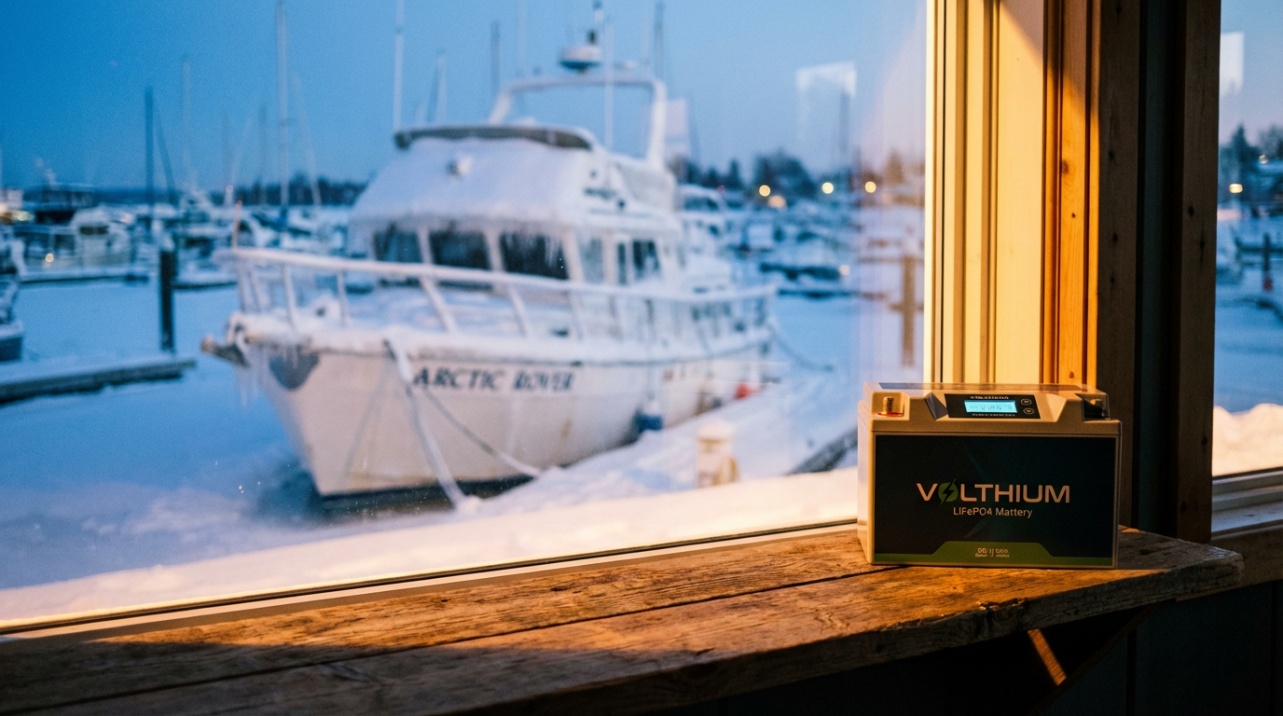

This guide explains when to remove LiFePO4 marine batteries for winter and when it is safe to leave them on board, so you protect performance, safety, and warranty coverage.
For most boaters in freezing climates, the lowest-risk move is to pull LiFePO4 batteries and store them indoors in a cool, dry place at a partial state of charge. Leaving them on the boat can work, but only if you can fully isolate them from all loads and keep them above damaging temperatures.
The forecast is dropping toward single digits, your boat is already wrapped, and those expensive lithium house batteries are still sitting in a damp compartment below the waterline. One owner’s simple winter routine keeps their pack waking up in spring with strong voltage, while another faces a dead bank and a denied warranty claim. The difference is not luck; it is a handful of deliberate choices about where you store the batteries, how charged they are, and what is still connected to them.
How Cold Really Affects LiFePO4 On Your Boat
LiFePO4 chemistry handles cold better than lead-acid when it comes to sitting idle, but capacity drops as temperature falls, and the real danger is charging when the cells are too cold. Manufacturer testing shows that a 100 amp-hour LiFePO4 can temporarily behave like a 70–80 amp-hour battery as temperature drops from around 32°F toward 0°F, then return to full output once the bank warms back up. That loss is temporary; once the cells are back in the 50–70°F range, rated capacity returns, consistent with lab and field data summarized in lithium winter storage guidance for house banks from Battle Born and other manufacturers’ cold-weather testing of LiFePO4 performance in boats and RVs, as reflected in winter storage guidance for LiFePO4 house banks and how LiFePO4 batteries perform in cold temperatures.
The critical red line is charging below about 32°F at normal currents. In that zone, lithium ions can plate onto the anode surface instead of intercalating properly, slowly reducing capacity or triggering internal failures. LiFePO4-specific chargers and modern battery management systems add low-temperature charge cutoffs that simply refuse to accept charge when the internal temperature is too low, often below the mid‑20s°F, and resume once the cells warm up, as described in charging and storage recommendations for LiFePO4 and in real‑world cold‑weather charging strategies shared by off‑grid boat owners.
When the bank is idle and disconnected, however, LiFePO4 self‑discharge is only about 1–3 percent per month. That means a 100 amp-hour pack parked at 60 percent state of charge at haul‑out still has roughly 45–55 amp‑hours available after four months in cool conditions, as long as nothing is quietly bleeding it down, a figure that aligns with multiple lithium storage guides and manufacturer-backed winterization advice for marine LiFePO4 systems.

The Core Decision: Location Versus Conditions
The real winterization question is not just “boat versus basement.” The smarter frame is whether your batteries will spend months in a controlled environment with no current flow, or in an uncontrolled environment where temperature, moisture, and parasitic loads are working against them.
If your boat spends winter in a climate where temperatures dip well below 0°F, compartments stay damp, and you cannot easily verify that every parasitic load is disconnected, removal is cheap insurance. Experienced boat owners who have watched half‑charged banks crack cases or drop to zero over a single harsh season routinely pull batteries and store them indoors on wood or shelves, matching long‑time marine battery storage advice from both lead‑acid and lithium manufacturers, as outlined in how to store your boat batteries during the winter and How to Protect Your RV and Boat Batteries During Winter Storage.
In milder climates, or in heated storage where compartments stay comfortably above freezing, leaving LiFePO4 on board can be a solid option, especially when the pack is well‑mounted and part of a more complex system. Forum users and engineers who routinely store lithium at temperatures near or below 0°F report no problems as long as the pack is not being charged and loads are truly removed, a pattern reinforced by technical discussions focused specifically on LiFePO4 cold‑weather storage.

When It Is Reasonable To Leave LiFePO4 On The Boat
Leaving your lithium bank on board can make sense when several conditions line up. Winter temperatures should rarely spend long stretches below roughly −10°F, or the compartment must be well insulated and kept above hard‑freeze extremes so the plastic cases and cabling are not stressed. The bank must be completely isolated from the boat’s wiring, not just with a panel switch, but by disconnecting the battery positive and negative so there are no bilge monitors, stereo memories, or detectors quietly pulling current in the background, a point emphasized in both LiFePO4 storage guidance and broader RV and boat winter storage practices.
In that setup, cold becomes an ally for long‑term life. Idle LiFePO4 stored at a moderate state of charge in a cool, dry compartment ages more slowly than the same pack sitting warm in a heated garage, as long as no current flows. Practical guidance from manufacturers suggests storing around 40–60 percent state of charge for best calendar life, while other marine-focused lithium suppliers prefer closer to 80 percent to provide more margin against self‑discharge and any unseen parasitic loads. A typical compromise for an onboard bank that is truly disconnected is charging somewhere in the middle of that band, then verifying voltage once or twice through the off‑season, which reflects the balance described in multiple lithium winterization resources.
When You Should Absolutely Take LiFePO4 Home
There are situations where leaving the bank in the boat moves from “calculated risk” to “bad bet.” If your winter lows regularly push well past −10°F, the combination of extreme cold, moisture, and vibration risks cracking cases and accelerating self‑discharge, especially if the bank is not perfectly sealed. Manufacturer guidance for both lithium and lead‑acid stresses keeping boat batteries above hard‑freeze conditions whenever possible and explicitly recommends removing them from the vessel in harsh climates, storing them cool, dry, and off concrete, a routine echoed in many marina checklists.

If you cannot fully disconnect the pack because you rely on an automatic bilge pump, tracking hardware, or other safety-critical loads, removing the LiFePO4 bank and temporarily running a cheap 12‑volt lead-acid on the boat is often the smarter play. This approach shows up repeatedly in cold‑climate cruising discussions, where owners protect their lithium investment indoors and leave a sacrificial battery to handle dock‑side chores through the deep winter months.
When theft, vandalism, or unmonitored yards are part of the picture, removal wins again. High-end lithium banks are portable and expensive, and winter is prime time for unattended boats. Pulling the bank reduces both technical risk and security risk in one move, something repeatedly highlighted in bass boat winterization and general boat battery care guides targeted at preventing both damage and loss.
Quick Comparison Of Your Two Main Options
Storage choice |
Main advantages |
Main risks |
Best suited for |
Leave LiFePO4 on boat |
No heavy lifting, wiring stays intact, cold idle storage can be gentle on cells when disconnected |
Harder to guarantee every parasitic load is gone; freezing compartments and moisture can crack cases; cold charging risk if chargers are left enabled |
Mild climates, heated or well‑insulated storage, owners who can fully disconnect and occasionally check voltage |
Remove and store indoors |
Temperature, humidity, and security are under control; easier to verify isolation and state of charge; virtually eliminates freezing and corrosion risk |
Requires disconnecting and lifting batteries; must protect terminals and follow safe handling at home |
Very cold climates, outdoor storage yards, boats with unavoidable parasitic loads or limited access over winter |
How To Prepare LiFePO4 For Winter, Wherever You Store It
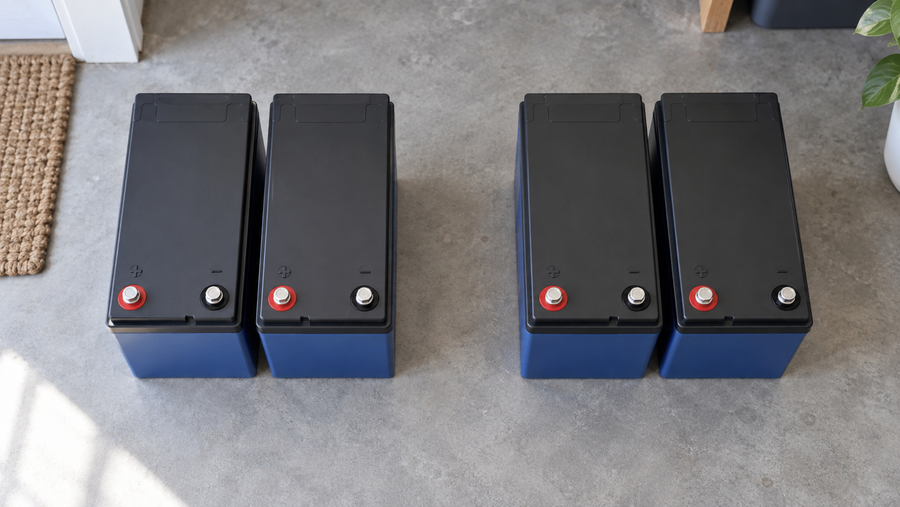
The first decision is state of charge. General LiFePO4 storage research points toward roughly 40–60 percent state of charge for best long‑term life, while some marine lithium vendors recommend a higher 80–100 percent charge before storage to ensure there is plenty of reserve to ride out self‑discharge and any standby electronics. A practical strategy that respects both is to aim for roughly half to three‑quarters full for batteries you are removing and storing under your control, and closer to three‑quarters or more for banks that must remain installed but truly disconnected. What you must never do is put a LiFePO4 away at or near zero; multiple winterization guides warn that a pack left flat can drift below the point where the BMS can protect it at all, turning an expensive battery into a service problem or a permanent loss over a single off‑season.
Next comes isolation. It is not enough to flip a main disconnect or turn off the helm panel. In many rigs, bilge pumps, alarms, stereo memories, and monitoring devices bypass the visible switches. LiFePO4 storage best practice is to remove both main cables from the battery bank or open a proper battery‑side disconnect that you have confirmed actually isolates every circuit, a step strongly recommended in LiFePO4-specific storage write‑ups and traditional marine battery winterization checklists. For a sense of scale, even a modest one‑amp parasitic draw will completely flatten a 100 amp‑hour bank in about four days; left unchecked for a month or two, that is precisely how good batteries die quietly over winter.
Finally, control the environment. Indoors, the goal is cool, dry, and boring: a room somewhere around typical house temperatures, away from direct sun and off the floor on wood or shelving. On the boat, if you choose to leave the bank, treat the compartment like a small mechanical room that deserves insulation and basic temperature management. Simple foam board lining can keep the battery space many degrees warmer than outside, and some owners in freezing regions supplement that with low‑wattage bulbs or 12‑volt heating pads controlled by thermostats, keeping the cells safely above freezing while drawing a tiny fraction of the energy of larger heaters.

Cold-Weather Charging: Protect The Upgrade You Paid For
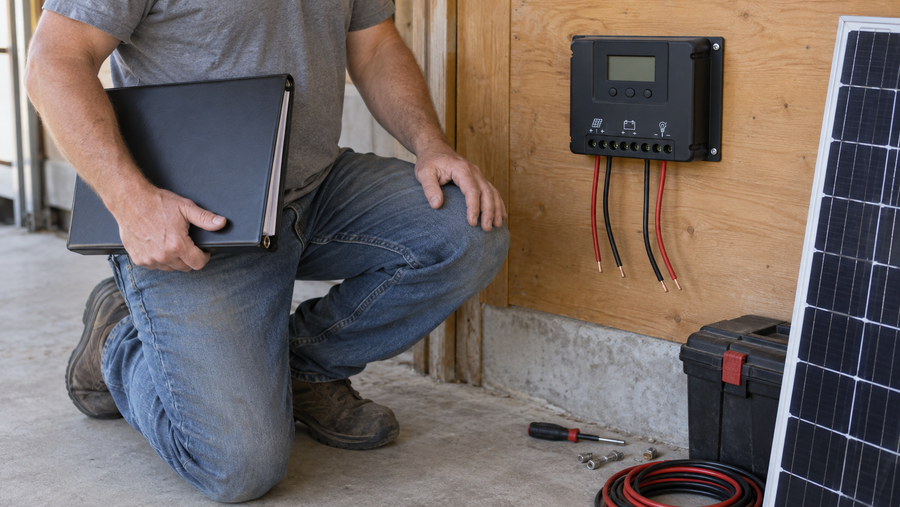
Once winter hits, the highest‑consequence mistake is not where the battery sits but how it is charged. Storage guides for LiFePO4 are nearly unanimous on a few points: do not charge a cold pack below freezing at normal currents, use chargers that are actually designed for LiFePO4, and make sure low‑temperature charge cutoffs in your BMS or chargers are enabled and respected. If your boat sits on a winter dock with shore power, that means checking charge profiles in your inverter-charger and solar controllers and being willing to disable bulk charging entirely when the bank is cold, or forcing it to float only once the pack is warm.
For boats that must keep charging through cold snaps, such as off‑grid liveaboards or remote fishing rigs, the answer is often a mix of insulation, dedicated battery heaters, and conservative charge limits. Owners who have successfully run LiFePO4 banks in real winter often insulate the battery box, install 12‑volt heating pads or blankets under thermostat control, and set their chargers to lower currents when temperatures are marginal, following the same pattern seen in both manufacturer guidance and long‑running cold‑weather lithium discussions among cruisers.
Real-World Scenarios: What Should You Do?
If you trailer a bass boat and store it in a suburban driveway where winter lows hover around the 20s°F, the cleanest strategy is usually to remove the LiFePO4 bank, bring it indoors, and park it at roughly half to three‑quarters charge. This matches the winter routines promoted for bass boats that lean on lithium: batteries are stored in a cool, dry space, terminals are protected, and the bank is topped off briefly every few months before spring rigging.
If your cruiser lives in an outdoor yard where the thermometer plunges below −10°F and snow piles against the hull, pulling the batteries is even more of a no‑brainer. In that environment, lead-acid guidance already insists on indoor storage to prevent electrolyte freezing and cracked cases, and lithium is not immune to physical damage or corrosion even if its chemistry tolerates cold. You get better control of temperature and humidity, and you drastically reduce the chance of discovering split cases or corroded terminals in April, an approach strongly supported by off‑season storage advice for both traditional and lithium marine batteries.
If you are running an off‑grid or liveaboard setup that must keep lights, pumps, and navigation electronics powered through winter, the calculus changes. In that case, you may leave the main LiFePO4 bank on board but invest in a properly insulated compartment, actively controlled heaters, and careful charge limits, or you may choose to remove the lithium bank and run a less expensive lead-acid battery as a winter “workhorse” on shore power. Both tactics show up in real installations because they separate critical winter reliability from long‑term lithium health, using the right tool for each season.
Brief FAQ
Can you leave a LiFePO4 totally disconnected all winter without charging?
Yes, provided it goes into storage with a healthy state of charge and is kept within the temperature limits recommended by its manufacturer. With a self‑discharge rate of only a few percent per month, a LiFePO4 stored around half to three‑quarters full and truly isolated from all loads can sit for many months and still wake up ready to recharge in spring, which is exactly the scenario described in multiple lithium storage and winterization guides.
Do LiFePO4 marine batteries need a trickle charger over winter?
Generally they do not, and in many cases trickle charging is discouraged. Unlike lead-acid, LiFePO4 packs are designed to sit idle without float charge, and the combination of low self‑discharge and a properly chosen storage state of charge means periodic top‑ups every few months are plenty if voltage is checked and the bank has been fully disconnected, a point stressed both in lithium-focused storage write‑ups and in broader RV and boat battery care advice.
A smart winter plan treats your LiFePO4 bank like the heart of your electrical system: protect it from deep cold and phantom loads, charge it to a deliberate level, and choose boat versus basement based on how much control you really have over the environment. Do that, and your spring power‑up will be a quick flip of the switch, not a costly troubleshooting marathon.