A lithium golf cart battery monitoring system uses sensors and a battery management system (BMS) to track electrical and thermal conditions, estimate state of charge, and send readings to a display or app. If monitored conditions reach operating limits, the BMS may limit charging or discharging to protect the battery.
What the system monitors
A BMS can monitor conditions such as voltage, temperature, and current. The exact measurements and responses vary by system. A DSIAC report on a lithium-ion BMS example describes monitoring for over-temperature, over-voltage, under-voltage, and low state of charge. Those examples explain common monitoring goals; they do not establish the features of every battery system.
How it estimates state of charge
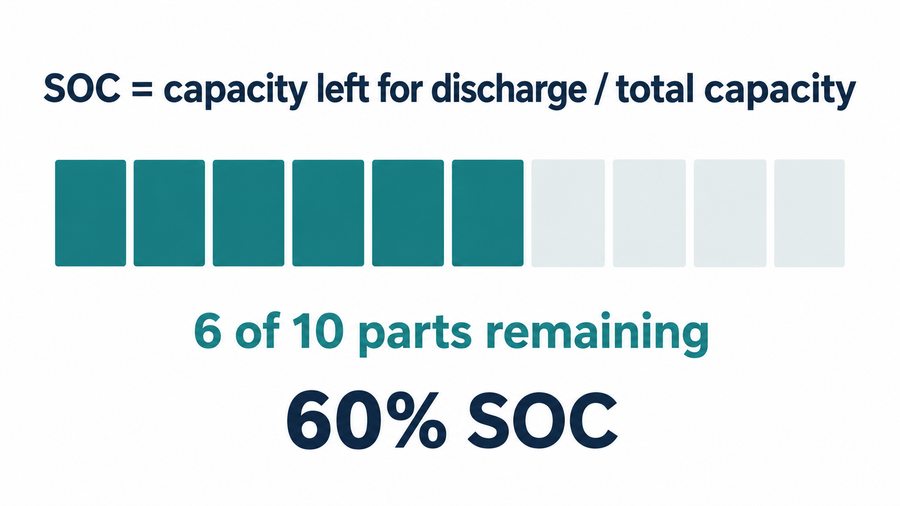
State of charge (SOC) is an estimate of how much charge remains, not a direct measurement. A BMS may estimate SOC by tracking current entering and leaving the battery (coulomb counting), using voltage readings, or applying an algorithm. The DSIAC example describes both coulomb counting and an SOC algorithm.
Displayed SOC can change as the cart draws power or the battery charges. A reading is an estimate of remaining charge, so it should be interpreted alongside the battery's current charge or discharge status rather than as a fixed quantity.
How the BMS responds to limits
When monitored conditions reach a system's operating limits, its BMS may restrict charging or discharging. The DSIAC example identifies temperature and voltage limits, along with low SOC, as conditions its BMS monitors; it does not specify thresholds for other systems.
If the system reports a fault or an abnormal temperature, stop using or charging the cart until the cause is addressed.
What the driver sees

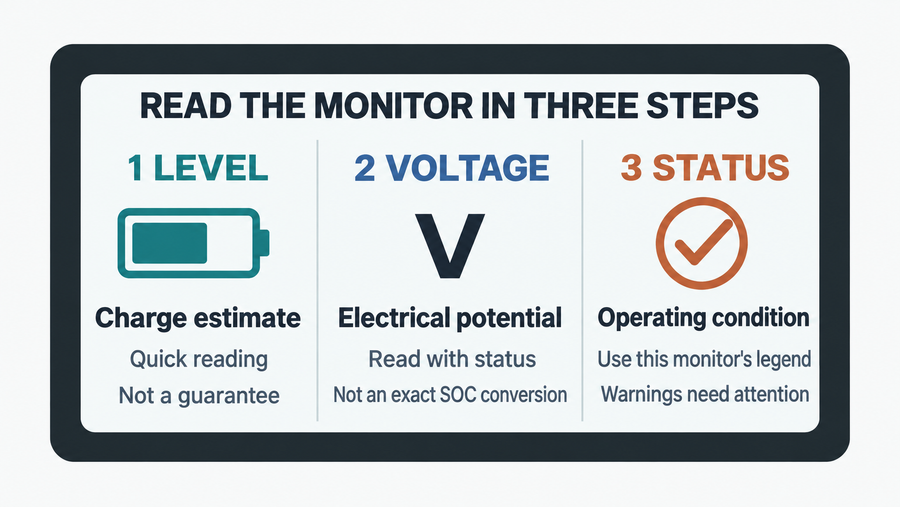
A display or app can present battery readings so the driver can check charge and operating status. Readings may change during driving or charging as current flows. Use them as status information, not as proof that a particular range or remaining drive time is guaranteed.
Monitoring on the Vipboss kit
The Vipboss 48V 150Ah Lithium Golf Cart Battery Conversion Kit includes an external LCD monitor for real-time battery-level and status checks. Its Bluetooth module connects to a mobile app that shows battery level, charge and discharge status, and battery health.
FAQs
What is the difference between a battery monitor and the BMS?
The BMS measures and manages battery conditions and may limit charging or discharging when operating limits are reached. The monitor or app presents selected readings from the system so the driver can check battery level, voltage, temperature, or operating status, depending on the equipment.
Why can the displayed state of charge change while driving or charging?
State of charge is an estimate based on measurements and calculations. Current entering or leaving the battery, voltage changes, temperature, and the system's estimation method can cause the displayed value to update during use or charging.
What should I do if the battery monitor shows a warning or abnormal temperature?
Stop driving or charging when it is safe to do so, then consult the battery and monitor instructions for the reported condition. Do not treat a normal-looking charge percentage as proof that the system is safe while a warning or abnormal temperature is present.