A 48V lithium golf cart battery’s voltage rises and then levels off during constant-voltage charging, relaxes toward a resting value after charging or use, and falls below its resting reading while the cart is driving under load. These changes are normal, but a single voltage reading cannot provide a precise state-of-charge estimate for LiFePO4 batteries because their open-circuit voltage stays relatively flat through much of their operating range.
Start with the three operating states
Read the battery in the state it is actually in: charging, resting, or driving. Charging pushes terminal voltage upward, a rest period lets the reading settle, and motor load pulls the reading downward. A 48V-class LiFePO4 system therefore produces a range of normal readings across a trip and charge cycle. Use the battery and charger specifications for the applicable limits, then compare readings taken in the same operating state.
What happens during charging
During constant-current charging, battery voltage rises. Once it reaches the charger’s voltage threshold, charging enters the constant-voltage phase: voltage is held around that threshold while charging current gradually falls. When charging ends and current stops, the voltage gradually drops as the battery rests. This qualitative pattern is described in a study of LiFePO4 charging and resting behavior.
The exact charging threshold and cutoff behavior depend on the battery, its BMS, the charger, temperature, and manufacturer settings. Do not treat a voltage seen during charging as the battery’s resting voltage or apply a universal 48V charging threshold.
How to read voltage at rest

After the charger stops or the cart is switched off, voltage moves toward a resting value. The reading can differ from the voltage observed during charging or driving, so compare readings taken under similar conditions.
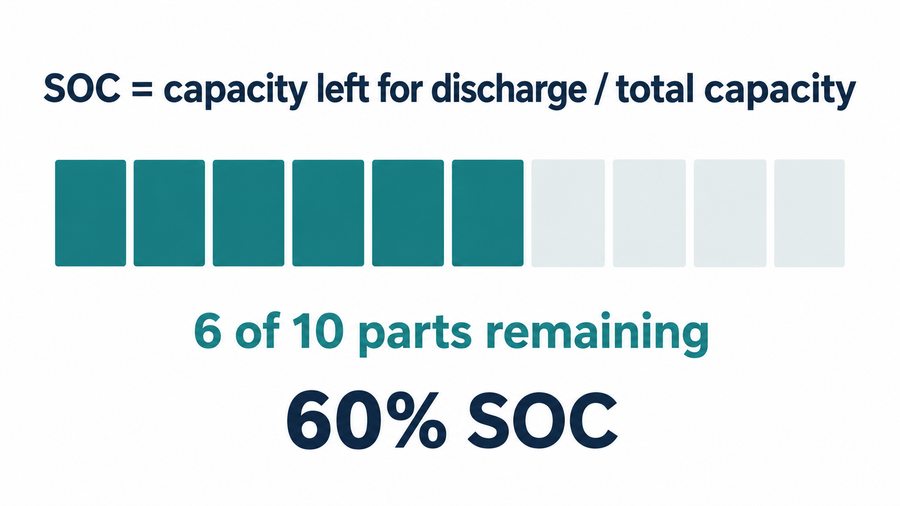
Resting voltage is a weak standalone charge gauge for LiFePO4. Its open-circuit-voltage curve is relatively flat through much of the operating range, making voltage changes small relative to changes in state of charge. A study of LiFePO4 state-of-charge estimation describes this limitation. There is no precise universal voltage-to-charge chart that can be derived from the 48V label alone.
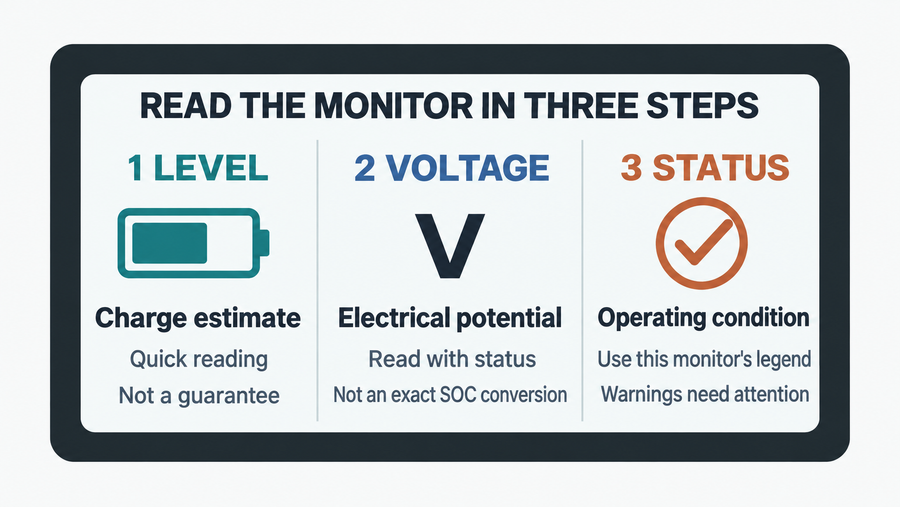
The Vipboss 48V 150Ah Lithium Golf Cart Battery Conversion Kit pairs its 51.2V, 150Ah LiFePO4 battery with an external LCD monitor and a Bluetooth app. Those tools show battery level and charge or discharge status, giving the voltage reading the operating context needed for a useful comparison.
Why voltage falls while driving
The motor and other electrical loads draw current, so measured terminal voltage under load is lower than open-circuit voltage. As stored energy is used, both loaded and open-circuit voltage can fall. This is why a reading during acceleration can be lower than one taken at rest; the loaded reading is not directly comparable to the resting reading. The relationship between loaded and open-circuit voltage is described in this battery discharge report.
How far voltage falls depends on the battery, BMS, temperature, load, and manufacturer settings. Do not diagnose a fault or assume a cutoff from one driving reading without the battery’s applicable specifications and operating context.
Compare readings in context
- Charger on: Note whether voltage rises and then levels off as charging proceeds. The charger’s threshold is battery- and system-specific.
- Charger off or cart at rest: Let the reading settle without assuming a fixed rest time. Compare it with other readings taken under similar conditions; do not use it alone as a precise charge estimate.
- Driving: Note whether voltage falls under load, especially during acceleration. Compare it with the resting reading as a loaded-versus-resting difference, not as if both readings represent the same condition.
- If behavior seems inconsistent: Check the battery, BMS, charger, temperature, load, and manufacturer settings that apply to the system before interpreting a threshold or cutoff. A single voltage value does not establish the cause.
FAQs
Why is battery voltage higher while charging than after the charger stops?
Charging raises terminal voltage. After charging stops, the voltage relaxes toward a resting value, so a reading taken during charging is not directly comparable with one taken after the battery has rested.
Is it normal for a 48V lithium battery's voltage to drop during acceleration?
Some voltage drop under load is normal because the motor draws current, especially during acceleration. Evaluate the loaded reading against the resting reading and the battery manufacturer's limits rather than treating one driving value as a fault by itself.
Can voltage alone show the exact state of charge of a LiFePO4 golf cart battery?
No. LiFePO4 voltage remains relatively flat through much of its operating range, so a single voltage reading is a weak standalone charge gauge. Use the BMS, battery monitor, or app and interpret voltage together with whether the battery is charging, resting, or under load.