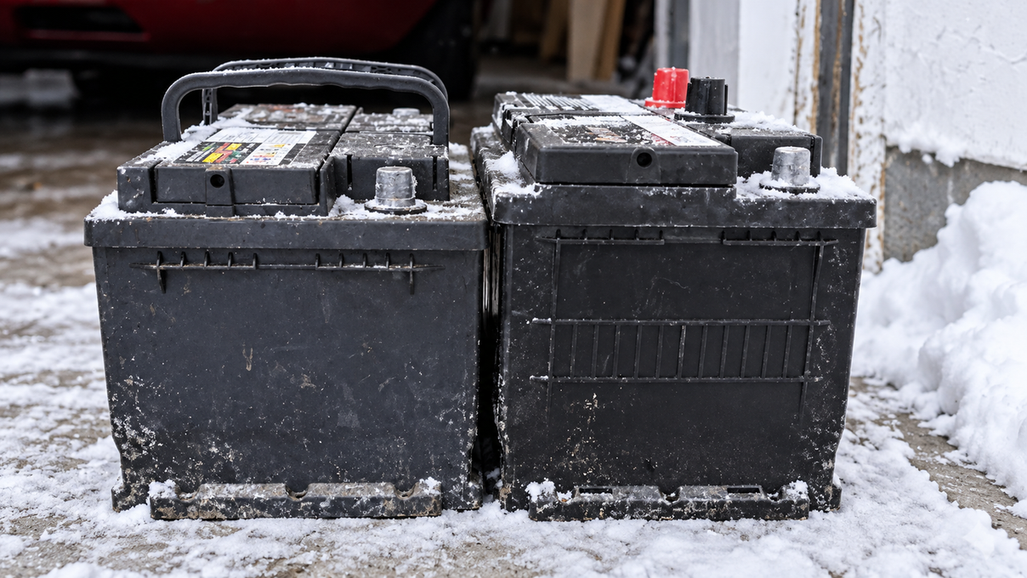

Neither chemistry is universally better in cold weather. AGM is usually the more practical choice when an installation must operate and accept charging in freezing conditions, while LiFePO4 is a strong choice for cold-weather discharge when its charging temperature is managed.
Charging and discharge are different
Cold weather affects charging and discharging differently. LiFePO4 batteries generally need to be above their permitted charging temperature before charging begins, but they can often deliver power at temperatures below that charging range. AGM batteries do not have the same lithium charging constraint, although their exact charging and operating specifications still depend on the battery model.
A PNNL technical report’s general temperature comparison places lead-acid batteries, including AGM, at an approximate operating range of -20 to 50°C. It reports LiFePO4-based batteries at approximately 0 to 45°C for charging and -20 to 60°C for discharge. These are approximate, general ranges reported by PNNL—not universal limits, a guarantee of equal performance among AGM models, or test results for every LiFePO4 battery.
Which battery fits a cold installation?

Choose AGM when charging in freezing conditions is unavoidable. Its lead-acid operating range makes it the more straightforward option for an installation that must remain usable outdoors or in an unheated space without a separate plan to warm the battery before charging. Check the selected AGM battery’s own rated charging and discharge temperatures before installation.
Choose LiFePO4 when cold-weather discharge matters and charging can be controlled. LiFePO4 can provide useful cold-weather discharge performance, but charging must stay within the battery’s permitted temperature range. A system may need to pause charging, warm the battery, or use the battery’s specified low-temperature charging control before charging resumes.
What to check before deciding
- Check the battery’s temperature ratings. Use the specific model’s permitted charging and discharge temperatures rather than treating chemistry-level ranges as exact limits.
- Identify the coldest charging condition. If the battery may be below its permitted charging temperature when a charger starts, LiFePO4 requires a control that prevents charging until conditions are suitable.
- Separate charging from use. A LiFePO4 battery may be able to discharge in colder conditions than it can accept a charge, so do not use its discharge rating as permission to charge at the same temperature.
- Match the battery to the installation. AGM is simpler where freezing-temperature charging cannot be avoided. LiFePO4 is more attractive where charging can be managed and lower weight or higher usable energy is important.
The Vipboss 12V 105Ah Bluetooth LiFePO4 Lithium Battery includes built-in low-temperature charge protection, which is relevant when selecting LiFePO4 for a cold-weather system. That feature supports the charging-control requirement; the battery should still be used within its specified temperature conditions.
Bottom line
AGM is the more practical default when the battery must accept charging while freezing. LiFePO4 is often the better cold-weather discharge option when the system prevents charging outside the battery’s permitted temperature range. The final choice should follow the selected model’s charging and discharge ratings, not a general chemistry range alone.
Frequently Asked Questions
Which battery is easier to charge in freezing weather, LiFePO4 or AGM?
AGM is generally the simpler choice when charging below freezing cannot be avoided, provided the selected AGM model permits it. LiFePO4 requires charging to stop below its specified limit unless the battery is warmed into its allowed range.
Is LiFePO4 still useful for cold-weather discharge?
Yes. A model may discharge at temperatures well below its charging limit, although cold can reduce usable capacity and increase voltage sag. Always use the specific battery's discharge rating.
What matters more than battery chemistry in a cold installation?
The actual model ratings, battery location, charging controls, expected loads, and ability to manage temperature are decisive. A well-designed system should match both charging and discharge conditions, not rely on a chemistry label alone.