
Learn how the spring clock change affects your solar production, batteries, and energy bills, and how to tune your system so the new schedule works in your favor.
Daylight saving time does not give your panels more sunlight, but it does change when that sunlight lines up with your lifestyle, your batteries, and your utility’s peak pricing, and you can use that shift to gain real charging and bill advantages.
The clocks jump ahead, the evenings feel brighter, yet your battery monitor still bottoms out before morning and your bill hardly moves. That mismatch between a sunnier evening sky and a tired lithium bank is one of the most common frustrations right after the spring clock change. With a bit of smart preparation before the switch, you can make that “extra” daylight land exactly where it helps most: in your solar charging window and your off‑grid resilience, not in wasted grid power.
Daylight Saving Time vs Real Sunlight
Daylight saving time is a legal clock shift that pushes social time one hour later in spring and one hour earlier in fall, changing how human activity lines up with the sun rather than changing the sun itself. Analyses of daylight saving time and energy use in modern grids daylight saving time show that the overall effect on total electricity use is small and often inconsistent, with lighting savings partially or fully offset by extra heating or cooling in darker mornings and extended evening activity does daylight saving time really save energy.
What does change in a big way around the spring clock shift is seasonal daylight. As late winter gives way to spring, the sun is higher in the sky, days are longer, and clear days deliver more usable, high‑intensity sunlight to your array, especially when panels are oriented and tilted correctly toward the sun’s path, a key factor that impacts solar panel performance. That seasonal geometry, not the legal time, drives the 30–50% swings in daily solar output many locations see between winter lows and summer highs, with winter days limited by shorter daylight and a lower sun arc.
Because the clock change happens while days are already lengthening, it is easy to credit daylight saving time for gains that actually come from the changing season. In practice, your panels will start working shortly after sunrise and peak around mid‑day in exactly the same way before and after the shift; it is the timestamp on your monitoring app that moves, not the physics of your modules, regardless of what time of day your solar panels start working.
Why Your Production Graph Suddenly Looks “Wrong”
Many owners look at their monitoring app the week after the spring transition and swear the system is off because the mid‑day peak appears to have slid sideways. When clocks move, sunrise, solar noon, and sunset all appear an hour later on the chart, so yesterday’s 12:30 PM power spike becomes today’s 1:30 PM spike without any real change in irradiance or efficiency, even though it may look as if the end of daylight saving time affects solar panel efficiency.
If you judge performance by “how tall is the curve at 2:00 PM,” this creates the illusion that something broke. The right way to read your system across a clock change is to compare total kilowatt‑hours per day and seasonal benchmarks, not raw shape against clock time.

Tracking your normal summer versus winter daily energy for your system size makes it much easier to spot real issues such as new shade or a failing string instead of blaming the time change for what is actually routine seasonal variation, including the kinds of differences described in how-daylight-savings-and-winter-vs-summer-affects-solar-nsw.
Extra Evening Light: How to Turn Clock Changes into Better Solar Charging
When clocks spring forward, sunset lands an hour later on the clock, which means more overlap between solar generation and the early evening ramp when people arrive home and turn on appliances, air conditioning, and lights what-the-beginning-of-daylight-savings-time-means-for-peak-pricing. In markets with a lot of solar, this later overlap keeps solar online deeper into volatile peak hours and has already helped reduce extreme price spikes on hot evenings as more of the early peak is served by solar and batteries instead of gas‑fired peaker plants how-does-daylight-savings-time-save-energy.
From a homeowner’s perspective, that “extra” daylight does not raise your panel’s maximum noon output, but it can reduce how much grid power you buy at expensive times if you align your loads with the new solar window. Time‑of‑use rates increasingly push the highest prices into late afternoon and evening, after solar used to fall away; as utilities respond to the solar “duck curve,” many have shifted on‑peak windows later into the day, from midday blocks to periods such as 4:00–9:00 PM, as discussed in how-does-daylight-savings-time-save-energy. A clock change that keeps solar contributing further into that window is an opportunity, but only if your usage patterns and battery schedules are tuned to take advantage.

Grid‑Tied Homes on Time‑of‑Use Rates
In grid‑tied homes, daylight saving time mainly changes the relationship between your household routine, your solar curve, and the utility’s time bands. When the clocks change, check whether your utility’s published peak, shoulder, and off‑peak windows are defined in standard time or self‑adjust with daylight saving; some tariffs shift relative to the sun, while others remain fixed in civil time, a distinction highlighted in how-does-daylight-savings-time-save-energy. If the on‑peak window now overlaps more of your solar output, you want as much load as possible in those hours to reduce expensive imports and, under net metering, to export surplus back to the grid when it is most valuable, as in solar-and-daylight-savings-maximizing-winter-sunlight.
Instead of running dishwashers, laundry, and vehicle charging late at night out of habit, a better strategy in high‑solar regions is to push flexible loads into the middle of the day and late afternoon when your array is strongest under the shifted clock, similar to the patterns described in how-daylight-savings-and-winter-vs-summer-affects-solar-nsw. This is especially powerful if your system is sized to overproduce in summer, letting you “bank” credits through net metering during sunny months and draw them down in darker seasons; many U.S. states still allow this kind of seasonal bill smoothing, although exact rules vary and need to be checked with your local utility, as noted in solar-and-daylight-savings-maximizing-winter-sunlight.
On the equipment side, do not forget the clocks inside your infrastructure. Inverter and monitoring gateways, smart water heaters, EV chargers, and home energy management systems often keep their own time and may not update automatically with daylight saving. Mismatched clocks can leave your car pulling from the grid at the wrong hours or your water heater missing the mid‑day solar peak, even though everything “looks fine” in each separate app, which is exactly the kind of issue described in how-does-the-end-of-daylight-saving-time-affect-solar-panels-efficiency.
Off‑Grid and Hybrid Systems: Protecting Your Lithium Bank
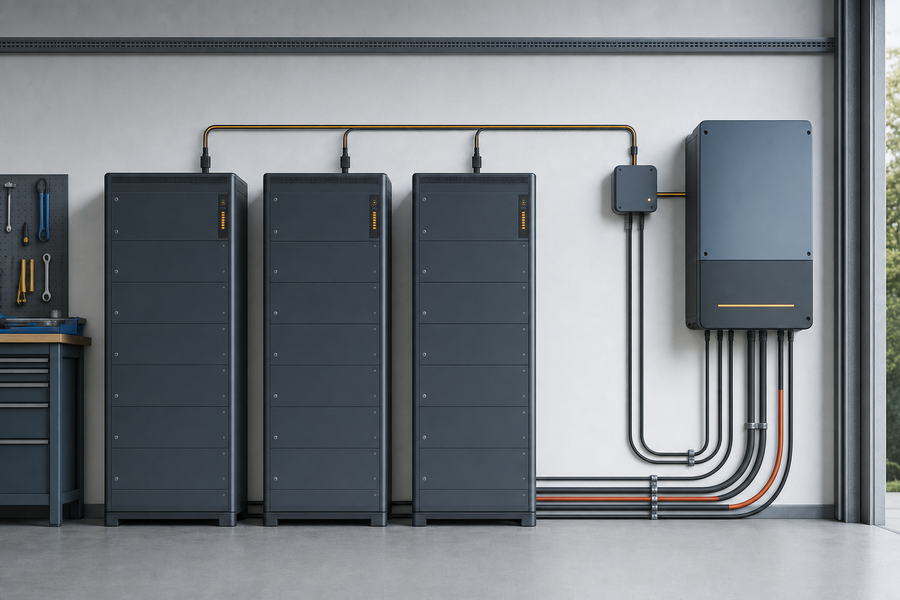
In off‑grid cabins, RVs, and hybrid homes with substantial battery storage, daylight saving time is less about the bill and more about battery state of charge and generator runtime. Lithium batteries perform best when you can recharge them hard during a strong solar window and avoid deep, slow overnight draws that push them to low state of charge by morning. As days lengthen and the clock shifts, your array has a longer real‑world charging window, but people also tend to stay awake and consume power later into the bright evening.
Solar batteries are designed to capture daytime generation and carry it into the evening and night, reducing your dependence on the grid or generator once the sun is down, a capability highlighted in daylight-saving-time-is-ending-invest-in-eg4s-solar-batteries. To make the most of that capability around the spring shift, check three things: the system time in your inverter or hybrid charger, any scheduled charge or discharge windows, and generator auto‑start rules. If your system is programmed to reserve grid or generator charging for cheap off‑peak hours in the very early morning, a one‑hour clock jump can accidentally push that window into a more expensive band or misalign it with your true minimum state of charge.
A practical approach is to aim for a comfortably high state of charge by the time the sun sets under the new clock and to restrict heavy overnight loads that could drag the battery deep before dawn. In winter, with shorter days and lower sun, total daily solar can drop by tens of percent relative to summer; pairing your array with adequate lithium storage is one of the most effective ways to maintain reliability during those shoulder seasons and darker months, as in how-much-solar-panel-power-output-in-winter-vs-summer. Around daylight saving changes, a quick battery audit—verifying that charge targets, depth‑of‑discharge limits, and backup priorities still match your actual usage pattern—is one of the highest‑leverage “paper” upgrades you can make.
Solar Lights and Outdoor Loads: Squeezing More from Longer Days
Daylight saving time also changes how outdoor lighting, especially solar fixtures, behaves relative to your schedule. Solar LED luminaires benefit from longer daylight charging windows because their panels have more time to fill the internal batteries, which improves evening brightness and reduces how often they fall back to grid power or dim modes daylight-savings-time-its-impact-on-grid-and-solar-led-lighting. Wired exterior lighting, in contrast, does not automatically adapt; timers and control systems must be reprogrammed so that floodlights, parking lot lights, and security illumination do not waste energy by turning on too early while the sun is still high.
For small solar garden and pathway lights, good charging discipline around clock changes can extend battery life and runtime. These fixtures work best when they get 6–8 hours of direct sun between late morning and mid‑afternoon, with the switch left off during the day so all energy goes into the battery rather than the LEDs make-your-solar-lights-last-longer-smart-charging-with-on-off-switches. After the spring shift, relocating marginal lights out of new afternoon shade and giving them a full day of charging with the switch off is often enough to restore healthy dusk‑to‑dawn operation.
Panel cleanliness and placement become more important as evenings stretch. Dust, pollen, or overgrown branches that were only a minor annoyance in winter can steal a significant fraction of charge time when you are relying on extended sun to fill small batteries. Keeping panels clear and exposed, mounted a couple of feet above ground and away from gutters or trees that drop debris, pays back quickly in brighter, longer‑lasting nights, as described in make-your-solar-lights-last-longer-smart-charging-with-on-off-switches.

Quick DST Playbook by System Type
System type |
Key DST impact on solar charging |
Priority actions before the spring shift |
Grid‑tied, no battery |
Solar overlaps later with evening loads and sometimes with on‑peak prices. |
Confirm utility time‑of‑use windows, update inverter and timer clocks, and move flexible loads into solar hours. |
Grid‑tied with lithium battery |
More daylight for charging but later evening usage can deepen nightly discharge. |
Align battery charge/discharge schedules with the new solar window and tariff bands, and review backup priorities (see daylight-saving-time-is-ending-invest-in-eg4s-solar-batteries). |
Off‑grid or hybrid with generator |
Longer real‑world solar day but human routines also extend into the bright evening. |
Check system time, adjust generator auto‑start and depth‑of‑discharge settings, and trim or shift heavy overnight loads. |
Solar path and area lighting |
More charging time improves evening brightness if panels see clear sun. |
Clean panels, relocate shaded fixtures, and use on/off switches to give a full‑sun charge day after the shift (make-your-solar-lights-last-longer-smart-charging-with-on-off-switches). |
Do Not Forget the Human in the Loop
Clock changes stress people as well as equipment. Even a one‑hour spring jump can cause a kind of mini jet lag, with increased accidents, heart events, and workplace injuries in the days immediately after, especially on the first Monday is-daylight-saving-time-a-hidden-danger-heres-what-the-science-s. Plan your rooftop work, heavy battery handling, and any ladder or attic jobs for well‑rested days before or after the transition, and use bright morning walks in natural light to reset your body clock so that you are alert while fine‑tuning system settings.
Good sleep actually helps your solar: sharper decisions mean better scheduling, fewer mistakes in tariff programming, and a much lower risk of damaging expensive lithium equipment or injuring yourself during maintenance. Treat the spring shift as a reminder not just to adjust clocks, but to check in on your own habits that quietly erode the gains you expect from your system.
FAQ
Q: Does daylight saving time increase my solar output? It does not change the amount of sunlight that reaches your panels; it only shifts clock time relative to the sun, so sunrise, solar noon, and sunset appear an hour later on the clock while the actual irradiance pattern stays the same under daylight saving time. What usually does increase output around the spring shift is the seasonal move toward longer days and higher sun angles, which improves daily yield independent of the legal time and is driven by the same factors that impact solar panel performance.
Q: Should I adjust my panel tilt for daylight saving time? You adjust tilt for seasons, not for the one‑hour clock change. Panels set roughly to your latitude and facing true south in the Northern Hemisphere already balance year‑round production, and steeper angles in winter or slightly flatter angles in summer are about tracking the sun’s path, not the civil clock (see sunlight-availability-daily-solar-energy-output). If you have adjustable mounts and want to squeeze more from shoulder seasons, time tilt changes to actual solar milestones such as equinoxes rather than the date your region happens to reset clocks, as discussed in how-much-solar-panel-power-output-in-winter-vs-summer.
Q: Can daylight saving time meaningfully cut my energy bill on its own? Most modern studies find that the net effect of daylight saving on total energy use is small, with lighting savings largely offset by changes in heating, cooling, and behavior, as summarized in does-daylight-saving-time-really-save-energy. Real savings come from how you respond to the new schedule: shifting flexible loads into the solar window, using batteries strategically, and tightening overall efficiency, rather than expecting the clock policy itself to deliver big reductions, a point echoed in how-does-daylight-savings-time-save-energy.
A clock change is free; the upgrade comes from how you use it. If you treat every daylight saving time transition as a system tune‑up—resetting schedules, tightening load timing, and giving your lithium bank a fresh strategy—you turn a bureaucratic nuisance into a reliable power‑optimization milestone.