
You can busk all day on battery power if you treat electricity like part of your rig: minimize draw, size a lithium pack with headroom, and deliver clean, regulated 9V and AC to everything you plug in. Do that and your tone will be just as strong on the last chorus as it was on the first riff.
Understand Your Power Needs
For an all-day street set, plan for at least 4–8 hours of continuous runtime, not just a single 45-minute slot. For pedals, real-world draws are small: many analog stomps sip under 50 mA, while digital delays, reverbs, and multi-FX can pull 200–500 mA each, so you must add every pedal’s current figure.
A simple working rule is: runtime in hours ≈ battery capacity (mAh) ÷ total pedal draw (mA), then cut that in half to account for conversion losses and real playing.

A 10,000 mAh pack feeding a 300 mA mini-board can often deliver well over a full busking day once you factor in breaks.
For amps, think in watts. A 30W solid-state busking combo might draw 25–40W at typical street volume; pair that with a 300Wh power station and you are in the 6–8 hour range. Bigger amps or cranked tube rigs multiply that draw fast, which is why buskers are better off with efficient solid-state or battery-native amps.
Pick the Right Battery Platform
Compact battery-powered amps like the Spark GO and NUX Mighty Lite are purpose-built for this job: they fit in a backpack, deliver surprisingly usable tones, and squeeze roughly 4–6 hours from their internal cells. For solo, low-volume players, carrying a second charged unit is often lighter and simpler than hauling a big power station.
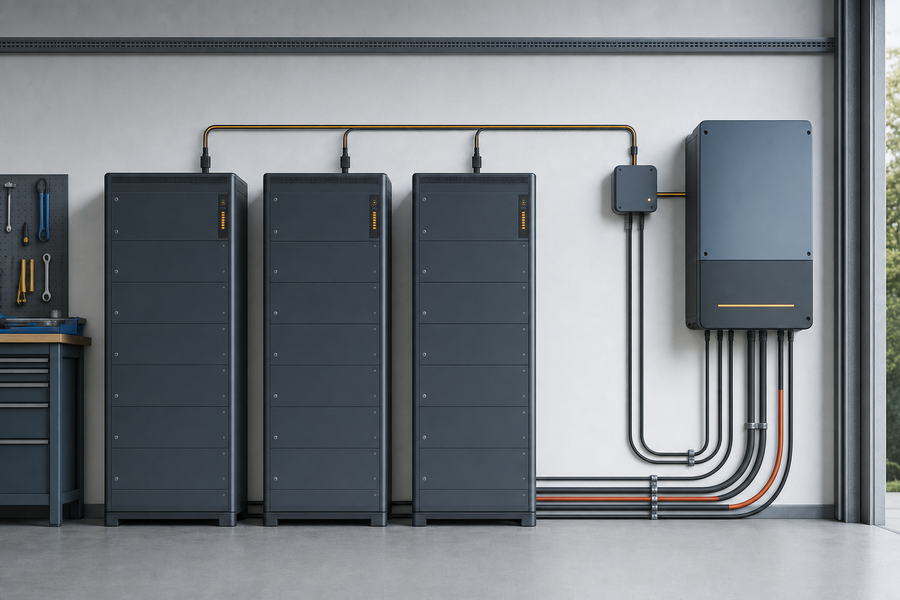
If your sound lives in a favorite 20–40W combo, use a pure sine-wave portable power station around 300Wh or more. At sensible busking levels that usually covers a full afternoon, especially if you treat breaks as “charge windows” back at a car, cafe, or friendly shop. Stick to solid-state for better efficiency and less stress on an ungrounded outdoor setup.

For pedal-heavy rigs, a split system works well: keep the amp on its own battery, and run the board on a dedicated lithium pedal pack. Modern supplies that combine USB Power Delivery with rechargeable Lithium Polymer packs are designed to run hungry digital modelers and wireless systems off-grid with multiple high-current 9V outputs.
Build Quiet, Reliable Pedal Power
Isolated pedalboard supplies keep noise down by giving each pedal its own regulated output instead of daisy-chaining from one overloaded adapter. The same logic applies off-grid: if you are stacking gain or using ambient reverbs, favor battery packs or bricks with isolated 9V outputs over cheap daisy chains.
In a grab-and-go street rig, you can power a small board from a USB power bank, but you must use a 5V-to-9V step-up converter that is center-negative, clean, and rated above your total mA draw. Under-specced converters cause brownouts, weird resets, and lost tips.
Always match three things: the voltage the pedal requires (9V or higher if specified), center-negative polarity, and a supply current rating that is comfortably higher than your summed pedal draw. Get those right and a battery-fed board is often quieter than the same pedals on dirty venue AC.

Example All-Day Busking Rigs
Here are three street-proven patterns that work well for all-day battery setups.
Ultra-minimal: run one battery amp in the Spark GO class, bring just your guitar, and keep a spare fully charged amp or power bank in your bag. You travel very light and simply swap units when the first battery drops.
Pedal-centric hybrid: use three or four analog pedals totaling 60–100 mA on a 10,000 mAh USB battery with a 9V converter, plus a 10–20W amp that can run from mains when available. The pedal pack lasts for dozens of hours, so you never worry about losing your effects during a long day.
Full off-grid: power a 30W solid-state combo from a 300Wh power station and run a four to six pedal digital board on a dedicated lithium pedal brick. With roughly 40W amp draw and about 0.5A at 9V for pedals, you are realistically in the 6–7 hour continuous-play zone.
In every case, design around your loudest moment, not your bedroom volume.

If you need extra headroom for a drummer or a loud street, size your battery one tier up.
Safety, Battery Health, and Backup
Use sealed lithium or AGM batteries from reputable brands, and keep them in a padded, ventilated case away from puddles and metal hardware. Avoid loose flooded lead-acid packs on busy sidewalks; the weight, spill risk, and venting are not worth the few dollars saved.
Some veteran players have found that a voltage stabilizer on mains power can be more trustworthy than a tiny UPS-style battery with a big amp, because it tames saggy, noisy venue circuits rather than just surviving brief outages. If you are occasionally plugging into bar power between street sets, bring a proper conditioner.
If your rig includes an active acoustic, onboard preamp, or wireless, high-quality alkaline or lithium 9V batteries will run longer and leak less than bargain cells, which matters when a surprise dropout can empty a crowd. Whatever your setup, carry one small backup pack, unplug cables on breaks to prevent hidden drain, and treat power as seriously as tuning—because on the street, dead batteries sound worse than a wrong note.